
Cool City Seattle – Emerald City
- 2 min.
- 4.8.2026
&w=1920&q=75)
Issue
02/25
Location
Germany
Photography
Ole Koch
In his workshop "Blechkisten Manufaktur", Ole Koch creates models for vintage car enthusiasts inspired by the 1920s.
Where did you get the idea to build model cars?
When my children were seven and nine, they wanted nothing more than to have a soapbox car. That was basically my first model – a racing car that I continue building to this day. So what I do is the direct result of my children’s wish. I enjoyed building them a car and wanted to turn it into something more. I’ve had my workshop for about three years now.
All of your cars are your own design. Where do you take the inspiration?
I’ve been a fan of vintage cars ever since I was young. But art has also always played an important role in my life. After attending art school, I worked in various different areas, developed some skills and, over the years, an idea of the kind of work I wanted to do. Each model is my own creation, but one that is based on a car that already exists. I’ve always been particularly interested in British cars, which is how the “Shootingbrake” came about. A beautiful car – the front section is made of metal, the rear part of wood – originally designed for hunting.
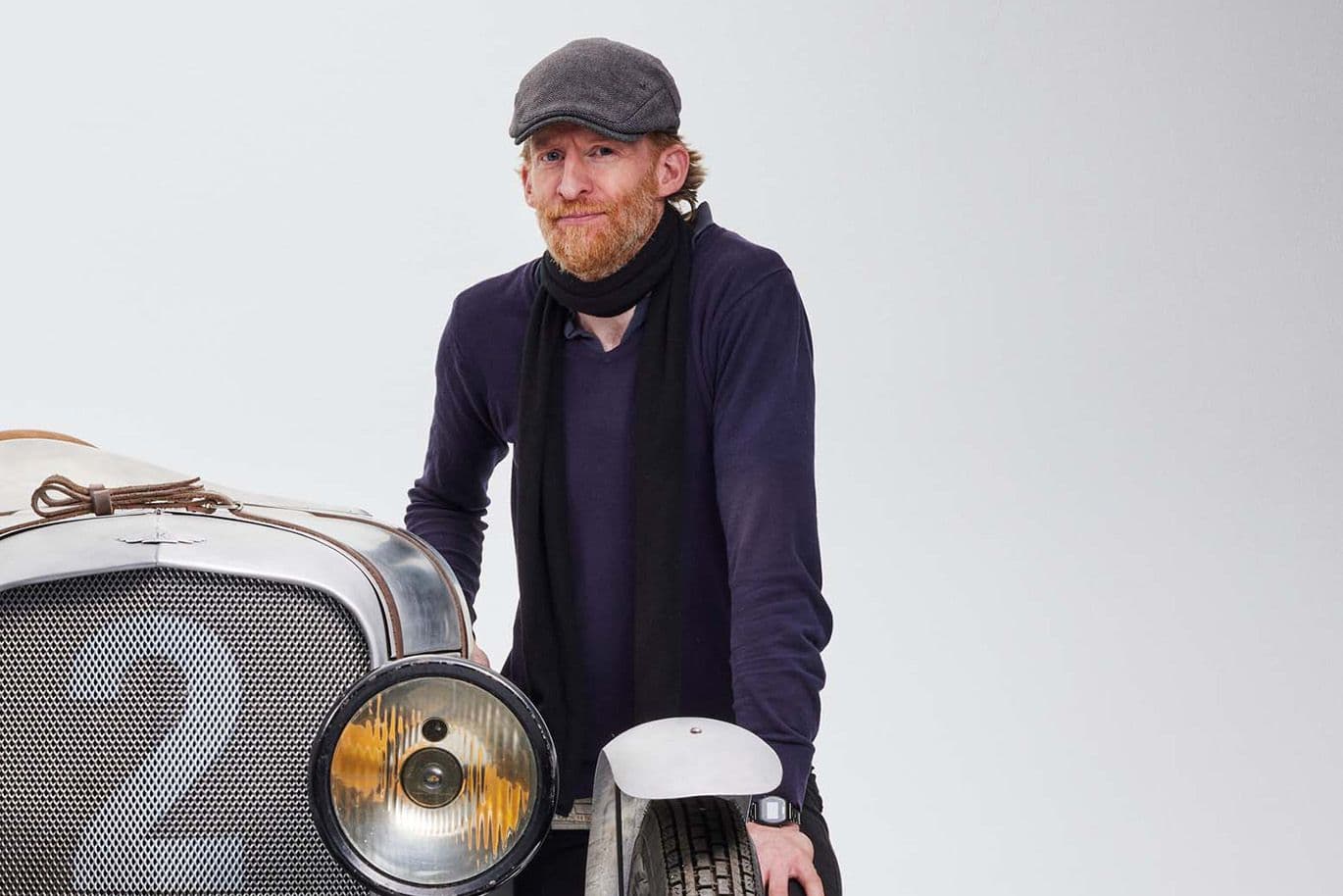
Your models are roughly three meters long, have working brakes and steering, so a person could theoretically climb inside, right?
It’s possible, but it’s not my intention. My cars are only meant to be displayed, they’re a special kind of objet d’art. Everything is handmade: the aluminum body, the frame, all of the woodwork, the entire interior. But what’s most important to me is the design. I don’t want my models to look “overly restored.” I want them to give the impression that they have been around during interesting times. To this effect, I put a lot of effort into producing a patina on every component.

Who are your customers?
Oh, that varies: My customers range from classic car museums to vintage car dealers, from architects to art aficionados who are looking for something to place in their homes. All kinds of people are interested in my work. I even had a customer from as far away as Australia, that was very exciting.
How long does it take you to make a model?
The work is very time-consuming. I need around 250 hours for the simplest model, and for the more complex versions, it can easily take twice as long.
I first create a rough sketch of what the model could look like and then start working on it. As I build it, I see where improvements can be made or where I need to make compromises because certain aspects are not feasible.
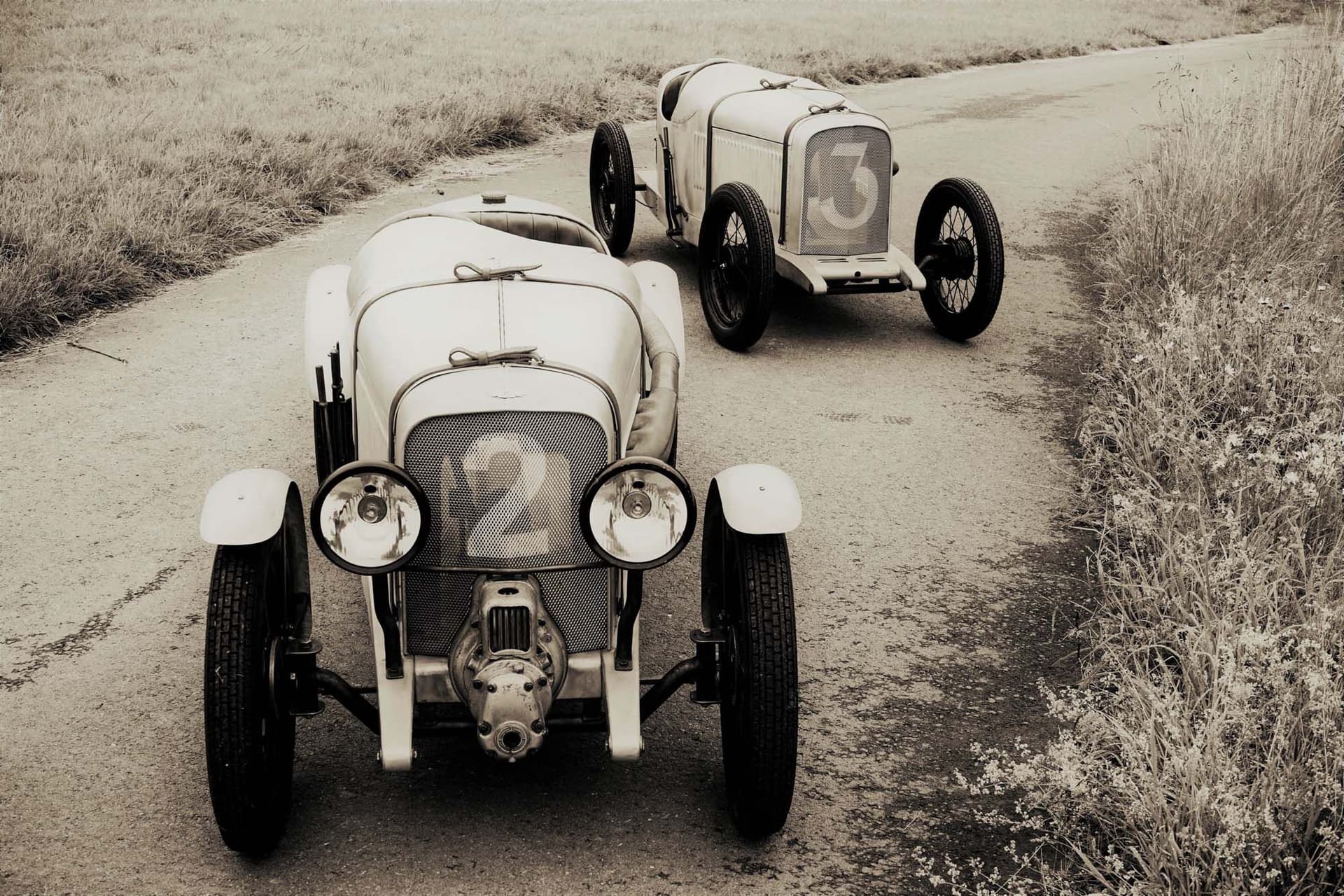
Which model did you start with?
The race car. By now, it exists in different variations, and everything has become more elaborate over time. The base model is the race car without additional parts, and later versions include fenders, mudguards, and so on. That was the starting point for everything. After that, I envisioned an entire model family. All my cars have the same front—meaning the radiator at the front, the hood—and then the wheelbase and rear structure vary.
Which parts are still old?
The engine, which was originally a stationary engine/industrial engine used to power small machines. I usually source the headlights from France, as they often have classic-looking ones available. Most of the instruments and dashboard fittings are also old, though I do remake some of them. The leather for the seats is recycled from old sofas, giving it a beautifully worn look.
You may also be interested in


GG Magazine exclusive content
GG is an independent magazine at the highest level. Exploring the world of architecture, lifestyle, design, fashion, yachting, luxury living and travel. We seek out the most exciting topics and personalities for you and invite you to get to know them from a fresh new angle. In GG, you will meet successful architects, interesting designers and exciting artists who are the talk of the town from London to New York and Berlin to Hong Kong.
See original article