Moving Checklist: Step-by-Step to a Successful Move
- 5 min.
- 12.11.2025
Three people. Three success stories. Get to know them. Discover now.

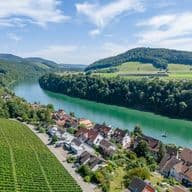
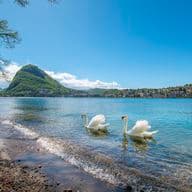
Whether it's a small oasis in the mountains or a vacation apartment with a lake view in Ticino, second homes in Switzerland are a sought-after luxury. But they are also clearly regulated. Here's what you need to know about buying second homes and the tax implications.
Second homes are generally defined as properties that:
are located in a municipality other than the one in which you are registered and reside, and
are not permanently occupied for work or educational purposes.
Accordingly, second homes in Switzerland are usually vacation homes.
Swiss citizens are generally permitted to purchase second homes without restrictions. However, since the Federal Act on Second Homes came into force on January 1, 2016, there have been strict rules on how many second homes are permitted in a municipality. Specifically, the proportion of second homes is limited to a maximum of 20%.
Once this figure is reached, no new vacation or second homes may be approved – with the exception of homes that are used and rented exclusively for tourism purposes.
Depending on their country of origin and residence permit, significantly stricter rules apply to foreign nationals. This is because the Lex Koller places tight restrictions on the purchase of real estate by foreigners.
The following are exempt from these restrictions:
People from EU and EFTA countries who have their main residence in Switzerland
People with a permanent residence permit (C permit)
Cross-border commuters who are citizens of an EU or EFTA country and who purchase real estate in the area where they work.
They have the same rights as Swiss citizens when purchasing real estate.
Foreign nationals who do not meet these requirements need a permit to purchase a second home. This must be obtained from the competent cantonal authority in the location where the property is located.
The following conditions must be met in order for the purchase of a second home or vacation home to be permitted:
The apartment must be located in a tourist resort.
The net living space may not exceed 200 m2, and the building plot may not exceed 1000 m2.
A vacation home may not be rented out all year round, but only temporarily; second homes may not be rented out at all.
You may not own more than one vacation home or second home in Switzerland.
If your main residence is abroad, you may only purchase a second home in a location with which you have an exceptionally close and worthy relationship.
In addition, the cantons may impose further restrictions. More details on this topic can be found on the federal government's website.
Important Information
Anyone who wishes to stay in Switzerland for more than 90 days per year as a non-working person requires a residence permit. However, taxes are only payable if you earn income in Switzerland from work or other sources such as real estate, or if you live in your own property in the country for more than six months per year.
Anyone who purchases a second home in Switzerland must register with the municipal residents' registration office within 14 days of moving into the second home. This incurs a fee, which varies depending on the municipality. A valid certificate of residence and an identity card or passport are required for registration.
A second home is a luxury – accordingly, buyers cannot benefit from simplified financing as they can with their primary residence. For example, it is not permitted to withdraw pension assets from the 2nd pillar or pillar 3a to purchase a second home.
In addition, the requirements for financing are generally stricter than for a primary residence – many banks often require 50% equity or more because they consider the risk to be higher.
Last but not least, real estate values are very high in many popular second home destinations. The second home initiative has further fueled this development, as in many places no new housing can be built, even though demand is high – and in some cases continues to rise.
This makes it even more difficult to raise the necessary equity for the purchase. This makes it all the more valuable to have good advice and support from experts who can point out the possibilities and limitations on an individual basis.

Second homes are treated in the same way as primary residences for tax purposes. This means that the imputed rental value is taxed as income, but deductions for mortgage interest and energy-efficient renovations are also possible. If the property is rented out, the rental income must also be taxed as income – in return, the imputed rental value is reduced by the rental income, so that the additional taxable income remains the same.
In addition, there are other taxes on real estate, such as property and transfer taxes or real estate gains tax on sale.
Not to be forgotten: maintenance costs and ancillary costs, as well as visitor's taxes per overnight stay in a vacation apartment in many cantons.
On September 28, 2025, the Swiss electorate voted in favor of abolishing the imputed rental value, which is expected to be implemented from 2028. On the one hand, this means relief for all owners of residential property. But at the same time, the deduction options will also be abolished.
In addition, the cantons can levy new taxes on second home owners to compensate for the shortfall in revenue. However, before these come into force, they must be approved by the electorate.
With the abolition of the imputed rental value, second homes could become even more attractive, even if mortgage interest and renovation costs are not deducted. Overall, this is likely to put pressure on properties in need of renovation, while new builds and prime locations will become even more attractive.
You may also be interested in

&w=1920&q=75)