
- 4 min read
- 15.04.2026
Office to residential conversion
How property owners benefit from government subsidies and accelerated processe
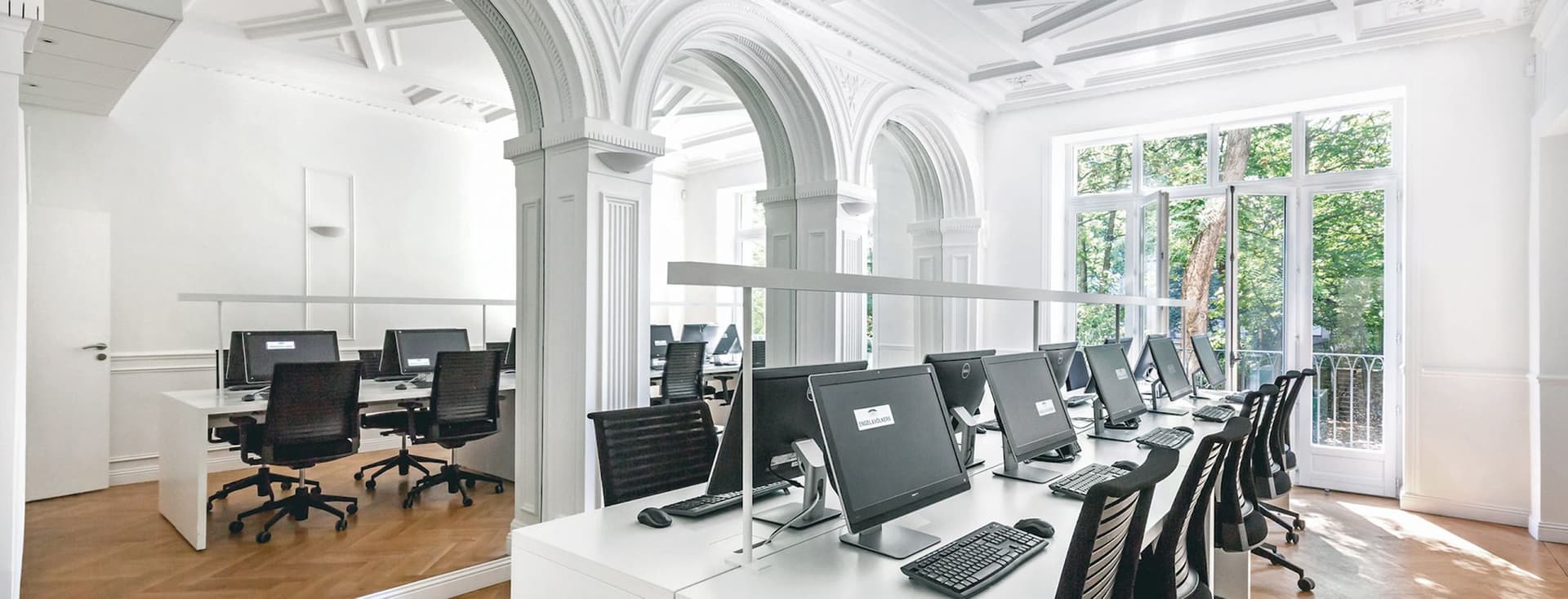
Unused office spaces in our city centers are far more than just vacant square footage, they are the foundation for the living concepts of tomorrow. Those who plan the conversion of offices into residential property today are creating valuable living space exactly where people truly want to be: in the heart of the action, supported by perfect infrastructure and the luxury of short distances.
In an era where developable land in prime city locations has become almost impossible to find, the reuse of existing buildings opens up entirely new horizons. While sellers provide their properties with a sustainable, long-term perspective through vibrant new use, buyers are presented with the rare opportunity to acquire exclusive living space with a unique character.
Adaptive reuse of real estate: Unlocking new dimensions of value
The way we use our cities is noticeably changing. Converting office buildings allows us to rethink architecture and create modern, loft-style living spaces in buildings originally designed for work.
If you own a property that is no longer reaching its full potential in the commercial sector, adaptive reuse is the key to a new era for that building. Buyers benefit from high ceilings, expansive window fronts, and central locations, a combination that is increasingly rare in traditional residential real estate.
The economic logic: Why commercial to residential is a strategic choice
The business case for commercial-to-residential conversion is becoming increasingly compelling on a global scale. As urban landscapes evolve, repurposing underutilized office space into high-quality housing is no longer just a trend, it is a sophisticated investment strategy. This approach allows owners to reactivate dormant assets and meet the rising demand for urban living in prime locations.
Key strategic advantages at a glance:
Optimized financing & returns: Many regions now offer specialized financial incentives and flexible loan structures to encourage the creation of new housing, often without the constraints of traditional rental caps.
Revitalizing urban hubs: By transforming vacant offices into residential units, you contribute to more vibrant, 24/7 neighborhoods, significantly increasing the long-term appeal and value of the surrounding area.
Asset maximization in prime locations: Conversions allow for the creation of premium residential space in central districts where developable land is otherwise non-existent, leveraging existing infrastructure and connectivity.
Sustainability as a value driver: Adaptive reuse is a cornerstone of environmentally responsible real estate. Preserving a building’s core structure can save up to two-thirds of the CO2 emissions compared to a new build, making it a powerful statement for ESG-conscious portfolios.
Furthermore, these projects offer the perfect opportunity to integrate modern energy standards. By investing in energy-efficient renovations during the conversion process, you secure the property’s prestige and ensure a future-proof energy balance that attracts high-tier residents and investors alike.
&w=1920&q=80)
Find your dream property
Mixed use development: Compelling concepts for owners and buyers
A particularly forward-looking model in the transformation of commercial space is mixed-use real estate. Rather than repurposing an entire building, this approach creates a harmonious interplay of different uses. For you as an owner, this translates into exceptional marketing flexibility.
The lower floors can continue to house attractive commercial spaces or cafés, while modern residential living is developed on the upper levels. This hybrid model is highly sought after by buyers, as it perfectly blends urban lifestyle with the convenience of short distances. Such integrated concepts are often a vital part of housing shortage solutions, as they maximize building occupancy while ensuring a vibrant neighborhood atmosphere around the clock.
What property owners and investors should consider
If you are a property owner or investor evaluating a repurposing project for the year 2026, the assessment of the building's core structure is the first priority. Not every office building can be transformed with the same level of ease. Factors such as floor plate depth, ceiling heights and the existing infrastructure for natural light play a decisive role. It is advisable to engage specialists early on to evaluate feasibility as well as local zoning requirements and building code adjustments. Equally important is the neighborhood context. Concepts in central locations with excellent connectivity and a high quality of life deliver the most stable returns. Engel & Völkers offers expert guidance throughout this process, from the initial potential analysis to the successful market launch of your project.
Your success with Engel & Völkers
The conversion of a property requires intuition, precision, and profound market knowledge. Engel & Völkers guides you through every stage of this compelling process. We assist sellers in identifying the hidden potential of their commercial spaces and connecting them with the right investors for repurposing. For buyers, we provide exclusive access to projects that promise unique living experiences through intelligent conversion. With our local expertise and global network, we ensure your real estate strategy is future-proof.
Engel & Völkers
Real estate worldwide
New
Grumme, Bochum, North Rhine-Westphalia, Germany
Seltene Gelegenheit in Grumme – großzügige Eigentumswohnung mit Balkon
Price
€279,000
- 4 Rooms
- 2 Bathrooms
- ~123 m² Living area
AI
New
Nea Erythraia, Attica, Greece
Beautiful 3rd-floor apartmentin Nea Erythraia
Price
€315,000
- 2 Bedrooms
- 2 Bathrooms
- ~90 m² Living area
New
Concón, Valparaíso, Chile
Departamento en Costa de Montemar
Price
UF 5,980
~€215,558
- 2 Bedrooms
- 2 Bathrooms
- ~66 m² Living area
- ~84 m² Plot surface
New
Nord, Palma, Balearic Islands, Spain
Stylish urban living - yet a tranquil oasis in the center of the city
Price
€1,076,000
- 2 Bedrooms
- 2 Bathrooms
- ~102 m² Living area
- ~11 m² Terrace surface
New
Nord, Palma, Balearic Islands, Spain
Stylish urban living - yet a tranquil oasis in the center of the city
Price
€1,263,000
- 3 Bedrooms
- 3 Bathrooms
- ~129 m² Living area
- ~11 m² Terrace surface
Ciutat Vella, Barcelona, Catalonia, Spain
Bright and cosy 2-bedroom flat on Carrer del Pi
Price
€412,000
- 2 Bedrooms
- 1 Bathroom
- ~67 m² Living area
FAQ
Frequently asked questions
Profitability depends on the suitability of the building and its location alongside available regional incentives. In many global markets conversions benefit from lower acquisition costs for underperforming commercial assets combined with a strong multifamily housing demand. Specialized financial programs and local support initiatives further improve the long term economic viability of these projects.
The duration of a conversion depends on the architectural complexity of the building and the respective regulatory framework. While the process involves several stages from structural assessment to construction projects often move faster when they benefit from streamlined permitting processes or urban development initiatives designed to accelerate the creation of new homes.
Office to residential projects are among the most effective housing shortage solutions because they breathe new life into existing structures within high density areas. By repurposing vacant commercial space cities can expand the residential supply in central locations where land is scarce offering a direct response to the urban housing crisis while revitalizing downtown districts.
Not every building is a natural candidate for residential use. Success depends on technical characteristics such as the depth of the floor plates which determines how well natural light reaches the interior as well as ceiling heights and the ability to integrate residential plumbing and ventilation systems. A thorough feasibility study is essential to ensure the structure can support a high quality of life for future residents.
Contact
Contact your personal advisor


Engel & Völkers Germany
Vancouverstraße 2a
20457 Hamburg, Germany
Tel: +49 40 361310