&w=1920&q=75)
Erice
- 2 min.
The new GG website: Inspiring personalities, extraordinary places and exceptional properties. Discover now.
A hidden treasure in the Mediterranean
&w=1920&q=75)
Whether for a vacation or for life, the province of Trapani offers its citizens and visitors the opportunity to discover new treasures of inestimable value in terms of landscapes, art, history, and traditions. Thanks to the cultural ferment that has characterized its history, each municipality possesses unique and unrepeatable peculiarities and characteristics.
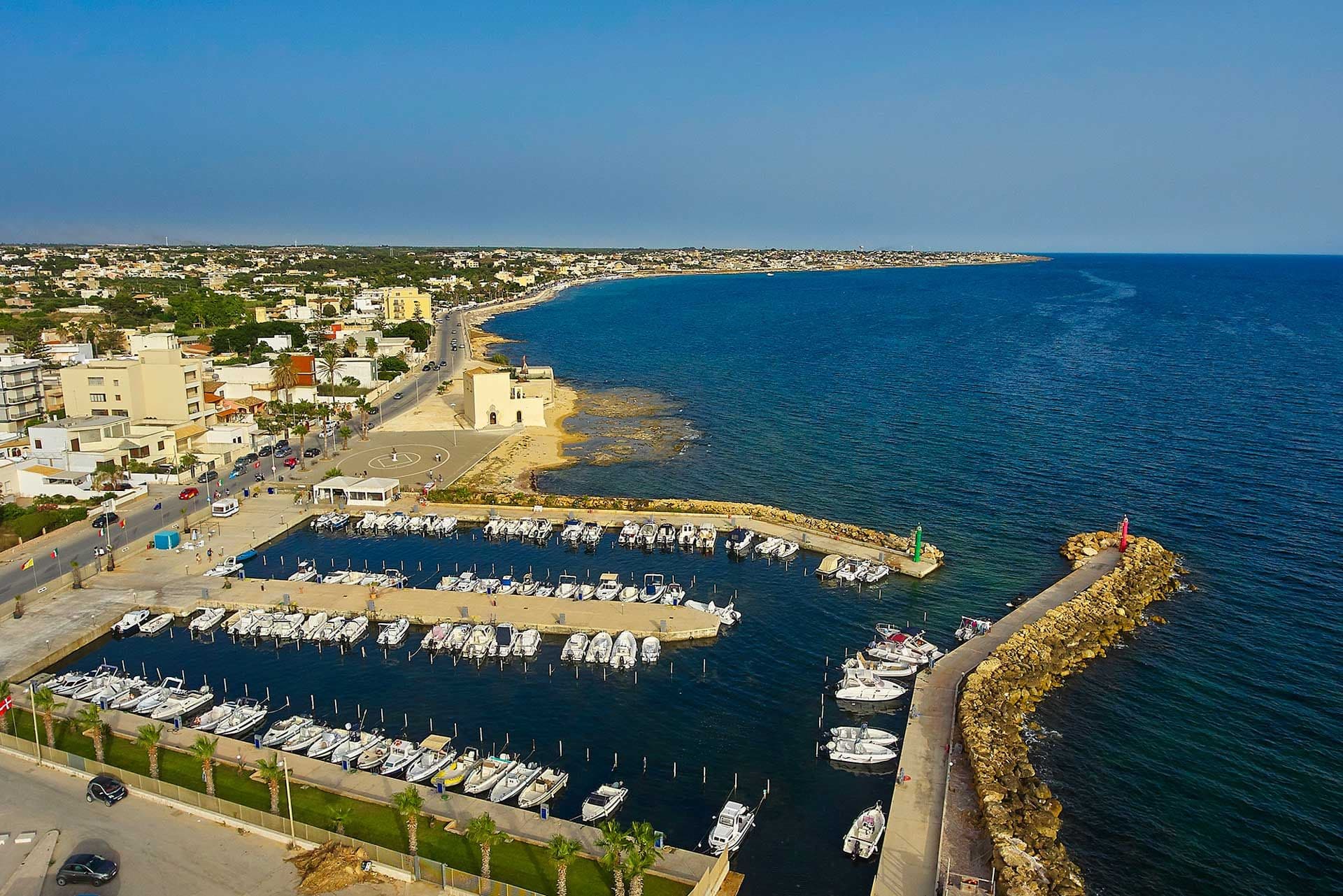
We present below the municipality of Mazara del Vallo, for millennia a crossroads of peoples whose historical traces make it unique in the panorama of Sicilian cities.
For millennia, it has been a land of conquests but also of cultural exchanges, a crossroads for goods from all over the Mediterranean. Over time, Phoenicians, Greeks, Carthaginians, Romans, Arabs, and Normans have settled here.
The Phoenicians made it an important commercial emporium and called it Mazar (the fortress); Greeks and Carthaginians, around 400 BCE, fought over it for its strategic position; the Romans left us the beautiful mosaic floor depicting a golden deer found in the church of San Nicolò Lo Regale; the Arabs in 827 chose it for their landing in Sicily and elected it the capital of one of the three Valleys, the Val di Mazara; the Arabs introduced new crops (lemons and oranges) and new cultivation techniques to the island, but also created a center for Islamic studies; the Normans built a series of monastic complexes, churches, and luxurious palaces, many of which were renovated during the Baroque period.
The varied architectural landscape that reflects the various cultures intertwined through the ages in this precious cradle of the Mediterranean boasts a substantial number of churches, earning Mazara the nickname "City of 100 Churches." Worth visiting are the Church of St. Catherine, with its fine Baroque facade, the Norman Church of San Nicolò Regale, and finally the Church of St. Francis, a magnificent example of Baroque art, rich in polychromy and decorations, located on the edge of the Casbah, the oldest and most fascinating part of the city, which preserves many residential characteristics of ancient Islamic settlements.
Here, thanks to the help of the municipal administration, Tunisians have renovated their houses and embellished facades, alleys, and squares with majolica tiles. During the Middle Ages, 4 ethnic groups coexisted in the city (Latins, Greeks, Muslims, and Jews) who created 4 distinct neighborhoods: San Francesco (the Casbah district), San Giovanni, Giudecca, and Xitta. But it was only after the Arab conquest in the 9th century that an era of flourishing recovery began after a period of decline. The city experienced, under Arab rule, an intense urban development whose layout is still evident today in the intricate network of narrow streets in the historic center.
With the arrival of the Normans, however, there was a flourishing of monastic complexes, churches, and luxurious palaces, still splendid today, many of which were renovated during the Baroque period. Particularly noteworthy is certainly the Cathedral of the Holy Savior, which dominates all in size and importance, which was built by Count Roger and is a true treasure chest. Inside, there is a remarkable amount of decorations and works of high artistic value. The imposing Transfiguration group by Antonello and Antonino from 1535, the paintings by Giambecchina, and a medieval fresco with Christ Pantocrator from the 13th-14th century, to name just a few.
Finally, let's not forget that, precisely in Piazza Plebiscito, the city preserves a masterpiece dating back to the 4th century BC that attracts many visitors: the Dancing Satyr, a beautiful bronze statue found only in 1998 by a fishing boat.
Beyond its artistic and architectural heritage, the city boasts several points of landscape and cultural interest.
Starting with the long beach of Tonnarella, which extends for about 8 kilometers, characterized by golden sand and clear waters, ideal, on windier days, for kitesurfing enthusiasts.
The nearby nature reserves of Lake Preola and Gorghi Tondi (managed by WWF) offer the opportunity to observe many species of water birds, while the Capo Feto reserve, a strip of territory separated from the sea by a sandy relief, which is invaded by the sea in winter and dries up in summer, enjoys special protection for its many endemic species of botanical interest.
And if Islamic culture has left its mark on the urban layout and traditions, Christian culture has also left its mark, not only in architecture; there are many religious rituals held in the city, including the Rite of Dawn, in which Easter Sunday celebrates the Resurrection of Jesus, and the Feast of San Vito, at the end of August, with a picturesque procession of sailors in traditional costumes and, in the following days, a representation of living tableaux illustrating the events of the Saint's life.
In this land rich in historical and artistic suggestions, a special mention must certainly be made for the local gastronomy in which, naturally, fish-based dishes predominate. Among these, further confirming the Arab tradition that can be felt in this city, couscous made from cooked semolina and seasoned with fish broth constitutes one of the main dishes of the tradition, while the principal product of Mazara cuisine is certainly the now world-famous Red Prawn of Mazara del Vallo.
In the past, it was discarded and thrown back into the sea during fishing trips; today, it is the most sought-after and prized crustacean. The history of the Red Prawn is closely intertwined with the maritime history of the city. Already an important Phoenician emporium, Mazara del Vallo boasts the largest fishing fleet in Italy, the second in Europe. A history that begins with subsistence fishing, mainly of blue fish. Then the industrial turning point at the end of the eighteenth century, thanks to the English Hoops family who started preserving anchovies for the British fleet.
In the golden years, those from the late 1940s to the 1990s, Mazara counted about 1,300 fishing vessels equipped with advanced technology and specialized in deep-sea fishing for this crustacean. Today, about sixty of those fishing boats remain, along with about thirty fish processing and preservation plants. This is due to the high cost of fuel and the economic crisis, which fortunately has not stopped the fishing of the famous Red Prawn.
To be defined as such, the Red Prawn of Mazara must have very specific physical and organoleptic characteristics: visually, it is a purple-red color almost like coral, the head has some dark spots typical of the prized red prawn of the Mediterranean, while to the palate it has a unique taste, thanks to the alternation of strong and sweet notes. Characteristics that derive from the high percentage of sea evaporation that enriches the prawn with mineral salts, giving it a highly iodized, dense, delicate meat that is easy to cut and does not shred. In fish markets, the price ranges from 50 to 60 €/kg for the largest size. On-board freezing allows the prawn's organoleptic properties, quality, taste, and freshness to be maintained intact.
The ancient multi-ethnic tradition, the climate, the geographical position, and the excellence of the products give the city's typical cuisine an inestimable value that is alone a sufficient reason to visit this wonderful treasure chest of the Mediterranean.
You may also be interested in
&w=1920&q=75)
&w=1920&q=75)
&w=1920&q=75)
&w=1920&q=75)
Contact provider
Page content provided by: Finest Properties West Sicily S.r.l.
License partner of Engel & Völkers Italia S.r.l.