Alcácer do Sal, Setubal, Portugal
INVESTMENT: Tourism Project
Price on request
- ~5,000,000 m² Plot surface
Find out if buying a house in Portugal without a down payment is possible and understand current market conditions.

Buying a home in Portugal remains a top priority for many families and young professionals. However, rising property prices in recent years have made the initial down payment—usually between 10% and 20% of the total value—one of the biggest obstacles to achieving this dream. Faced with this reality, the question becomes increasingly relevant: Is it possible to buy a house in Portugal with no down payment?
In this article, we analyse what the real estate market says, the role of banks, alternative financing options, and the trends that are emerging. If you're planning your first property purchase, this is an excellent starting point for understanding both the challenges and opportunities. Engel & Völkers can be the ideal partner to help you find solutions tailored to your financial profile and future expectations.
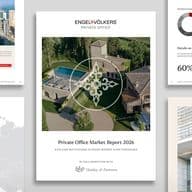
Additionally, knowing the actual market value and financing potential of the property you're considering can make all the difference. We recommend checking a current real estate market report before making any decision—updated data helps you understand price trends by region and what types of properties fit your budget.
Table of Content
What does “buying a house with no down payment” mean?
Are there 100% mortgage loans in Portugal?
The importance of the bank appraisal value
Strategies to overcome the lack of down payment
Real estate market trends in Portugal
Who qualifies for 100% mortgage loans?
What documents are needed to apply for a mortgage?
What are the risks of 100% financing?
How to find properties eligible for higher financing?
Personalised support: a major advantage for buyers
What to expect in the coming years
Final thoughts
Frequently asked questions (FAQ)
Buying a house with no down payment means securing 100% bank financing for the purchase. In other words, instead of having to save 10%–20% of the purchase price as an upfront payment, the bank covers the entire amount.
In practice, this is a rare and exceptional scenario. Portuguese banks generally follow prudential rules set by the Bank of Portugal, which recommend that financing should not exceed 90% of the property's appraisal value. However, there are exceptions and strategies that can help make this possible.
Generally speaking, Portuguese banks do not offer 100% financing for homes sold on the open market. However, certain situations may allow full financing:
Properties owned by banks or financial institutions: these are often eligible for 100% financing, particularly if the bank is trying to clear real estate from its portfolio
Real estate investment funds: sometimes offer favourable financing terms
Buyers with additional guarantees: such as a co-signer with high income or valuable collateral, may be granted full coverage
While these options exist, they are rare and require a detailed risk assessment. Running simulations and seeking expert advice is essential. If you're unsure, consider checking how much your property is worth—a professional appraisal can improve your chances of negotiating better financing terms.
The amount a bank is willing to finance depends on the appraisal conducted by a certified professional. For example, if you buy a property for €200,000 but the appraisal value is only €180,000, the bank will base the loan on €180,000—not the purchase price.
This means that even if the seller lowers the price, if the property doesn’t match the bank’s valuation, you will need to cover the difference out of pocket. Appraisal is a key part of the home-buying process.
Even though 100% financing is uncommon, there are several ways to work around the upfront payment:
It may sound obvious, but saving in advance is still one of the most effective strategies. Setting clear goals and sticking to a savings plan can allow you to accumulate the necessary 10% to 20% in just a few years. Many buyers choose to invest in a retirement savings plan (PPR), which can be used to buy a home with associated tax benefits.
In some cases, it is possible to negotiate favourable conditions with the seller—such as a lower deposit, staged payments, or a long-term preliminary sale agreement that gives you more time to gather the down payment.
As mentioned, these may be eligible for full financing and are often part of recovery portfolios. The downside is that supply is limited and conditions may vary depending on the property’s condition.
While not directly offering 100% mortgages, some municipalities or regional programmes provide support to young buyers or families—such as reduced property taxes, rental support with purchase options, or municipal housing initiatives. Staying informed about these can make a big difference.
The Portuguese property market has shown signs of stabilisation after years of rapid growth. Despite rising interest rates, demand from local buyers remains strong, particularly in areas surrounding major cities or in regions with good quality of life and more affordable prices.
According to the Portugal Market Report 2023/2024, there is growing demand from young couples and hybrid workers looking for alternatives outside large urban centres.
This shift is creating new opportunities in cities like Setúbal, Aveiro, Braga, and Viseu—where square metre prices are still attractive and banks are more willing to lend under favourable conditions.
Although rare, 100% financing may be available to buyers with strong profiles:
Young professionals with stable careers
Dual-income couples with minimal expenses
Buyers with high-earning guarantors
Clients purchasing bank-owned properties or those in incentivised areas
In these cases, it is essential to work with a real estate team with in-depth market experience, who can guide you through every step—from finding the right property to mortgage negotiations and legal formalities.
To apply for a mortgage loan in Portugal, you will typically need:
Income statements
Tax returns (IRS)
Credit report from Banco de Portugal
Proof of employment
Property documentation
Once submitted, the bank performs a credit risk analysis and, if approved, issues a European Standardised Information Sheet (ESIS) with the loan terms.
While buying a house with no down payment may sound appealing, there are several risks:
Higher debt levels: full financing means higher monthly payments
Higher effort rate: if your income is not significantly above expenses, the loan may be denied
Property depreciation: if the property value drops, your loan may exceed the house’s market value
Variable interest rates: with today’s volatility, your monthly instalments could increase significantly
Before committing, run detailed simulations and seek advice from mortgage advisors. You may also consider selling your current apartment to reinvest in a new property with less financial strain.
If you’re specifically looking for homes with favourable financing options or reduced down payment requirements, consider:
Bank-owned or repossessed properties
New developments with bank partnerships
Real estate agencies offering special campaigns
Areas with local government housing incentives
The Engel & Völkers platform allows you to filter properties by location, price, features, and even financing options. With a national network of consultants, the brand offers exclusive listings and support throughout the process.
In a competitive market with many variables, working with experienced consultants is essential. A skilled professional helps to:
Correctly assess market value
Negotiate favourable mortgage terms
Prepare the necessary paperwork
Avoid unexpected delays and costs
Many buyers feel more confident when working with trusted professionals who know the local market. The expertise of real estate consultants ensures that the entire process runs smoothly and securely.
As younger generations enter the housing market, banks will face pressure to offer more flexible products. Some financial institutions are already exploring low down payment loans for young buyers, especially when combined with life insurance or collateral.
Additionally, rent-to-buy models may become more common. This option allows buyers to live in a property while paying rent, which is later deducted from the purchase price—effectively reducing the need for a large upfront deposit.
Buying a house in Portugal without a down payment is an ambitious—but not impossible—goal. Although banking regulations are strict, exceptions exist, and opportunities can be found by those who prepare early and rely on the right guidance. Understanding the type of property, local market dynamics, and available financing solutions is key to making a smart and sustainable decision.
With the support of an experienced team like Engel & Völkers, you can discover personalised strategies that align with your profile and goals. Whether through special financing opportunities, public programmes, or strategic selling of your current home, the path to homeownership may be more accessible than you think. The secret lies in preparation, information, and choosing the right partners.
PROPERTIES IN PORTUGAL
Alcácer do Sal, Setubal, Portugal
Price on request
Vale do Lobo, Almancil, Faro District, Portugal
Price on request
Quinta do Lago, Almancil, Faro District, Portugal
Price on request
Centro Historico, Cascais, Lisbon, Portugal
Price
€22,000,000
Porto, Porto District, Portugal
Price on request
Albufeira, Faro District, Portugal
Price
€18,500,000
Faro, Faro District, Portugal
Price
€18,000,000
Carnaxide, Lisbon, Portugal
Price
€17,000,000
Sintra, Lisbon, Portugal
Price
€16,500,000
Yes, but it’s the exception, not the rule. Most banks require a down payment of 10% to 20%. However, 100% financing may be available for bank-owned properties, strong borrower profiles, or with additional guarantees.
There’s no public list of banks offering 100% mortgages. Some do offer it for properties in their portfolios, but approval depends on risk evaluation, property type, and borrower profile.
Banks base the mortgage amount on the appraised value, not the purchase price. If the bank’s appraisal is lower than what you pay, you’ll need to make up the difference yourself.
Yes. Under Portuguese law, PPRs can be withdrawn without penalty for purchasing a primary residence. This is a common and tax-efficient way to fund the down payment.
Technically possible, but not recommended. Banks assess your effort rate (total debt vs. income), and combining a personal loan with a mortgage can lead to rejection or unsustainable payments.
While there’s no nationwide 100% mortgage programme in 2025, some local authorities offer tax exemptions (like IMT for buyers under 35), rental assistance, or affordable housing schemes. Availability depends on your municipality.
Start with a mortgage pre-approval. It gives you a clear idea of your budget and strengthens your position when negotiating or making an offer on a property.
You may also be interested in
&w=1920&q=75)








FOR MORE INFORMATION



Engel & Völkers Portugal
Av. da Liberdade 196, 7 andar
1250-096 Lisboa, Portugal
Tel: +351 210 200 490