
Get Your Free Investment Guide
Learn how to maximise returns and make informed decisions in Dubai’s property market.
The new GG website: Inspiring personalities, extraordinary places and exceptional properties. Discover now
Key Takeaways:
The main risks of buying property in Dubai include market volatility, legal complexities, and hidden financial costs
Off-plan properties carry additional risks like construction delays and project changes, making due diligence essential
Working with a trusted real estate agent helps ensure compliance, safeguard your investment, and minimize potential losses
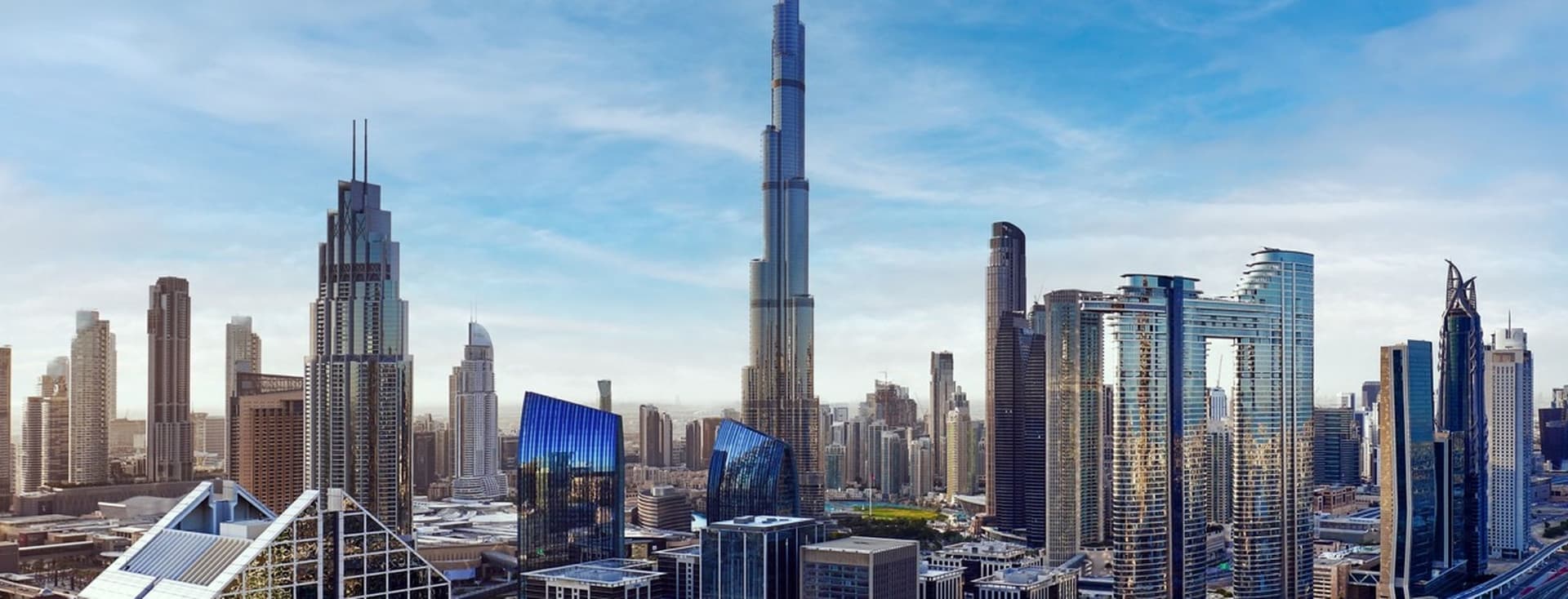
In recent years, Dubai’s real estate markethas stood out for its resilience and remarkable growth, even in the face of challenges like the pandemic, inflation, and global economic shifts. With property transactions on the rise, it’s clear that buyers and investors continue to flock to the market, eager to take advantage of its opportunities.
Following several years of exceptional growth, Dubai’s property market entered a more balanced phase during 2026. Transaction activity has moderated and buyers have become more selective, but demand remains supported by population growth, international investment and the emirate’s strong economic fundamentals.
However, like any real estate market in the world, Dubai’s market is not immune to certain risks. Being aware of the risks of buying property in Dubai can provide you with insightful information, enabling you to make informed real estate investment decisions. This guide explains the key risks buyers should understand in 2026 and how to reduce them before committing to a purchase.
Just like every real estate market globally, market volatility is a hazard in Dubai’s housing market. While the market has delivered exceptional growth in recent years, activity naturally moves through periods of expansion, consolidation and slower growth depending on economic conditions, supply levels and buyer confidence.
Whilst Dubai’s real estate market has been on a clear upwards trajectory, there are periods of consolidation and declining prices.
For example, between 2012 and 2014, there was a remarkable surge in average property prices. However, the market then experienced a gradual decline that continued until 2020.
There was a sudden change in 2020 when transactions and property prices began a sharp upwards move, a momentum that has continued since.
After reaching record highs during 2024 and 2025, price growth moderated during 2026 as additional supply entered the market and buyers became more value conscious. While many communities have remained resilient, performance now varies much more between locations, property types and individual developments.
This shift highlights the importance of researching local market conditions rather than assuming all areas will perform equally. Investors with a long-term outlook remain well positioned, but careful asset selection has become increasingly important.
Global economic conditions can have a significant impact on Dubai’s real estate market. Events such as global recessions, oil price movements, and economic events can cause a certain degree of volatility in Dubai’s real estate market.
In addition, factors such as interest rates, geopolitical uncertainty and changes in global investor sentiment can influence buying activity, particularly in the luxury segment where international purchasers play a significant role.
While buying property in Dubai is generally considered a steady investment, it is important to understand the risk of market volatility and conduct research before making a purchase.
Dubai’s rules and regulations for real estate are relatively straightforward but can come across as confusing, especially for first-time buyers. It is also important to note that the city’s regulations are strict and non-compliance can result in legal consequences.
To navigate the legalities of Dubai’s real estate market, buyers should consult with a RERA-accredited real estate agent who ensures that all the regulations are followed and all the paperwork is completed correctly before submission.
While buying property in Dubai as a foreigner is allowed, there are certain rules that they must abide by. For example, there are specific freehold areas in Dubai that allow foreigners to buy both residential and commercial property. It is important to know about those areas and understand what kinds of properties you can buy.
There are also specific rules for foreigners wanting to buy property in Dubai on a mortgage. Consulting with an experienced mortgage advisor in the UAE and a real estate agent can give clarity on one’s options.
Dubai’s real estate market is open for non-resident investors, which means that not every buyer will hold a residence visa while investing in or buying property. However, non-resident investors must hold a valid passport that confirms their identity while buying property in Dubai. Exact requirements vary depending on transaction type, financing, and property value.
One of the most prominent risks of buying property in Dubai is the monetary aspect. Buyers often assume that their financial requirements for a Dubai property are over as soon as they have bought it. That is not the case.
There can be several costs to buying property in Dubai. Costs of buying a property can include home insurance, DLD fees, real estate agent commission, and property registration fees.
As a property owner in Dubai, paying maintenance and service charges is an integral part of your ownership journey.
Depending on factors such as your property type (e.g. apartment/townhouse/villa), the location, and surrounding amenities, the cost of maintenance and service charges will greatly vary. Generally, the higher the price point for the property, the higher the fees.
Off-plan properties in Dubai are highly popular options with both investors and buyers, as they generally cost less than completed properties.
However, the risks of buying an off-plan property in Dubai pertain to factors such as:
Delays in project completion
Changes in the project development plan
Project cancellations
To avoid such risks, buyers should conduct due diligence and thoroughly research the property developer’s financial records, track records, and ensure that the sales contract has protective clauses to address any potential delays.
The biggest asset any property developer has is their previous record for starting and completing projects on time. However, even the most reputed developers may face issues during the project development - which is a risk all off-plan property buyers should be aware of.
The best way to mitigate such risks of buying property in Dubai is to research the developer of the property you are interested in. Ensure to:
Research whether people who have invested in the developer’s previous projects were satisfied with the final product.
Verify the developer’s reputation by looking for news articles, financial records, and project completion dates.
Understand the project timeline and construction milestones.
Historically, the biggest risk of project delays or cancellations is the loss of money that was invested in the project. However, the DLD has introduced various regulations, such as the use of Escrow accounts, to ensure that the risks are significantly mitigated, though delays can still affect liquidity and timelines.
Even with these protections, buyers should review construction progress, expected completion dates and the developer’s delivery history before committing to an off-plan purchase.
Get Your Free Investment Guide
Learn how to maximise returns and make informed decisions in Dubai’s property market.
Property-buying risks in Dubai are often tied to two types of properties: off-plan and ready. While you can immediately move into a ready property upon obtaining ownership, you can buy an off-plan property while it is still yet to be built or under construction.
The risks of buying an off-plan property tend to be the chance of construction delays, but these properties usually have a lower purchase price. In comparison, ready properties do not have the risk of delays, but also have higher prices and less opportunities for customisation.
Knowing the risks of buying property in Dubai can help you avoid certain common mistakes made by investors and homebuyers. Here is a list of common mistakes and how you can avoid them.
Whenever possible, it's essential to visit a property in person to check its condition. A property check helps you assess whether it matches up to the online listing and whether any renovation or repairs need to be completed.
If moving forward with the purchase, you can also do a property status enquiry to ensure the property is not linked to any financial issues.
Your budget is the crux of your property search. One risk of buying property in Dubai is buying a property that exceeds your financial capability, particularly once the additional purchase costs are factored in.
Setting a budget helps you narrow down your property search and choose the option that is right for you.
This is especially important for investors. Conducting market research, or working with a real estate agent who does it on your behalf, will help you understand which areas offer the potential for high ROI and excellent rental yields.
It is equally important to compare current asking prices with recent transaction evidence. In a more balanced market, some sellers continue to price properties based on peak market conditions, making independent valuation and local expertise increasingly valuable.
If you are an end-user, the property you buy will have a significant impact on your lifestyle. Always ensure you consider your preferences.
Do you prefer a suburban lifestyle or like being in the bustle of the city? Do you have a family and need schools and hospitals nearby, or are you a working professional and must be close to your office?
Consider your lifestyle priorities before settling on a property.
While this may not be one of the biggest risks of buying property in Dubai, it is definitely an important factor to consider.
Before diving into the buying process with thoughts such as, “How to buy an apartment in Dubai?”, it is important to analyze the potential returns of your investment and understand how future market projections could have an impact.
Before buying a property, an investor should consider whether they want to have a long-term or short-term investment strategy.
A short-term investment strategy typically means owning a property for less than one year. Most commonly, this involves buying a property that is in need of modernization, renovating it, and then selling it for a higher price. This strategy has a high potential return but carries higher execution and market timing risk.
A long-term investment strategy generally results in the investor/buyer holding the property for over a year. This generally involves buying a property with the intention of renting it out, either on a short-term or long-term basis. Whilst the returns may be slower than with a short-term strategy, the risk is also typically lower and the investor can benefit from both rental income and capital appreciation over time.
An important way of mitigating the risks of buying property in Dubai is to research market trends and understand future growth areas that could significantly impact your investment.
For example, the current market trends for Dubai’s real estate market are:
Its strong and stable economy is not only being diversified into different industries but is also attracting an increasing influx of investors and foreigners, thereby creating more job opportunities.
The UAE government’s 0% tax rate on personal income and capital gains has attracted many business people, investors, and entrepreneurs to work and live in Dubai. Additionally, there is no annual property tax for residential and commercial properties in Dubai.
Sustainability is being integrated with newer constructions as developers and the government in Dubai are emphasizing a sustainable present and future. For real estate, this primarily means the implementation of green building practices and ethical sourcing of construction materials.
Following several years of rapid price growth, buyers are placing greater emphasis on quality, location, developer reputation and long-term value rather than simply purchasing any property in a rising market.
Luxury and ultra-luxury homes continue to attract strong international demand, although buyers have become more selective and transaction timelines have lengthened compared to previous years.
Keeping abreast of Dubai’s real estate market will help you safeguard your investment and, to the best of your capability, reduce the risks of buying property in Dubai.
When it comes to understanding the risks of buying property in Dubai, experienced, regulated real estate agents play a critical role. Having years of experience and expertise in the property market, a credible real estate agent will provide end-to-end solutions for how to buy an apartment in Dubai.
While Dubai remains one of the world’s most attractive real estate investment destinations, successful investing depends on selecting the right property, understanding market conditions and carrying out thorough due diligence. Markets naturally evolve over time, making informed decision-making more important than trying to time short-term price movements.
Engel & Völkers is here to guide you throughout the property investment process. With our global network and in-depth knowledge of Dubai’s property market, you can trust us to help you make informed decisions and maximize your returns.
Contact us today to discover how we can support your real estate journey.

Make informed property decisions
Get expert advice to navigate Dubai’s property market and invest with greater confidence.
Some of the biggest risks of buying property in Dubai can include delays in the completion of off-plan properties, market volatility and economic uncertainty, navigating visa regulations, along with financial risks and hidden costs.
You should be informed of Dubai’s laws for property ownership, especially foreign property ownership laws.
Dubai continues to offer attractive long-term investment opportunities, supported by population growth, international demand and comparatively strong rental yields. However, following several years of exceptional growth, buyers should focus on asset quality, pricing and location rather than expecting every property to deliver the same level of appreciation.
Whilst off-plan properties in Dubai carry certain risks, working with an experienced real estate professional can mitigate many of the potential issues.
A property buying risk comes from not understanding additional purchase costs. These include DLD fees, real estate agent fees, mortgage fees, as well as ongoing maintainence and service charges.
You may also be interested in






Usman Adrees
Usman Adrees is the Head of Primary Sales at Engel & Völkers Dubai, leading one of the city’s largest and most experienced real estate teams. With over 10 years in Dubai’s property market, Usman specialises in the off-plan segment and maintains direct relationships with all of Dubai’s top developers. Under his leadership, the off-plan team provides clients with early access to the city’s most sought-after launches and expert guidance across every stage of the buying process.
Contact



Engel & Völkers Dubai
7th Floor, Al Khail Plaza
Jumeirah Village Triangle, Dubai, UAE
Tel: +971 4 4223500