- 3 min read
- 20.05.2026
- by Engel & Völkers Commercial Berlin
Why Swiss investors don't share Berlin's nervousness
What fascinates Swiss and Berlin investors about each other’s markets—and why the two systems could hardly be more different.
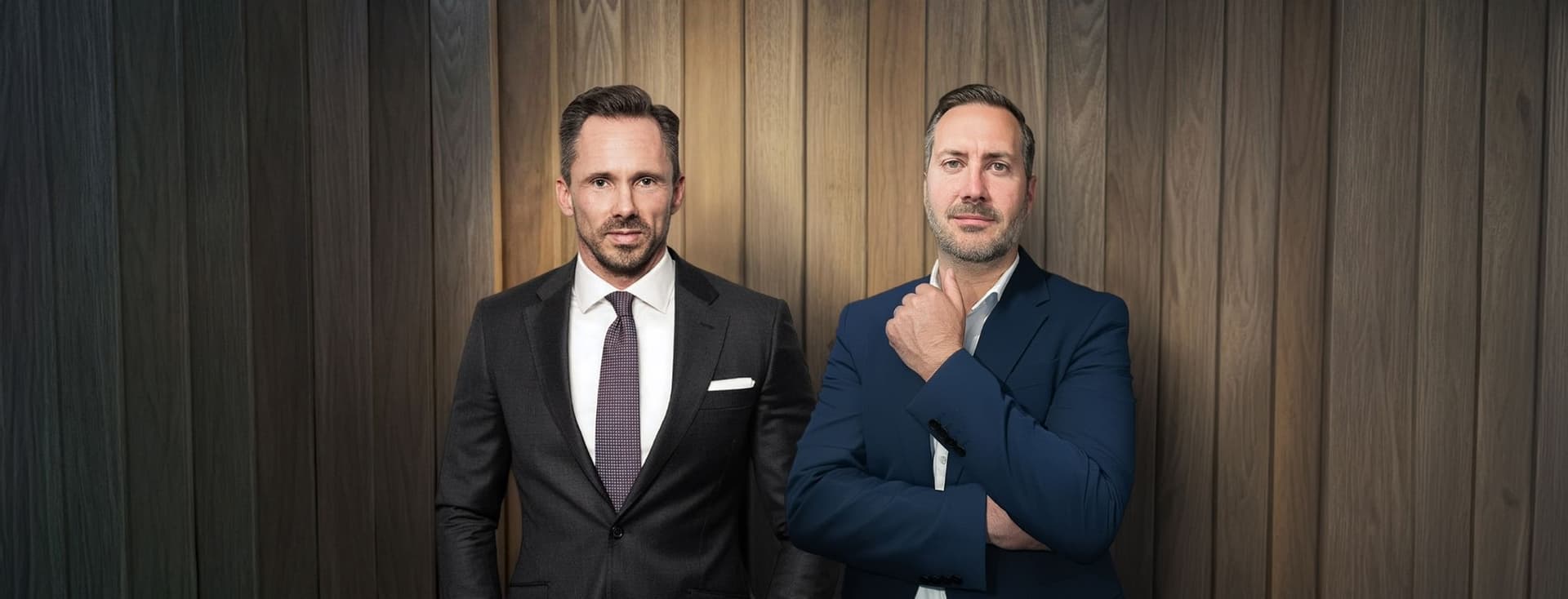
Switzerland is synonymous with stability, legal certainty, and predictable markets. Berlin, on the other hand, is characterized by dynamism, growth, political friction, and change. Nevertheless, Swiss investors are currently paying much closer attention to the Berlin real estate market. Conversely, certain German investors are also showing growing interest in Switzerland as a strategic location.
A conversation with Michael Gassmann, member of the Executive Board and partner at Engel & Völkers Schweiz Invest AG in Zurich, and Benjamin Rogmans, Managing Director at Engel & Völkers Commercial Berlin.
Switzerland and Berlin seem like polar opposites in the European real estate market. Why, then, are both sides showing increasing interest in each other?
Michael Gassmann: Because each market offers something the other lacks. Switzerland stands for stability, a strong currency, and high institutional reliability. Berlin, on the other hand, stands for dynamism, growth, and market activity. Long-term investors, in particular, often seek precisely this combination.
Benjamin Rogmans: Switzerland seeks stability. Berlin seeks dynamism. That is precisely why both markets are interested in each other.
From an international perspective, Berlin is far less exotic than the German debate often suggests. Many Swiss investors view political discussions more soberly. They tend to analyze a city’s structural fundamentals: population growth, economic development, housing supply, and new construction. And in that regard, Berlin remains a very interesting market despite all the political noise.
The political debate surrounding housing and regulation in Berlin is currently extremely heated. Doesn’t that deter Swiss investors?
Benjamin Rogmans: Of course, that’s noticed. But international investors often focus less on individual headlines and more on market mechanics and long-term trends. Berlin continues to have an extremely tight housing market, virtually no vacancies, and strong international appeal.
One must also not forget: Switzerland itself is also highly regulated. The difference lies more in the style of regulation. Switzerland seems more predictable and technocratic. Berlin more emotional and political.
Michael Gassmann: Exactly. Swiss investors are fundamentally accustomed to operating in regulated markets. What matters is not so much the existence of rules as their reliability and long-term predictability.
What do German investors often underestimate about the Swiss market?
Michael Gassmann: Just how structured and rule-based the market operates. Switzerland is not a market for quick opportunities. Processes are slower, financing is more conservative, and regulatory issues play a major role. International investors in particular quickly encounter issues like the Lex Koller, i.e., the regulation of real estate purchases by foreign nationals.
But that doesn’t mean the market is closed off. Rather, access is clearly defined. Commercial real estate, light industrial properties, or hotels, for example, offer very interesting entry opportunities.
Conversely, what do Swiss investors often underestimate about Berlin?
Benjamin Rogmans: Just how resilient the market has become. In Germany, Berlin is often discussed almost exclusively in terms of political risks. International investors, on the other hand, frequently see the city’s economic dynamism first and foremost.
For years, Berlin has been growing structurally faster than many other German regions. At the same time, housing remains extremely scarce. It is precisely this combination that is attractive to long-term capital.
And it is now clear: the market is functioning again. Institutional buyers are back, due diligence processes are more intensive, and portfolio transactions are on the rise. The market phase today is much more rational than it was during the era of low interest rates.
Both markets appear very different. Are there still similarities?
Michael Gassmann: Yes, surprisingly enough, there are actually quite a few. Both markets suffer from a shortage of supply. Both have a strong international character. And in both markets, quality and precise location are becoming significantly more important.
Benjamin Rogmans: And both markets are currently demonstrating very well that real estate is once again being valued more strongly based on its intrinsic value. The days when virtually any story could be financed are over. Today, it’s all about location quality, use quality, structure, and long-term sustainability.
Final question: What can both markets learn from each other?
Michael Gassmann: Perhaps above all, how to handle timing. In Switzerland, investments are made with a very long-term perspective, often with a focus on stable cash flows. Berlin, on the other hand, shows how strongly values can grow when market phases are actively leveraged and cycles are strategically managed.
Benjamin Rogmans: And Berlin can learn from Switzerland to deploy capital even more strongly in line with long-term strategies. The market was long characterized by dynamism. Currently, however, we are seeing how important stable financing structures and reliable assumptions are throughout the entire investment cycle.
Michael Gassmann: So in the end, it’s less about “stability versus dynamism” and more about how professionally one combines both factors.