- 3 min read
- 17.04.2026
Friedrichshain Neighborhood Report: A Trendy and Residential Area with Steady Demand
Friedrichshain is characterized by its older buildings, neighborhood life, and the banks of the Spree. A look at housing, market trends, and the district’s development.
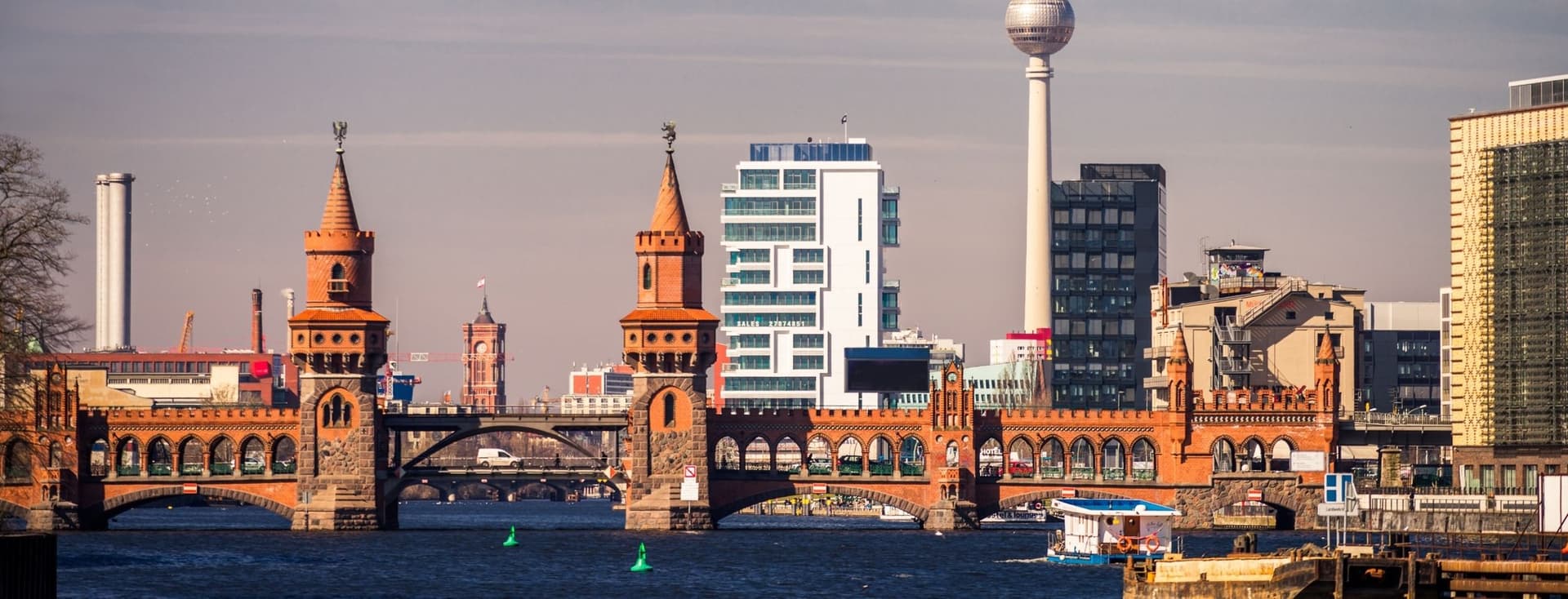
Located between Warschauer Straße, Frankfurter Allee, and the banks of the Spree lies one of Berlin’s liveliest neighborhoods. Around Boxhagener Platz and Simon-Dach-Straße, a dense network of historic buildings, cafés, bars, and small shops lines the streets. During the day, many daily tasks are handled right in the immediate vicinity: short distances and a dense local retail scene characterize everyday life, while in the evening, restaurants and nightlife spots bring the streets to life.
Away from this, the northern neighborhood feels quieter and more focused on residential living. Wider streets and a slightly more open layout change the landscape, with ground-floor retail spaces taking a back seat. Along the Spree around Ostbahnhof, new buildings and workplaces are emerging, further developing the district and bringing about selective changes.
Living in Friedrichshain
Friedrichshain consists predominantly of single-person households. At just under 57 percent, the district is in line with the Berlin average. Two-person households trail far behind at 23 percent, and larger households are even rarer.
The age structure also paints a clear picture. The 30- to 50-year-old age group is particularly well-represented at around 42 percent, significantly higher than the Berlin and national averages. In terms of income, there is a wide range, with a clear concentration in the middle-income brackets.
Rents and Market Trends
Asking rents in Friedrichshain have risen significantly since 2020 and remain consistently above the Berlin average. Following the sharp increases, prices have stabilized at a high level.
The market for residential and commercial buildings is also showing signs of vitality. The significant rise through 2021 was followed by a correction. The market is now back on track. Demand varies noticeably within the district: areas with high foot traffic and successful mixed-use development ensure stable returns, while traditional residential neighborhoods are particularly attractive due to their long-term rental potential.
Neighborhood Context
The district is crisscrossed by several neighborhood preservation zones, including the Samariterviertel, the area around Boxhagener Platz, and parts of the Stralauer Kiez. The regulations limit alterations to existing buildings and set clear guidelines for modernization and repurposing. At the same time, they provide transparency for owners and stabilize the social fabric.
The area remains in flux. Around the Mediaspree, Ostbahnhof, and in the Nordkiez, new projects are emerging that supplement the existing stock with residential and commercial space. These include, among others, the LXK Campus at Ostbahnhof, a mixed-use quarter spanning approximately 61,200 m² with office, commercial, and some residential space.
Outlook
Friedrichshain remains a neighborhood with clear parameters. Demand is high, primarily driven by a young, international tenant base. At the same time, supply remains limited. The densely built-up stock of older buildings leaves little room for new construction, thereby strengthening the position of existing residential and commercial buildings. Developments around the Mediaspree and Ostbahnhof further enhance the area and improve the location’s quality.
At the same time, requirements are increasing: neighborhood preservation, tenancy law regulations, and permitting requirements set clear limits, while construction costs and the need for energy-efficient modernization make investments more challenging. Added to this are conflicts over land use in heavily frequented areas where residential, dining, and tourism sectors intersect closely.