
How to organise a move step by step: checklist, procedures and essential tips

Buying a home and applying for a mortgage can seem like a complex process, especially when you’re unfamiliar with the various documents the bank presents for you to sign. One of the most important is the FEIN for the mortgage.
The FEIN document is a key element that marks a turning point in the negotiation with the bank. In this article, we’ll explain what the FEIN in a mortgage is and everything you need to know about it: what it’s for, when it’s issued, and other frequently asked questions.
FEIN stands for Ficha Europea de Información Normalizada (European Standardised Information Sheet). It is a standardized document at the European level that transparently outlines the customized terms of the mortgage being offered by the bank.
This document makes it easier to compare different mortgage loans, helping you make the best possible decision. Since 2019, following the implementation of the new Real Estate Credit Law, banks are legally required to issue the FEIN, and it must be provided at no cost to the client.
The FEIN fulfills several functions for future mortgage holders:
It helps compare mortgages: Since all FEINs follow the same format, it’s easier to compare loan conditions.
It ensures transparency: All the data and conditions you need to know before signing your mortgage are included.
It provides legal certainty: Once issued, the bank cannot change the proposed conditions while the document remains valid.
It’s required to sign the mortgage: Without the FEIN, you cannot go to the notary or finalize the mortgage process.
The financial institution is required to provide you with the FEIN 10 calendar days (or 14 days in Catalonia) before signing the mortgage before a notary. During the preliminary notarial appointment, the notary must verify that the FEIN was delivered on time and that you understand it. To confirm this, they will conduct a brief test. After this step, the final deed is signed.
The FEIN is binding. It is issued once you’ve applied for a mortgage and the bank has approved your application. If the deed is not signed within those 10 days, the bank may change the mortgage conditions, which would require a new FEIN to be issued and the review process to start over.
The FEIN is not a schematic document, but a detailed one that includes all relevant and personalized information about your mortgage. Its purpose is to help you fully understand every detail before signing. Here's what it contains:
This section includes:
The name of the borrower(s): your personal details.
The name of the bank granting the mortgage loan.
The total amount of the mortgage.
The type of mortgage: fixed, variable, or mixed.
The loan term.
The loan’s supervisory authority, which in Spain is the Bank of Spain.
This section contains key information to help you understand how much you’ll pay for your mortgage:
The interest rates: the Nominal Interest Rate and the Annual Percentage Rate.
Opening fees.
Early cancellation fees.
Costs for early repayment or subrogation.
Potential discounts, for example, for direct deposit of your salary or purchasing additional products like insurance.
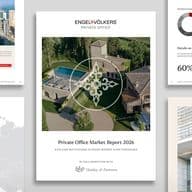
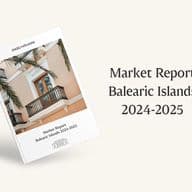
At Engel & Völkers, we prepare an annual report based on data collected by our agents, which also reflects interest rate trends and how they impact mortgages and the real estate market.
Having the support of an expert agent in the field will help you better understand the market and its trends, and also find the home of your dreams that fits your financial situation. Start your future today with our team.

Another key element included in the FEIN is the breakdown of expenses that arise when taking out a mortgage loan:
Property appraisal costs, if they are your responsibility.
Notary and land registry fees.
Taxes, such as the Stamp Duty (Impuesto de Actos Jurídicos Documentados) applicable in some regions.
A clear explanation of which costs you must cover and which will be paid by the bank—under the new Mortgage Law, most are now the bank’s responsibility.
In addition to everything mentioned above, the FEIN must also include:
A repayment schedule showing an estimate of your monthly payments.
The amount of principal repaid with each installment.
Simulated scenarios, such as what happens if the Euribor rises or if you repay the loan early.
Consequences of missing payments.
Your rights, including withdrawal rights and portability.
When the bank issues the FEIN, you may not agree with the loan and conditions offered. Here are some of the most frequently asked questions on this topic:
Yes. Once the FEIN has been issued, you can negotiate the terms and conditions of the loan with the financial institution if you’re not satisfied. Any changes must be reflected in a new FEIN, and you will again have 10 days to review and accept it.
As mentioned before, yes—but not directly. The bank must issue a new document and comply again with the 10-day waiting period.
Not necessarily. As explained, you can renegotiate with the bank. If an agreement is reached, the loan terms can be modified accordingly.
During the mortgage process, another document often appears alongside the FEIN, causing confusion: the FIPRE. Although both contain information about the loan, they are not the same.
FIPRE stands for Ficha de Información Precontractual, or Pre-contractual Information Sheet. It is a general and non-binding document that banks provide at the beginning of the mortgage process, before reviewing your financial profile.
The purpose of the FIPRE is to inform you about the standard conditions of mortgage loans. In other words, it’s a non-personalized document that outlines the general features of the mortgage products offered by the bank.
At Engel & Völkers, we work with over a hundred credit institutions to help you find the mortgage solution that best suits your needs. Get in touch with our team and let us guide you through the home buying process.
In addition to the FEIN, the bank must also provide you with another document at the same time: the FIAE, which stands for Ficha de Advertencias Estandarizadas, or Standardized Warning Notice.
This document outlines the key risks involved in accepting and signing the mortgage. Its purpose is to inform you of the possible consequences of failing to comply with the loan conditions or if those conditions change. It includes warnings about:
The risk of interest rate increases if you have a variable or mixed mortgage.
The presence of floor or cap clauses, if applicable.
Possible penalties for early repayment.
A warning about the risk of losing your property in the event of non-payment.
With the FIAE, the bank promotes transparency and ensures you understand the full implications of signing the mortgage agreement.
As you can see, the FEIN is a crucial document in any mortgage process. It contains essential information about the loan terms. Understanding the FEIN means understanding your mortgage—and accepting the conditions the bank offers for purchasing your new home.
At Engel & Völkers, we know how important it is to find the home of your dreams, which is why we guide and support you throughout the entire process. Contact our team today and start your home search with us.
You may also be interested in
&w=1920&q=75)


&w=1920&q=75)


&w=1920&q=75)


FOR MORE INFORMATION



Engel & Völkers Spain
Avenida Diagonal 640, 6B
08017 Barcelona, España
Tel: +34 900 747 281