Fuencarral-El Pardo, Madrid, Community of Madrid, Spain
Unique detached house in Mirasierra
Price
€3,500,000
- 5 Bedrooms
- 6 Bathrooms
- ~787 m² Total surface
- ~1,072 m² Plot surface
The new GG website: Inspiring personalities, extraordinary places and exceptional properties Discover now

The most important aspect when decorating your home, to make it as personal and aligned with your goals as possible, is to stay true to your tastes. Although decorators and influencers may now be highly inspirational in providing ideas, you are the one who must reflect your own personality in every room. In this article, we will focus on how to combine the colours of the walls, furniture, bed linens, decorative objects, flooring, curtains, and more.
A proper combination of colours is one of the key components in achieving a perfect look and a stylish interior design.
Complementary colours are those that are located opposite each other on the colour wheel. Their combination creates a very lively and energetic effect, especially when using saturated tones. This technique is ideal for creating strong contrasts, adding dynamism and vitality to any space.
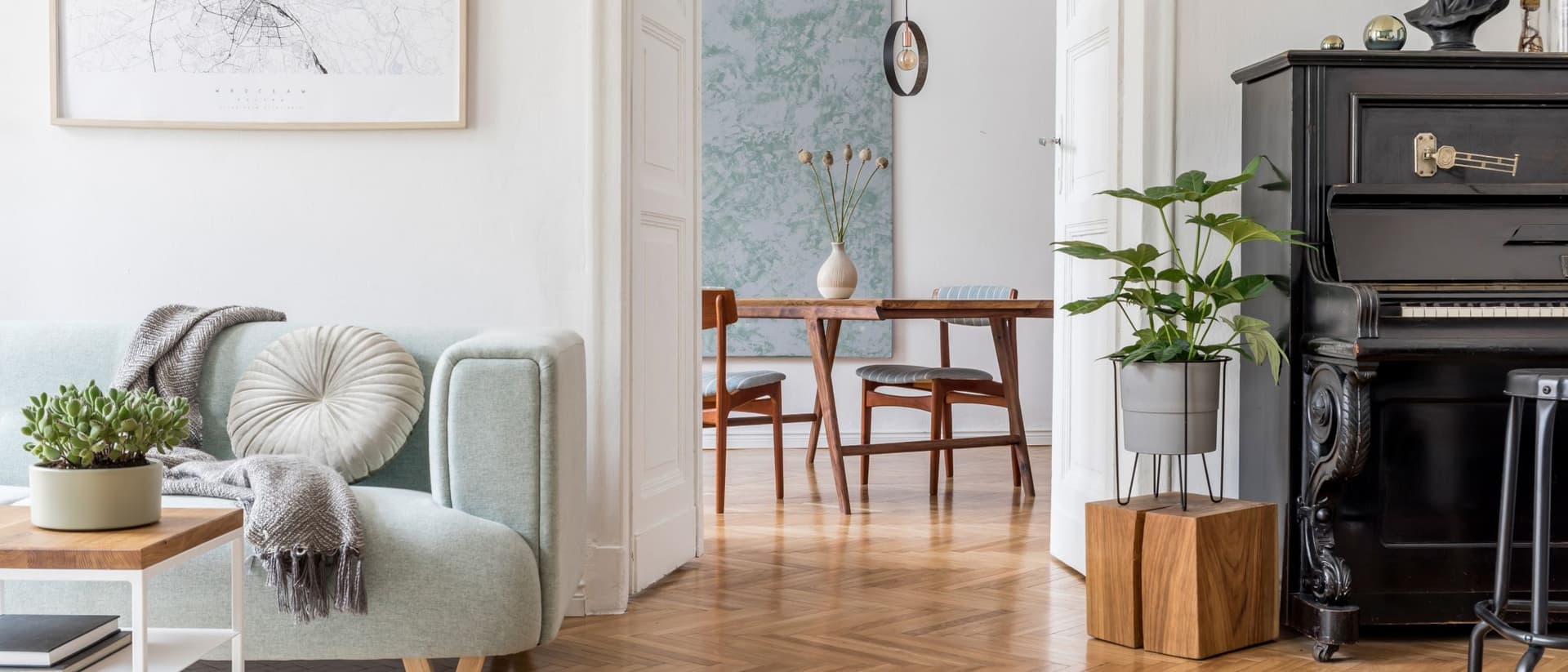
A triadic colour scheme involves combining three colours that are equally spaced from one another on the colour wheel. This combination provides strong contrast without disrupting the overall harmony of the space. While triadic colours are typically associated with vibrant tones, even pale and unsaturated shades can create a vibrant and balanced atmosphere.

Analogous colours are those that sit next to each other on the colour wheel. In other words, they are the neighbouring colours which share a common hue. This combination is also known as a monochromatic scheme. The analogous colour scheme creates a gentle and harmonious effect, making it ideal for spaces where you want to achieve a relaxing and comfortable atmosphere.

The tetradic colour scheme involves one base colour, two additional colours, and one that serves as an accent. This combination allows you to play with a broad and balanced colour palette, generating interesting contrasts and adding depth to the space without losing cohesion.
PROPERTIES IN MIRASIERRA
Fuencarral-El Pardo, Madrid, Community of Madrid, Spain
Price
€3,500,000
Fuencarral-El Pardo, Madrid, Community of Madrid, Spain
Price
€3,195,000
Fuencarral-El Pardo, Madrid, Community of Madrid, Spain
Price
€2,750,000
You may also be interested in

&w=1920&q=75)
&w=1920&q=75)


Contact provider
Page content provided by: Egone Consulting, S.L.U.
License partner of Engel & Völkers Franchise and Trademark GmbH