
How to organise a move step by step: checklist, procedures and essential tips

Spain's real estate market enters 2026 in a new stage of maturity, characterised by greater market segmentation, changing buyer profiles and sustained price pressure in the country's most sought-after locations.
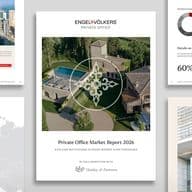
According to the latest Engel & Völkers 2025 Market Report, based on data collected by our real estate advisors, the sector is evolving into a far more complex landscape where it is no longer possible to speak of a single national market. Instead, Spain is increasingly defined by multiple local markets, each with its own dynamics.
Within this environment, factors such as limited housing supply, the continued expansion of the prime segment and the rise of wealth-driven buyers are reshaping the market. For buyers, sellers and investors alike, understanding these trends is no longer simply useful—it is essential for making informed decisions.
Table of Content
How Spain's real estate market is evolving in 2025–2026
Market polarisation: A new reality for Spanish real estate
House prices in 2025–2026: Continued growth, but at a more moderate pace
The rise of the prime segment and a new definition of luxury
A wealth-driven buyer: More selective and increasingly strategic
What buyers should consider in 2026
What sellers should consider in 2026
Outlook for Spain's real estate market in 2026
Frequently asked questions about Spain's real estate market in 2026
Spain's real estate market recorded a steady recovery throughout 2025, supported by improved financing conditions and sustained demand from both domestic and international buyers.
The stabilisation of the Euribor and improved access to mortgage financing have stimulated lending activity, leading to a significant increase in completed transactions. At the same time, residential sales exceeded 600,000 transactions, highlighting the strength of buyer demand despite interest rates remaining relatively high.
However, this growth continues to take place against a backdrop of limited housing supply, particularly in established locations where the shortage of available properties continues to put upward pressure on the market.
One of the defining concepts of today's market is territorial polarisation. In practice, this means that Spain's property market is increasingly divided into highly dynamic, high-value locations and more stable, slower-moving markets. These differences exist not only between autonomous regions but also between neighbourhoods within the same city.
Spain no longer behaves as a single, homogeneous property market. Instead, it has evolved into a collection of micro-markets where each city—and often each individual district—has its own patterns of demand, pricing and housing stock.
This growing polarisation is reflected in price differences of more than 70% between the country's highest- and lowest-priced regions, highlighting the widening gap between prime and secondary markets.
In practical terms, this means:
Major cities and premium coastal destinations continue to experience the strongest demand pressure.
Mid-tier markets are showing signs of stabilisation.
Property decisions increasingly require detailed local market analysis rather than broad national assumptions.
House prices have remained one of the defining features of Spain's residential market over recent years.
According to our latest market report, residential property prices continued to rise significantly throughout 2025, driven by strong buyer demand and limited housing supply. However, growth is expected to moderate during 2026 as the market gradually moves towards greater stability and selectivity.
The latest figures show that average house prices increased by more than 12% year-on-year, largely as a result of sustained demand competing for a limited stock of available homes.
This trend is particularly evident in:
Madrid, where property prices have reached record highs.
The Balearic Islands and the Costa del Sol, where international demand remains exceptionally strong.
Spain's major cities, where well-located properties continue to be absorbed rapidly by the market.
Looking ahead to 2026, however, the market is expected to move towards a more balanced phase, with slower price growth and a healthier relationship between supply and demand, although a widespread correction in property values is not anticipated.

The prime residential sector continues to establish itself as one of the key drivers of Spain's real estate market.
Growth in the prime segment is being fuelled by both international buyers and high-net-worth individuals, with demand centred on exceptional properties in exclusive locations that combine quality, sustainability and lifestyle.
This expansion is not driven solely by overseas demand. It also reflects an evolving definition of luxury, which today extends well beyond location and property size alone.
According to the report, today's concept of luxury increasingly incorporates factors such as:
Privacy.
Technology.
Wellbeing and quality of life.
At the same time, the geography of Spain's prime market continues to expand beyond traditional destinations such as Madrid and Marbella towards emerging luxury markets along the Costa Blanca and in northern Spain.
Another of the market's most significant developments is the evolution of the buyer profile.
Today's buyer in Spain's 2025–2026 real estate market is typically wealth-driven, financially stronger and less dependent on mortgage financing, resulting in more strategic and selective purchasing decisions.
In prime locations, more than 40%of transactions are completed without financing, highlighting the growing importance of this buyer profile.
This shift has several implications:
Higher expectations regarding property quality.
More rational and carefully considered purchasing decisions.
Lower sensitivity to mortgage conditions and interest rates.
For the market as a whole, this represents a move towards a more professional environment in which the intrinsic value of the property and its location play an even greater role.
According to data collected by our real estate advisors, anyone planning to buy property in 2026 should focus on location, asset quality, energy efficiency and long-term potential, as limited housing supply is expected to continue shaping the market in the most sought-after areas.
Key considerations for buyers include:
Prioritise established locations or areas with genuine growth potential: Not every location performs equally. In a polarised market, well-positioned properties—whether in city centres, prime districts or areas with established urban development—are more likely to retain their value over time.
Assess the quality of the property beyond its asking price: Today's buyers place greater value on well-designed homes offering practical layouts, natural light, outdoor space and quality amenities. Construction quality has a direct impact on future liquidity.
Evaluate energy efficiency and sustainability: Energy-efficient homes are becoming increasingly desirable. This not only improves comfort and reduces running costs but also enhances future resale value and long-term demand.
Understand the local micro-market: Two neighbourhoods within the same city can perform very differently. Analysing local pricing, average selling times and buyer demand is essential.
Consider financing conditions without relying solely on them: Although mortgage conditions have improved, today's market is less leveraged than in previous years. Buyers should assess their financial capacity with a long-term perspective.
Clarify the intended use of the property: Buying a primary residence requires different criteria from purchasing an investment property, where factors such as rental demand, liquidity and expected returns become increasingly important.
Take a long-term view rather than pursuing short-term opportunities: Today's buyers are more strategic, focusing on assets capable of preserving value rather than speculative opportunities.
Seek professional advice in increasingly complex markets: In a highly segmented environment, local expertise and access to high-quality opportunities can make a significant difference.
In highly competitive markets, making informed, data-driven decisions with a long-term perspective has never been more important.
Successfully selling property in 2026 requires realistic pricing, strategic presentation and an approach tailored to a buyer who is increasingly informed, selective and demanding.
Key considerations for sellers include:
Set a price that reflects current market conditions rather than expectations: In a more selective market, overpricing can significantly extend selling times and reduce initial buyer interest, which is often critical to achieving the best outcome.
Understand where the property sits within its market segment: Selling a mid-market property requires a different pricing, marketing and sales strategy than selling a prime asset.
Invest in professional presentation: Buyers' perception of quality directly influences purchasing decisions. Professional photography, home staging and carefully crafted marketing materials can significantly improve results.
Adapt to a better-informed buyer: Today's purchasers compare multiple properties, analyse pricing and expect transparency throughout the process. Clear information and professional guidance build confidence and accelerate decision-making.
Differentiate the property within a competitive market: Features such as location, energy efficiency, design and additional amenities should be clearly communicated to highlight the property's strengths.
Optimise the timing of the market launch: The timing of the listing, launch strategy and early market visibility all have a direct influence on the success of the sale.
Remain flexible during negotiations: Although demand remains strong in many areas, buyers are negotiating more actively than before. Preparing for different negotiation scenarios can improve outcomes.
Take advantage of strong demand, but with the right strategy: In highly competitive markets, rapid sales remain achievable—but only when the property is correctly positioned.
Work with experienced professionals: In an increasingly sophisticated market, local market expertise helps optimise both pricing strategy and selling times.
Selling a property today involves far more than simply listing it for sale. It requires a carefully designed strategy tailored to the property, the local market and today's buyer profile.
Spain's residential property market continues to evolve towards a more segmented, professional and selective model.
The market still shows signs of a structural imbalance between supply and demand, particularly within the new-build sector, and this imbalance is expected to continue shaping market performance in the coming years.
Growth is expected to continue, although at a more moderate and sustainable pace, with location, property quality and buyer profile becoming the main factors influencing market performance.
Within this environment, the advisory approach provided by our real estate experts becomes increasingly valuable, combining detailed local market analysis, long-term thinking and data-driven decision-making—essential elements in an increasingly complex market.
Contact our team today and let us help you successfully buy or sell your property with expert guidance tailored to your needs.
What is the main trend shaping Spain's real estate market in 2026?
The defining trend is market polarisation, with increasingly significant differences between locations and a growing emphasis on local market dynamics.
Will house prices continue to rise?
Yes, although at a slower pace than in 2025, with future growth largely determined by the availability of housing supply.
Who is buying property in Spain?
An increasing proportion of buyers are wealth-driven purchasers with greater financial capacity and less reliance on mortgage financing.
What is the prime segment?
The prime segment refers to high-value residential properties located in exclusive areas, attracting strong demand from both domestic and international buyers.
Is now a good time to sell property?
That depends on both the location and the type of property. However, market conditions remain favourable overall, particularly in well-established and highly sought-after areas.
You may also be interested in
&w=1920&q=75)


&w=1920&q=75)


&w=1920&q=75)


FOR MORE INFORMATION



Engel & Völkers Spain
Avenida Diagonal 640, 6B
08017 Barcelona, España
Tel: +34 900 747 281