14th arrondissement, Paris, Île-de-France, France
Characterful house to renovate with garden in the heart of a 14th-century Parisian village.
Price
€2,940,000
- 5 Bedrooms
- 2 Bathrooms
- ~259 m² Living area
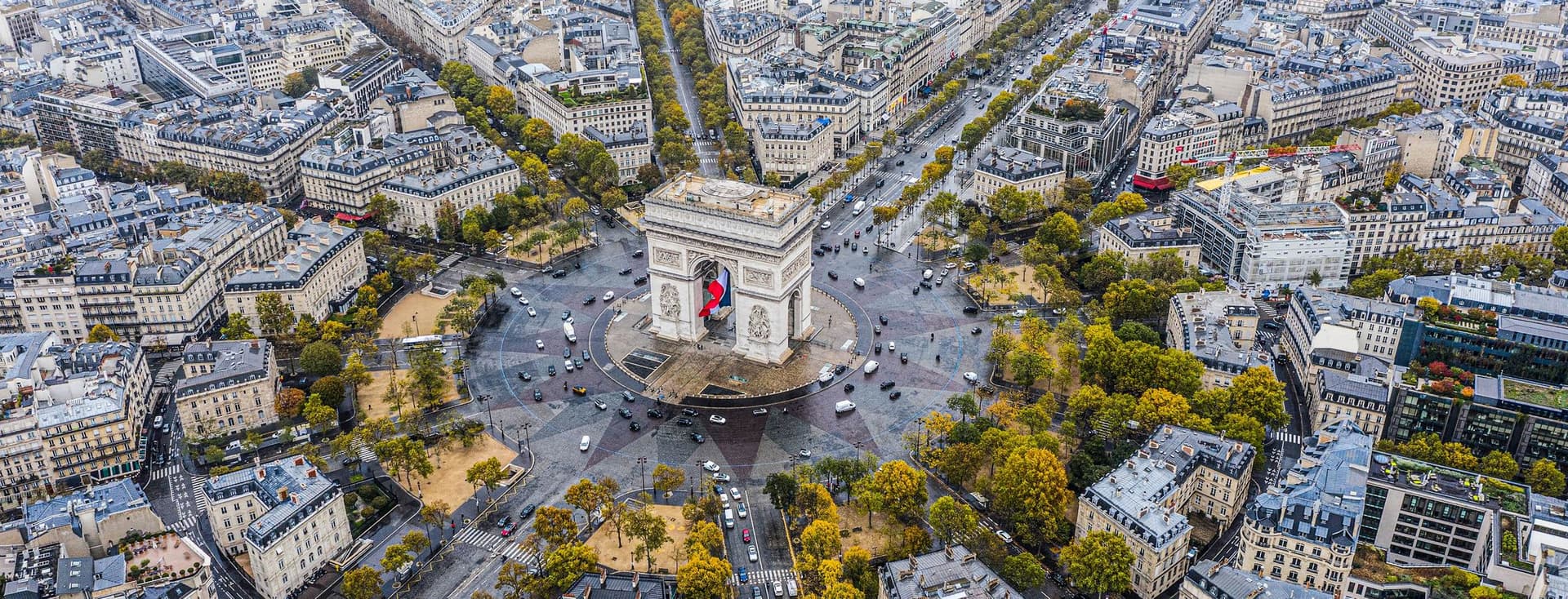
Located in Paris’s 8th arrondissement, the Golden Triangle is one of the capital’s most prestigious neighbourhoods. Defined by Avenue Montaigne, Avenue George-V and the Champs-Élysées, this exceptional area covers around 12 hectares and brings together haute couture houses, luxury hotels, landmark architecture, fine dining and some of the most sought-after properties in Paris.
From the arrival of Parisian high society in the west of the capital in the 19th century to the establishment of the world’s leading luxury brands, the Golden Triangle has built an identity closely associated with Parisian elegance. Its residential market reflects this heritage, with exceptional apartments and private mansions attracting an international clientele.
Table of Content
History of the Golden Triangle: From the 1848 Revolution to the Temple of Luxury
Paul Poiret, 1909: The couturier who helped create the Golden Triangle
From Dior in 1947 to LVMH: A century of prestige
Architecture and Heritage: A Century of Splendour
Fashion in the Golden Triangle: The Global Capital of Haute Couture
Art de Vivre: Luxury Hotels, Gastronomy and Culture
Living in the Golden Triangle: Lifestyle and Amenities
Real Estate in the Golden Triangle: One of Paris’s Most Exclusive Markets
Buying in the Golden Triangle with Engel & Völkers
The history of the Golden Triangle is closely linked to the transformation of Paris during the 19th century. Following the Revolution of 1848, part of the Parisian bourgeoisie gradually moved away from the historic centre towards the western districts of the capital.
The development of the area around the Champs-Élysées coincided with the major urban transformations initiated under Napoleon III and Baron Haussmann. Wide avenues, prestigious residences and elegant private mansions progressively changed the character of western Paris.
This evolution established the foundations of the neighbourhood that would later become the Golden Triangle: a residential area designed around spacious avenues, prestigious architecture and proximity to the capital’s cultural and political centres.
Fashion became one of the defining forces behind the Golden Triangle in the early 20th century.
In 1909, couturier Paul Poiret established his fashion house on Avenue d’Antin, now Avenue Franklin-D.-Roosevelt. His presence helped establish the area as a centre for haute couture and luxury.
Other designers soon followed. Madeleine Vionnet opened her house at 50 Avenue Montaigne in 1922, further reinforcing the avenue’s role in the history of French fashion.
The post-war period marked another decisive chapter. In 1947, Christian Dior presented his New Look from Avenue Montaigne, transforming both the history of fashion and the international image of the avenue.
Other major houses followed, including Givenchy, Yves Saint Laurent, Chanel and Louis Vuitton. Today, Avenue Montaigne remains synonymous with haute couture and luxury.
The presence of LVMH at 22 Avenue Montaigne further confirms the area’s status as one of the world’s major luxury destinations.
14th arrondissement, Paris, Île-de-France, France
Price
€2,940,000
8th arrondissement, Paris, Île-de-France, France
Price
€640,000
8th arrondissement, Paris, Île-de-France, France
Price
€895,000
7th arrondissement, Paris, Île-de-France, France
Price
€1,397,000
4th arrondissement, Paris, Île-de-France, France
Price
€1,380,000
6th arrondissement, Paris, Île-de-France, France
Price
€1,100,000
8th arrondissement, Paris, Île-de-France, France
Price
€1,900,000
7th arrondissement, Paris, Île-de-France, France
Price
€1,350,000
7th arrondissement, Paris, Île-de-France, France
Price
€2,135,000
The architectural identity of the Golden Triangle is strongly influenced by the Haussmannian transformation of Paris.
Elegant façades, wrought-iron balconies, large windows, mouldings, fireplaces and high ceilings are characteristic features of many residential buildings. Private mansions are also found throughout the area, offering a different architectural expression from the traditional Parisian apartment.
For buyers, these architectural details are more than aesthetic features. Ceiling height, natural light, original parquet flooring, fireplaces and preserved decorative elements can significantly influence the character and value of an exceptional property.
The neighbourhood also contains examples of Art Deco and more unusual architectural features.
The building at 39 Avenue George-V is known for its trompe-l’œil façade, while the Hôtel Lalique reflects the close relationship between luxury craftsmanship and architecture.
The Maison de la Païva, on the Champs-Élysées, is another remarkable example of the architectural heritage associated with the district.
The Théâtre des Champs-Élysées, designed by Auguste Perret and inaugurated in 1913, is another major architectural landmark.
Together with the Grand Palais and Petit Palais, it contributes to the exceptional concentration of cultural and architectural heritage surrounding the Golden Triangle.
The relationship between the Golden Triangle and haute couture began more than a century ago.
Paul Poiret established his house on Avenue d’Antin in 1909, while Madeleine Vionnet opened at 50 Avenue Montaigne in 1922. Their presence helped establish the avenue as a major destination for French fashion.
Christian Dior’s 1947 New Look marked a turning point. Presented from his Avenue Montaigne fashion house, the collection became an international symbol of post-war French elegance.
The avenue subsequently became increasingly associated with the world’s leading couture houses and luxury brands.
Givenchy, Yves Saint Laurent, Chanel and Louis Vuitton have all contributed to the international reputation of the neighbourhood.
The result is an unusual concentration of historic fashion houses and contemporary luxury boutiques within a remarkably small area.
For visitors and residents alike, fashion is not simply a commercial activity here. It is part of the neighbourhood’s cultural identity.
22 Avenue Montaigne is now home to LVMH’s headquarters, reinforcing the avenue’s importance within the global luxury industry.
The address symbolises the continuity between the area’s historic role in haute couture and its current position at the heart of the international luxury economy. 13 Brief _ triangle d’or paris
14th arrondissement, Paris, Île-de-France, France
Price
€2,940,000
8th arrondissement, Paris, Île-de-France, France
Price
€640,000
8th arrondissement, Paris, Île-de-France, France
Price
€895,000
7th arrondissement, Paris, Île-de-France, France
Price
€1,397,000
4th arrondissement, Paris, Île-de-France, France
Price
€1,380,000
6th arrondissement, Paris, Île-de-France, France
Price
€1,100,000
8th arrondissement, Paris, Île-de-France, France
Price
€1,900,000
7th arrondissement, Paris, Île-de-France, France
Price
€1,350,000
7th arrondissement, Paris, Île-de-France, France
Price
€2,135,000
The Golden Triangle is home to some of Paris’s most prestigious hotels and palaces.
The Plaza Athénée on Avenue Montaigne, the Four Seasons Hotel George V, the Prince de Galles and Fouquet’s on the Champs-Élysées all contribute to the district’s reputation for exceptional hospitality.
Their presence also reinforces the area’s appeal to an international clientele seeking a Parisian lifestyle centred around luxury, gastronomy and culture
Fine dining is another defining element of the Golden Triangle.
The neighbourhood and its immediate surroundings bring together renowned chefs and restaurants, including Alain Ducasse and Yannick Alléno, alongside a broad selection of international dining destinations.
This concentration of high-end gastronomy is part of what makes the area particularly attractive for residents looking for a lifestyle that combines convenience and exclusivity.
The Golden Triangle also offers direct access to art and entertainment.
Artcurial contributes to the area’s position within Paris’s art market, while the Crazy Horse and Théâtre Marigny provide internationally recognised cultural and entertainment venues.
The neighbourhood therefore combines residential prestige with an unusually dense cultural offering.
Despite its dense urban environment, the Golden Triangle is close to several green and open spaces.
The Jardins des Champs-Élysées provide an important green setting, while the Seine offers a natural extension to the neighbourhood and a particularly attractive environment for walking.
Free, confidential and non-binding
Receive your digital valuation instantly
Based on data by Engel & Völkers
The neighbourhood is particularly well connected by public transport.
Residents have access to Franklin D. Roosevelt, George V and Alma-Marceau metro stations, while Charles-de-Gaulle–Étoile provides access to the RER network.
The central location also makes many destinations in the capital accessible on foot.
Several schools are located in or around the Golden Triangle, including Eurécole, École Marbeuf, Bilingual Montessori and Saint-Pierre de Chaillot.
The area can therefore accommodate different residential profiles, including international families looking for an established address in central Paris.
Although the Champs-Élysées and Avenue Montaigne are among the busiest and most recognisable streets in Paris, the residential streets and private addresses behind them offer a markedly quieter atmosphere.
This contrast is one of the neighbourhood’s particular strengths: residents benefit from immediate access to the city’s major luxury destinations while retaining a degree of residential privacy.
The Golden Triangle is among the most expensive residential markets in Paris.
Average prices can range from approximately €20,000 to €30,000 per sq. m., while exceptional properties can reach significantly higher levels depending on their address, floor, views, architectural features, renovation and services.
Price alone therefore provides an incomplete picture of the market. Within such a limited geographical area, the value of two properties can differ considerably according to their precise location and characteristics.
The residential market includes large Haussmannian apartments, private mansions and high-end contemporary residences.
Exceptional apartments can feature reception rooms, multiple bedrooms, balconies, terraces, fireplaces, original decorative elements and views over some of Paris’s most recognisable landmarks.
Private mansions remain particularly rare and represent one of the most exclusive segments of the market.
Purchasers approach the Golden Triangle with different objectives.
For some, the neighbourhood represents a prestigious primary residence in the heart of Paris. For others, it provides an ideal pied-à-terre, combining an exceptional location with immediate access to culture, fashion and gastronomy.
The area can also attract investors seeking a scarce asset in one of the capital’s most established luxury markets. The appropriate property will depend on the intended use, holding strategy and buyer profile.
The Golden Triangle has a particularly strong international appeal.
Its reputation, central location, concentration of luxury brands and scarcity of exceptional properties make it familiar to buyers from around the world.
For international purchasers, the neighbourhood can offer both a Parisian lifestyle and a globally recognised address.
The Golden Triangle requires detailed knowledge of its micro-markets. Differences between Avenue Montaigne, Avenue George-V, the Champs-Élysées and the smaller streets surrounding them can have a significant impact on a property’s positioning.
Engel & Völkers combines local expertise with an international network to support buyers and sellers throughout their real estate projects.
The Golden Triangle is located in Paris’s 8th arrondissement and is traditionally defined by Avenue Montaigne, Avenue George-V and the Champs-Élysées. The area covers approximately 12 hectares and includes some of the capital’s most prestigious residential, fashion and cultural addresses. 13 Brief _ triangle d’or paris
Prices generally range from around €20,000 to €30,000 per sq. m., while exceptional properties can reach significantly higher levels depending on their location, characteristics, condition and rarity.
The name refers to the triangular geographical area formed by Avenue Montaigne, Avenue George-V and the Champs-Élysées. Its association with haute couture, luxury brands, palaces and exceptional real estate has reinforced the idea of a “Golden Triangle” at the heart of Paris.
The Golden Triangle refers to the broader area between Avenue Montaigne, Avenue George-V and the Champs-Élysées. The “Little Golden Triangle” describes a smaller sector around Place François-Ier and the Seine, known for particularly prestigious addresses. 13 Brief _ triangle d’or paris
You may also be interested in
&w=1920&q=75)
Contact


Engel & Völkers France
170 Rue du Faubourg Saint-Honoré
75008 Paris
Tel: +33145643030