Alcácer do Sal, Setubal, Portugal
INVESTMENT: Tourism Project
Price on request
- ~5,000,000 m² Plot surface
Learn how to increase the value of homes before they go on the market to attract more buyers and maximize the property's selling price.
Putting a home on the market without preparing it first is one of the most common and most costly mistakes a seller can make. The difference between a property that enters the market well positioned and one that arrives as it stands can translate into tens of thousands of euros in the final sale price and weeks or months of difference in the time it takes to sell.
The good news is that adding value to a home before selling does not necessarily require a complete renovation or a major investment. Many of the interventions with the greatest impact on a property's perceived value are relatively simple and accessible. What they require is method, market knowledge and a clear understanding of what buyers value most at this moment in the market.
This article explains how to prepare a home for the market strategically, which interventions deliver the best return, how to present the property to maximise buyer interest and how the right professional support makes the difference between a good sale and an exceptional one.
Table of Content
Understanding what the market values before investing in any works
The first impression starts before stepping through the door
Interior interventions with the greatest return
Decluttering and depersonalisation: preparing the home to belong to someone else
Home staging: when presentation is a professional strategy
The importance of photography and digital presentation
Documentation in order: avoiding delays that cost deals
The right price: neither above nor below the market
The value of having the right partner from day one
Frequently asked questions
The first mistake many sellers make is investing in improvements based on personal taste rather than what the market is looking for. A kitchen with high-end finishes that does not fit the profile of the area, or an extension that does not align with local demand trends, may not add the value the seller expects, or worse, may actually deter certain buyer profiles.
Before making any decision about works or improvements, it is essential to understand what active buyers in the area are looking for. Which configurations are most in demand? What characteristics distinguish properties that sell quickly from those that linger? What is the local market ceiling for that type of home?
These answers are not found on property portals or in conversations with neighbours. They are found in the analysis of real transaction data, in knowledge of recent viewings in the area and in reading the behaviour of buyers who are actively searching. This is precisely the kind of market intelligence that a specialist team like Engel & Völkers puts at the service of its clients before any sale decision is made.
Requesting a professional property valuation before defining any value-adding strategy is the correct starting point. A rigorous valuation tells the seller where the property's current value stands, which factors are limiting it and where the real improvement opportunities with guaranteed returns lie.
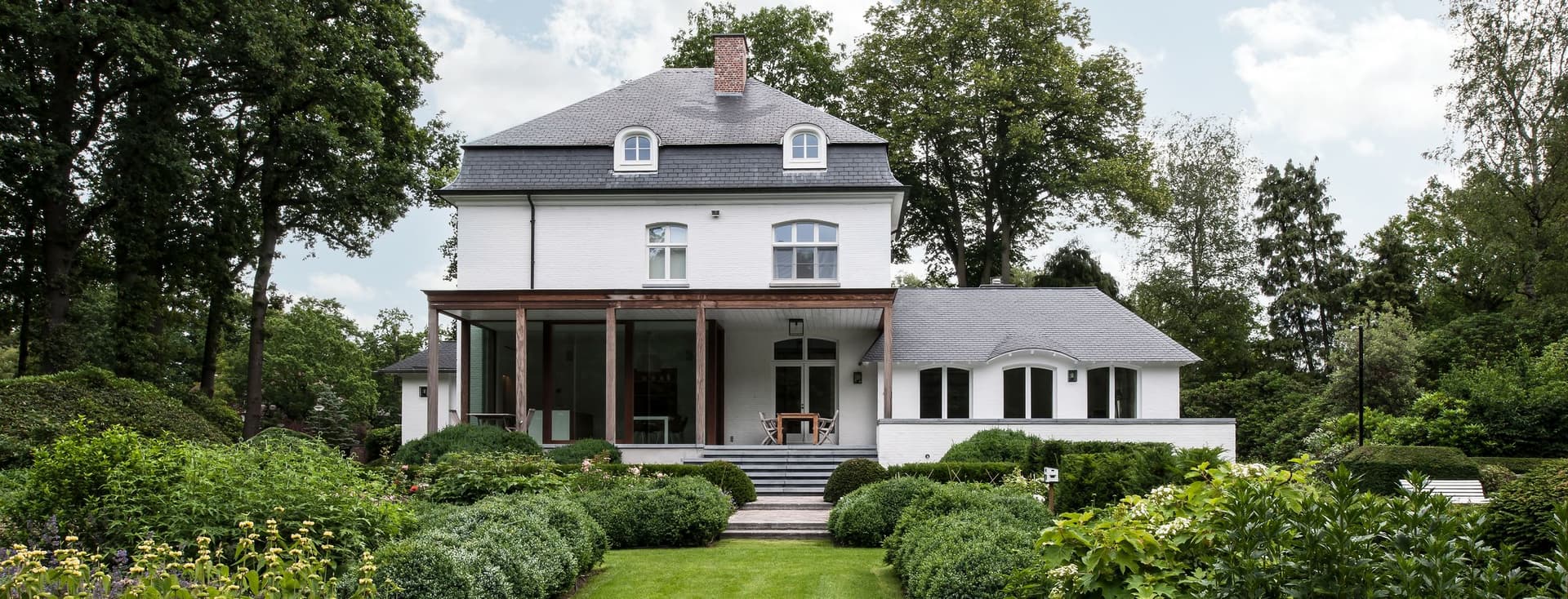
For a buyer, the experience of visiting a home begins long before crossing the threshold. The approach to the property, the state of the garden, the facade, the gate, the access path — all of this creates a first impression that will colour the perception of everything that follows. A property with a well-maintained exterior predisposes the buyer positively. A neglected exterior immediately raises doubts about the general state of the property, even if the interior is immaculate.
Investment in curb appeal, the term for a property's attractiveness as seen from the street, is consistently one of the highest-returning in terms of perceived value. Painting or cleaning the facade, tending the garden, replacing the gate or fencing, repairing the access path and ensuring the exterior lighting is functional are relatively low-cost interventions that have a disproportionate impact on first impressions.
The state of the garden deserves particular attention. A well-maintained garden, even a simple one, conveys to the buyer the idea that the house has been cared for. A neglected garden, on the other hand, creates the suspicion that the neglect extends inside. If the garden has potential but has been overlooked, a deep clean, pruning, fertilising and the strategic replanting of a few plants can completely transform the perception of the exterior at very reasonable cost.
Inside, the interventions with the greatest impact on perceived value are concentrated in a few specific areas. Market experience shows that buyers make emotional decisions very quickly when they visit a home, and that certain rooms carry disproportionate weight in that decision.
The kitchen is, in virtually all market studies, the room that carries the most weight in the purchase decision. A dated or poorly maintained kitchen can drive away buyers who would otherwise be interested in everything else. A renovated or simply well-presented kitchen can be the decisive argument for closing a deal.
The good news is that renovating a kitchen does not necessarily mean replacing everything. In many cases, replacing the cupboard doors and handles, updating the worktop, renewing the tap and the most visible appliances and painting the walls can completely transform the appearance of the kitchen at a fraction of the cost of a full renovation.
When the structure of the kitchen is in good condition but the finishes are outdated, a well-executed cosmetic update typically delivers a return far above its cost, particularly in markets where demand is high and buyers have multiple options.
Bathrooms are the second area with the greatest impact on the perceived value of a home. Unlike the kitchen, where a cosmetic renovation can be very effective, in bathrooms buyers tend to be more sensitive to the overall state of the sanitary fittings, the waterproofing and the finishes.
Replacing dated taps, renewing the silicone sealant, cleaning and regrouting the tiles, updating mirrors and accessories and ensuring the lighting is adequate are low-cost interventions that significantly elevate the perception of quality. When the sanitary fittings are in poor condition or the waterproofing is compromised, the intervention goes deeper, but it is almost always worth the investment given the impact on the sale value.
Painting the house before selling is probably the single intervention with the best cost-to-impact ratio of all. A fresh coat of paint on clean walls in neutral tones completely transforms the space, making it feel brighter, more spacious and more appealing to a wider range of buyers.
Neutral tones, whites, light beiges and soft greys, are the safest choice because they allow the buyer to imagine living in the space without the existing decoration interfering with that projection. Very specific or heavily personalised colours can create a mental obstacle for buyers with different tastes.
The state of the floors is one of the first elements buyers assess when they enter a room. Floors in poor condition, whether cracked, stained, with dirty grouting, worn or scratched wood, create an immediate negative impression that is very difficult to overcome.
Intervention on floors depends greatly on the material and condition. Wood in good structural condition but with a worn finish can be sanded and re-varnished at a cost far below replacement. Ceramic with dirty or stained grout can be transformed with a professional deep clean and regrouting. When the floor is genuinely in poor condition, replacement is almost always advisable, because the visual impact is too negative to be overlooked by buyers.
One of the most overlooked aspects of preparing a home for sale is the depersonalisation of the space. A house full of personal objects, family photographs, collections, memories and the seller's personality is a house the buyer finds it difficult to imagine as their own.
The depersonalisation process is not a value judgement about the seller's tastes. It is a sales strategy. The goal is to create a space that is as neutral and appealing as possible to the greatest number of buyers, allowing each one to project their own life onto the space without interference.
This means removing photographs and personal objects from walls and surfaces, reducing the amount of furniture so the space feels larger, organising cupboards and storage areas (buyers open them) and ensuring there are no strong or persistent odours that might create a negative impression.
A deep clean is non-negotiable. A home that smells fresh, that is impeccably clean and that is organised conveys a clear message to the buyer: this home has been well cared for. And that message carries value in the negotiation.
Home staging is the practice of professionally preparing a property for presentation to the market, with the goal of maximising its visual appeal and perceived value. It goes beyond cleaning and organising: it involves the strategic selection of furniture, decoration and lighting to create an environment that is both appealing in photographs and during in-person viewings.
In mature property markets such as the American or British, home staging is standard practice. In Portugal, it has been growing significantly, particularly in the mid-to-high value home segment, where the return on investment is most evident.
Industry studies consistently show that properties with professional home staging sell faster and closer to the asking price than properties with no preparation. The investment in home staging is typically recovered many times over in the sale.
For higher-value homes, professional home staging can be decisive. For mid-value homes, a more accessible version of the same principle, depersonalising, organising, lighting and decorating strategically with what already exists, can produce equally significant results.
More than 90% of home buyers begin their search online. The first time a buyer sees your property is not at a viewing, it is on the screen of a phone or computer. This means the photographs of the property are, literally, the first sales argument.
Low-quality photographs, poorly framed, with poor lighting or that fail to show the potential of the space, drive away potential buyers before they have had the opportunity to visit. Professional photographs that showcase every room, capture natural light and tell a story about the space generate far more enquiries and viewings.
Presentation videos and 360-degree virtual tours are increasingly valued complements, particularly for mid-to-high value homes and for international buyers who may not be able to visit in person at an early stage. A complete, high-quality digital presentation multiplies the property's exposure and increases the likelihood of attracting the right buyer.
The experienced property team at Engel & Völkers takes care of the entire digital presentation of the property, from professional photography to content creation for the distribution channels, ensuring every home enters the market with the best possible presentation.
One aspect frequently overlooked in preparing a home for sale is the state of the documentation. Documentary problems discovered at an advanced stage of the sale process can delay or even prevent deals that were practically closed, with financial and emotional consequences for all parties.
Checking in advance the status of the land registry, the property tax record, the occupation licence, the energy performance certificate and the property's tax situation is an investment of time that can prevent unpleasant surprises. If there are any irregularities, it is far better to discover them before entering the market than during an active negotiation.
The documents required for the sale of a property are more than a bureaucratic checklist: they are the guarantee that the process will run smoothly and without surprises. An experienced property consultant verifies this documentation from the outset and guides the seller through the steps needed to resolve any pending situation.
All the preparation of the property loses its impact if the entry price to the market is wrong. A price above market drives away qualified buyers from the start, accumulates time on the market and frequently results in a sale below the value that would have been achievable with correct positioning. A price below market, while it may accelerate the sale, represents a real loss of value for the seller.
The right price is not what the seller would like to receive, nor what a neighbour heard someone had asked for. It is the value that the current market, with the active buyers in that area at that moment, is willing to pay for that property in those conditions.
Determining this value precisely requires access to real transaction data, knowledge of the current demand profile and experience in similar property negotiations. It is work that requires method and information, and it has a direct impact on the financial outcome of the entire sale.
Selling a home is, for most people, one of the most significant financial transactions of their lives. The value at stake is high, the process is complex and the decisions made in the first weeks, from property preparation to price positioning, largely determine the final outcome.
The Engel & Völkers Market Study confirms that well-prepared properties, well positioned in terms of price and supported by an effective marketing strategy, consistently sell faster and at values closer to the asking price. It is not luck. It is method.
Having alongside a team that knows the market in depth, that understands what buyers are looking for, that handles the visual presentation of the property, that manages the documentary process and that conducts the negotiation with experience and data makes the difference between a satisfactory sale and a truly good one. If you are thinking of putting your home on the market, start with the right step: request a valuation and find out what Engel & Völkers can do for the sale of your home.
PROPERTIES IN PORTUGAL
Alcácer do Sal, Setubal, Portugal
Price on request
Vale do Lobo, Almancil, Faro District, Portugal
Price on request
Quinta do Lago, Almancil, Faro District, Portugal
Price on request
Centro Historico, Cascais, Lisbon, Portugal
Price
€22,000,000
Porto, Porto District, Portugal
Price on request
Albufeira, Faro District, Portugal
Price
€18,500,000
Faro, Faro District, Portugal
Price
€18,000,000
Carnaxide, Lisbon, Portugal
Price
€17,000,000
Quinta do Lago, Almancil, Faro District, Portugal
Price
€16,500,000
The answer depends on the type of works, the expected cost and the anticipated impact on the sale price. As a general rule, large-scale works are rarely fully recovered in the sale price and can unnecessarily delay entry to the market. What tends to deliver the best return are high visual-impact, relatively low-cost interventions: painting, deep cleaning, small repairs and targeted finish updates. The right decision always depends on the specific analysis of the property and the market it sits in, which makes prior consultation with an experienced professional almost indispensable. In some cases, lowering the price slightly is genuinely the best strategy; in others, an investment of a few thousand euros can return ten times that amount at sale.
The temptation not to disclose structural or technical problems is understandable but risky. In Portugal, the seller carries legal responsibility in cases of concealment of defects that the buyer could not have detected during a normal viewing. Beyond the legal risk, concealing defects is a strategy that frequently backfires: buyers carry out technical inspections, defects surface at an advanced stage of negotiation and the element of surprise amplifies the negative perception far beyond what the defect itself would warrant. The most effective approach is to proactively disclose any significant problem, present resolution estimates and adjust the price transparently. This honesty builds trust, prevents disputes and often allows deals to be closed more quickly.
Home staging is a service focused exclusively on preparing a property for sale: the goal is to maximise the space's appeal to the greatest possible number of buyers, typically through a neutral and appealing aesthetic that makes it easy for visitors to project their own lives onto the space. Interior design, by contrast, is a service focused on personalising a space for whoever will inhabit it, prioritising the specific tastes and needs of the client. For someone selling, home staging is the relevant service. An experienced home stager knows what works in photographs, how to showcase each room and how to create an environment that accelerates the purchase decision. It is not about decorating to the seller's taste, but about presenting the home in a way the market values.
The most reliable way to assess price alignment is to compare the property with similar homes sold recently in the same area, not with properties currently listed for sale. Prices on listings are asking prices, not sale prices; the difference can be significant and easily misleads. A professional valuation carried out by a consultant with access to real transaction data is the most precise way to obtain this reference. Additionally, how long similar properties spend on the market is a very revealing indicator: if comparable homes sell quickly and yours is sitting there, price is almost always the primary cause.
The impact of the energy performance rating on market value has been growing consistently in recent years and will continue to do so as European regulation advances in this area. A home with a good energy rating has lower running costs for whoever lives there, which is increasingly valued by buyers, especially younger ones. Conversely, a very low energy rating is beginning to be perceived as an implicit cost that reduces the property's attractiveness. Interventions such as installing insulation, replacing windows with double glazing or installing solar panels can improve the rating and add real value to the property. The cost-benefit of these improvements should be analysed case by case, but the general trend clearly favours improving energy efficiency before selling.
The ideal preparation time depends on the current state of the property and the scale of the interventions needed. For homes that require only deep cleaning, depersonalisation and minor repairs, two to four weeks are typically sufficient. For properties that need overall painting, kitchen or bathroom renovation, six to eight weeks of work plus drying and finishing time is prudent. For more significant interventions, such as space reconfigurations or exterior works, planning should begin three to six months in advance. A meeting with an experienced property consultant at the outset of this process allows a realistic preparation plan to be defined, the highest-return interventions to be prioritised and unnecessary investment to be avoided.
Homes with large pools and gardens have characteristics that amplify both the potential for value appreciation and the risk of value loss before sale. A clean pool with treated water, a good revetment and functional technical equipment is a powerful sales argument. A pool with green water, degraded revetment or faulty equipment can deter buyers and lead to significant price discounts. The garden should be well maintained, pruned and clean, but not excessively formal or with upkeep that appears too demanding for the buyer. The perception that a garden requires a great deal of time and maintenance cost can be an obstacle for certain buyer profiles. The balance between careful presentation and accessible naturalness is the objective.
You may also be interested in
&w=1920&q=75)








FOR MORE INFORMATION



Engel & Völkers Portugal
Av. da Liberdade 196, 7 andar
1250-096 Lisboa, Portugal
Tel: +351 210 200 490