Alcácer do Sal, Setubal, Portugal
INVESTMENT: Tourism Project
Price on request
- ~5,000,000 m² Plot surface
Find out what is drawing a growing number of national and international buyers to the Portuguese estate market
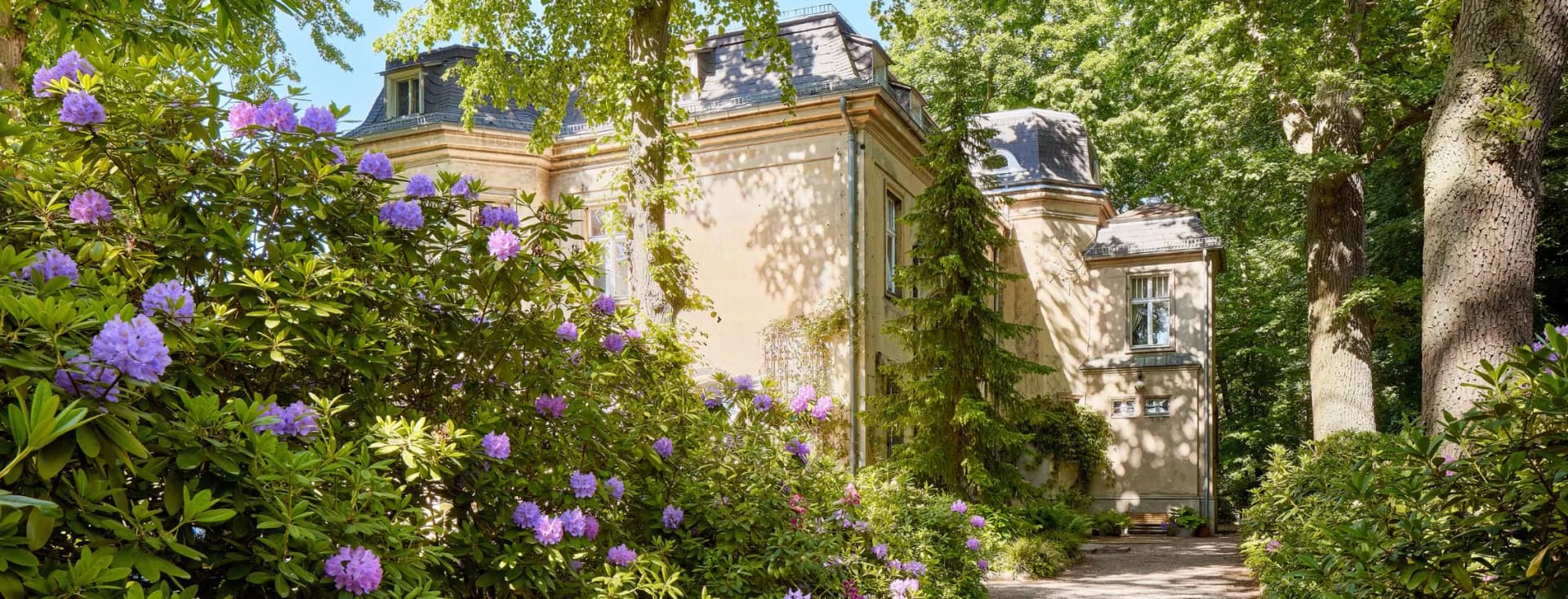
Something is happening in the Portuguese property market that goes beyond the usual urban demand trends. In recent years, interest in estates for sale in Portugal has grown remarkably, among both national and international buyers. This is not a passing fashion or a residual niche. It is a movement with deep roots in a shift in values and priorities that the pandemic accelerated but which had already been taking shape well before.
A herdade, or rural estate, is in essence a large-scale rural property, typically with a dwelling, agricultural or woodland land and, very often, additional infrastructure such as stables, wine cellars, barns or outbuildings. In Portugal, estates of this kind are associated primarily with the Alentejo and the Ribatejo region, although properties with similar characteristics exist in the interior Algarve, the Lower Alentejo and the Beira Baixa. These are properties with character, with history and with a kind of freedom that no city apartment can offer.
This article explores the concrete reasons behind the growth of this demand, what buyers find in these properties that they cannot find elsewhere, and how making the right decision in this segment requires knowledge, time and the right support.
Table of Content
The escape from noise: what estate buyers are really looking for
The Alentejo as the epicentre of a movement
The buyer profile: who is looking for estates in Portugal
What makes an estate different from any other property
Appreciation potential: a long-term perspective
Rural tourism as a driver of profitability
Organic farming and regeneration projects: the new spirit of rural estates
The importance of specialist support in this segment
A life-changing decision: how to approach it with clarity
Frequently asked questions
When you speak to buyers looking for rural estates, one theme emerges almost invariably: the desire for silence. Not merely the absence of noise, but an experience of space, nature and autonomy that the urban way of life, even in the most carefully curated of developments, simply cannot provide.
The 2020 pandemic was a catalyst that made this need urgent for many people. Lockdown revealed weaknesses in the urban life model that many had normalised: small spaces, no outdoor access, total dependence on external services, forced proximity to neighbours. When restrictions lifted, a significant proportion of those who had the means to make different choices began to explore them.
For many, the estate is not necessarily a permanent destination, at least not immediately. It is a second home, a weekend retreat, a place where time operates differently. For others, particularly those who work remotely, it has become the primary residence, exchanging the city for a slower, vaster territory with a different relationship with the land and the seasons.
The growth of remote working was another decisive accelerator. When the office ceased to be a fixed and mandatory location, the equation of where to live changed completely. It is no longer necessary to live within 30 minutes of the workplace. What is needed is a decent internet connection and an environment where it is possible to work with focus and quality of life. An estate in the Alentejo with good internet coverage meets these requirements and adds a dimension of wellbeing that no apartment in central Lisbon can match.
The Alentejo is, by far, the region of Portugal with the greatest concentration of estates for sale and the most active demand in this segment. The combination of landscape, climate, gastronomy, wine, low population density and a quality of life genuinely distinct from the major cities has created a territory that attracts a very specific buyer profile: demanding, with high purchasing power, with a long-term vision and with a relationship of respect for the land.
The Alentejo plains, the centuries-old olive groves, the vineyards stretching to the horizon and the properties with adobe or stone houses that carry decades or centuries of history are elements that no property developer can recreate. These are unique properties, with unrepeatable character, and it is precisely that singularity that makes them so sought after.
The Alentejo wine market has played a relevant role in this demand. Portugal has consolidated its position as one of the world's most interesting wine-producing countries, and the Alentejo is one of the most dynamic regions within that story. Buyers who invest in an estate with a vineyard are not simply buying a rural property: they are entering a project with income potential, product identity and a connection to a territory with growing international recognition.
Évora, Beja, Portalegre, Grândola, Santiago do Cacém, Serpa, Moura — each of these municipalities has its own market specificities, its own strengths and its own buyer profiles. A buyer who arrives in the Alentejo looking for an estate without knowing the differences between these areas is navigating a very vast territory without a map. This is precisely where local knowledge and the support of experienced consultants like those at Engel & Völkers make a difference that is difficult to overstate.
The buyer of estates in Portugal does not have a single profile, but does have recurring characteristics. In terms of nationality, the international buyer carries very significant weight in this segment. Germans, Dutch, Belgians, British, French and, more recently, Americans and Brazilians of high economic capacity have been actively seeking Portuguese estates, attracted by the combination of price, quality of life and appreciation potential.
The domestic buyer is also present, generally with a different profile. Entrepreneurs, liberal professionals, families established in Lisbon or Porto who want a retreat space that genuinely belongs to them, where they can receive friends and family and where they can build a way of life closer to nature without entirely giving up comfort and quality.
There is also a growing profile of buyers who see the estate as a business project: quality rural tourism, organic agricultural production, private events, wellness retreats, small-scale wine production. For this profile, the estate is not simply a dwelling but a life and work platform with a very clear identity.
What unites all these profiles is the search for something that does not exist in cities: space, silence, land, horizon and a more direct relationship with natural rhythms. And Portugal, with its territory, its climate, its gastronomy and a price-to-quality ratio that remains very favourable compared to other Western European countries, is one of the most attractive destinations in the world for those who want to make this change.
Buying an estate is radically different from buying an apartment or a house in an urban area. The variables involved are far more numerous, the due diligence is more complex and the margin for error is greater, both financially and in terms of expectations.
An estate is a multidimensional property. It has a residential component, which may include a main house and several outbuildings. It has a land component, which may include arable land, pasture, montado, vineyard, olive grove or woodland. It has infrastructure, which may include a borehole, irrigation tanks, energy systems, warehouses, stables or agricultural facilities. And it has a regulatory and documentary component that is far more complex than that of an urban property.
The legal situation of an estate may include water rights with specific regimes, land classifications that constrain use, rights of way, agricultural land rental contracts with special regimes, and inheritance or partition issues that may affect ownership. Any of these elements, if not properly verified before the purchase, can transform a promising acquisition into a problem that is very difficult to resolve.
This is precisely why buying an estate demands a level of professional support that goes well beyond the norm. Having alongside a property consultant who knows this segment, a lawyer specialising in agricultural and property law and, where relevant, an agronomist or forestry technician to assess the productive potential of the property is not a luxury but a necessity.
One of the reasons attracting more buyers to the estate segment is the appreciation potential of these properties over a medium to long-term horizon. Estates are scarce properties, with characteristics that cannot be reproduced and with a location that, by definition, cannot be replicated. The combination of scarcity and growing demand creates conditions for consistent appreciation over time.
The estate market in the Alentejo has seen significant appreciation over the past ten years, driven by growing international attention to the territory, the success of quality rural tourism in Portugal and the global recognition of Alentejo wines and products. Properties that were transacted at very accessible prices fifteen years ago are worth multiples of that value today, and the long-term trend points to a continuation of this appreciation.
For those buying as an investment, a well-chosen estate in a good area with agricultural or tourism exploitation potential is an asset with very distinct characteristics from urban properties: less immediate liquidity but greater uniqueness, greater income potential through exploitation and a relationship with the land that has an intrinsic value that is difficult to quantify but very real for those who experience it.
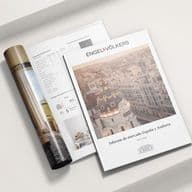
The Engel & Völkers Market Study confirms that the segment of large rural properties in Portugal has been registering consistent and growing demand, with an increasingly diversified buyer profile and a high level of expectation in terms of quality, location and documentation.
For many estate buyers, tourism activity is the vehicle that makes the project financially sustainable. Portugal has been recording remarkable growth in quality rural tourism, with growing demand for accommodation with character, history, local gastronomy and an authentic experience of the territory.
An estate with tourism potential, properly licensed and with a differentiated offer, can generate significant income particularly in the months of highest demand, which in the Alentejo extend across spring, autumn and, increasingly, the less extreme winter months. Private events, weddings, corporate retreats, family celebrations, are another revenue stream that many estates are exploiting with growing success.
Managing an estate with tourism activity is not, however, a simple task. It requires specific licensing, compliance with safety and hygiene standards, operational management capacity and a value proposition that justifies the prices of a premium segment. Buyers who arrive at this project without experience in hospitality or rural management have frequently benefited from partnerships with specialist operators who take on management in exchange for a percentage of revenues.
There is a growing segment of estate buyers who are not primarily motivated by financial reasons but by a life project with a dimension of sustainability and relationship with the land that goes far beyond the dwelling. For this profile, the estate is the place where one produces organically, regenerates the soil, replants montado or recovers native species, where a genuine connection with the cycles of nature is built.
This trend, often associated with the permaculture or regenerative agriculture movement, has attracted buyers with a high cultural and economic profile who are looking in Portugal for a territory where this vision of life is still possible at a scale that in countries such as Germany, the Netherlands or Switzerland simply does not exist or comes at prohibitive cost.
Portugal offers, in this context, a combination of available territory, favourable climate, still relatively accessible costs and an agrarian tradition that, although in decline over recent decades, preserves knowledge and practices that these new owners want to recover and value.
Given the complexity of an estate transaction, the role of an experienced property consultant specialising in this segment is significantly different from that in a conventional urban transaction.
The consultant accompanying the purchase of an estate needs to know the territory in depth, not just prices but the specific characteristics of each area, the potential land uses, water access issues, distances to essential services and local market dynamics. They need a network of partners that includes specialist lawyers, agricultural and forestry technicians and, where relevant, rural tourism consultants.
The experienced property team at Engel & Völkers regularly accompanies national and international buyers looking for rural properties and estates in Portugal, with deep knowledge of the specificities of this segment and a partner network that covers all the dimensions of a transaction of this complexity.
For those exploring this possibility for the first time, the most effective starting point is a conversation with professionals who know the market, who can help define realistic criteria, identify the areas with the greatest potential for the specific project and avoid the most common mistakes that less experienced buyers make in this segment.
Buying an estate is, for most people who do it, a decision that goes far beyond a property transaction. It is frequently a redefinition of priorities, a choice of territory and pace of life, a project that involves not just money but time, attention and a clear vision of what one wants to build.
Clarity about objectives is therefore the most important starting point. An estate bought as a second home has very different requirements from one bought for an agricultural project, or one bought for rural tourism. And the properties that serve each of these objectives are also very different from one another, both in physical characteristics and in dimension, location and price.
Visiting several properties before deciding, spending time in the territory across different seasons, speaking to people who have already made this choice and having the right professionals at every stage of the process are the conditions that transform an exciting decision into a solid and well-founded one.
If you are exploring the possibility of buying an estate or rural property in Portugal, speak to the Engel & Völkers team and find out how we can help you find the right property, in the right area, with the right process. The estate you are looking for exists. The question is knowing where to look and how to get there with confidence.
PROPERTIES IN PORTUGAL
Alcácer do Sal, Setubal, Portugal
Price on request
Vale do Lobo, Almancil, Faro District, Portugal
Price on request
Quinta do Lago, Almancil, Faro District, Portugal
Price on request
Centro Historico, Cascais, Lisbon, Portugal
Price
€22,000,000
Porto, Porto District, Portugal
Price on request
Albufeira, Faro District, Portugal
Price
€18,500,000
Faro, Faro District, Portugal
Price
€18,000,000
Carnaxide, Lisbon, Portugal
Price
€17,000,000
Quinta do Lago, Almancil, Faro District, Portugal
Price
€16,500,000
Estate prices in Portugal vary enormously depending on dimension, location, the state of conservation of the dwelling, the quality of the land and the existing infrastructure. In the Alentejo, the area with the greatest concentration of this type of property, it is possible to find estates ranging from a few hundred thousand euros for smaller properties without quality housing or with land of lower agricultural suitability, to several million euros for properties with quality houses, productive vineyards, olive groves in production and complete infrastructure. The factors that most influence value are the size and quality of the dwelling, the quality of the soils and the type of crops established, the availability of sufficient water on the property, accessibility and proximity to services, and the existence of valid tourism or agricultural activity licences.
Obtaining a mortgage for an estate is possible but more complex than for a conventional urban property. Banks assess the residential component and the land and agricultural component separately. Typically, financing covers the residential part and rarely covers the full property value. A bank's valuation of an estate is also more complex and may take longer than for an urban property. In many estate transactions, particularly higher-value ones, payment is made largely or entirely with own funds. For those who need financing, it is advisable to involve a mortgage broker with experience in this specific segment and to begin the bank assessment process with sufficient advance notice.
Water is one of the most critical resources on an estate and one of the aspects requiring the most careful verification before purchase. In Portugal, rights to use water for agricultural purposes are regulated and may be subject to specific licences issued by the River Basin Administration bodies. Before buying, it is essential to verify the existence of legalised boreholes and the corresponding extraction rights, the existence of ponds or storage tanks and their capacity, the availability of mains water and associated costs, and any restrictions on aquifer use in the area. Properties with insufficient or poor-quality water are a serious risk to any agricultural or rural tourism project, regardless of the quality of all other attributes.
Licensing for tourism activities in rural areas in Portugal falls under rural housing and rural tourism legislation, which provides for different formats depending on the type of accommodation and activity. Obtaining the necessary licences involves ensuring the dwelling meets minimum safety, accessibility and hygiene requirements, registration with the relevant authorities and, in some cases, municipal approval. Estates that already have tourism licensing in place are simpler to manage from a bureaucratic perspective, though it is important to verify that the licences are current and cover all the activities the buyer intends to develop. For estates without existing tourism licensing, the process of obtaining it can take several months and frequently involves adaptation works.
Beyond the purchase price, buying an estate involves the payment of the Municipal Property Transfer Tax, whose rates for rural properties differ from those applicable to urban housing, stamp duty, notary and land registry costs, and legal fees. In many estate transactions, an assessment by an agricultural or forestry technician is also recommended before the purchase, representing an additional cost but with an informational return that can prevent far more costly errors. After the purchase, estate owners pay property tax on rural land at specific rates, and should account for the maintenance and management costs of the property, which can be significant depending on its size and the activities conducted.
The montado is an agroforestry system unique to the Iberian Peninsula, especially present in the Alentejo and in the Spanish Extremadura. It consists of cork oaks and/or holm oaks managed in an extensive way, where cork, pasture and game coexist in a balance built over centuries. The cork oak is the basis of cork production, a raw material of growing value in the global market, and the montado is recognised by UNESCO as one of the most sustainable and biodiverse agricultural systems in the world. For an Alentejo estate, having montado in good condition is an asset of great value, both economically and from environmental and landscape perspectives. Cork extraction occurs in nine-year cycles per tree, implying regular but spaced-out income. Managing the montado requires specific technical knowledge and is regulated by legislation that protects cork oaks and constrains interventions on the property.
There are no legal restrictions on the purchase of rural properties or estates in Portugal by foreign nationals, regardless of nationality or tax residency. The acquisition process is the same for nationals and foreigners, although non-resident buyers need to obtain a Portuguese tax identification number before formalising the purchase. For buyers from countries outside the European Union, there may be additional considerations regarding residency and access to banking services that are advisable to clarify in advance. In tax terms, the buyer's status as a Portuguese resident or non-resident may influence the treatment of any income generated by the property, which is why consulting a lawyer or accountant with experience in international property law is recommended.
The process of buying an estate tends to be significantly longer than for an urban property, due to greater documentary complexity and the need for more extensive technical verifications. Under normal conditions, the process from identifying the property to signing the final deed can take between three and six months, and in some cases longer, particularly when there are documentation regularisation issues, pending inheritances or licences to update. Due diligence on an estate typically includes verifying the land registry and rural property record, confirming water rights, checking any existing agricultural tenancy agreements, analysing the local development plan regarding land classification and assessing the state of the infrastructure. Having an experienced lawyer in this segment from the very start of the process is the most effective way to ensure all these verifications are carried out rigorously and without omissions.
You may also be interested in
&w=1920&q=75)





FOR MORE INFORMATION



Engel & Völkers Portugal
Av. da Liberdade 196, 7 andar
1250-096 Lisboa, Portugal
Tel: +351 210 200 490