
One month after the Berlin election
- 3 min.
- 20.10.2026
The new GG website: Inspiring personalities, extraordinary places and exceptional properties. Discover now.
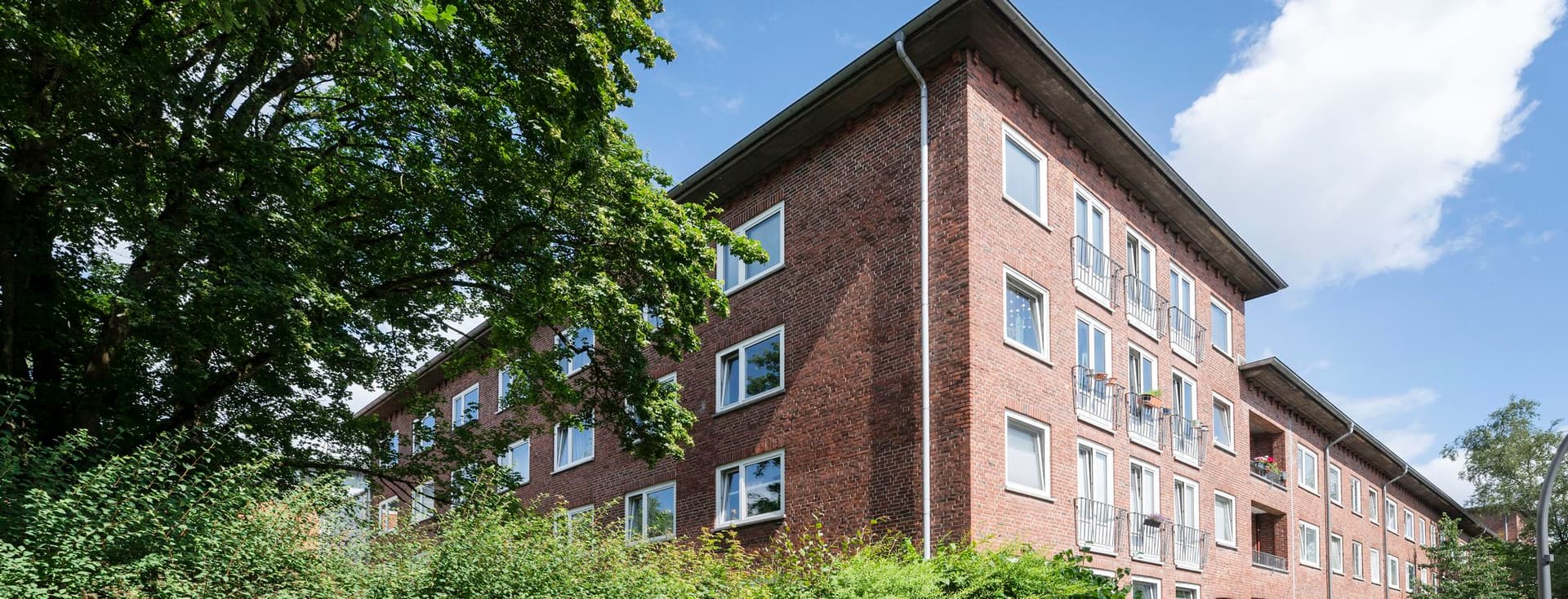
The usable area of a house or apartment (also abbreviated as UA) is the space that can be used and assigned to a specific purpose. It does not necessarily have to be habitable. As a result, the usable area is generally larger than the living area.
According to DIN 277, usable areas are divided into seven categories (purposes): living and staying, office work, production, manual and machine work, experiments, storage, selling and distribution, education, teaching and culture, care and healing, and other uses.
Functional rooms such as heating rooms, technical operation rooms, and machinery rooms are not included in the usable area. Circulation areas like stairs, entrances, and elevators are also excluded.
The term agricultural area (AA) includes areas of agricultural enterprises such as meadows, pastures, and farmland.
The usable area is determined according to DIN 277. All floor areas serving one of the above purposes are included in the calculation.
The dimensions of the finished room form the basis for the calculation of usable area. For the final calculation, the measured floor areas are added together.
Living area must be habitable according to the Living Space Ordinance. Usable areas, on the other hand, include both living spaces and other usable areas according to DIN 277. Living area is always a part of the usable area.
The difference lies in whether a particular space is merely usable or also habitable.
Living area is an important factor when selling or renting property, as buyers want to know exactly how much living space they are purchasing. As a seller, you are responsible for providing accurate information.
Key points for calculating living area: Not every room is included in the living area. The rules are summarized as follows:
Only rooms used for staying (living/bedrooms) are included; basements and garages are excluded.
All rooms must belong exclusively to the measured apartment.
Certain room types, such as swimming pools and conservatories, can only be partially included.
Projections, pillars, and columns taller than 1.5 meters and with a floor area of more than 0.1 square meters are excluded, as are stairs with more than three steps and their landings.
Balconies, loggias, roof gardens, and terraces are counted at 25% to 50%.
Only areas with a height of 2 meters or more are counted 100%; areas between 1 and 2 meters are counted at 50%; areas under 1 meter are not counted.
You may also be interested in











Contact provider

Page content provided by: Engel & Völkers Gewerbe GmbH & Co. KG
License partner of Engel & Völkers Franchise and Trademark GmbH