
Buying a holiday home in Greece
- 3 min.
- 22.06.2026
Everything regarding the process, additional costs, attractive regions, and legal requirements
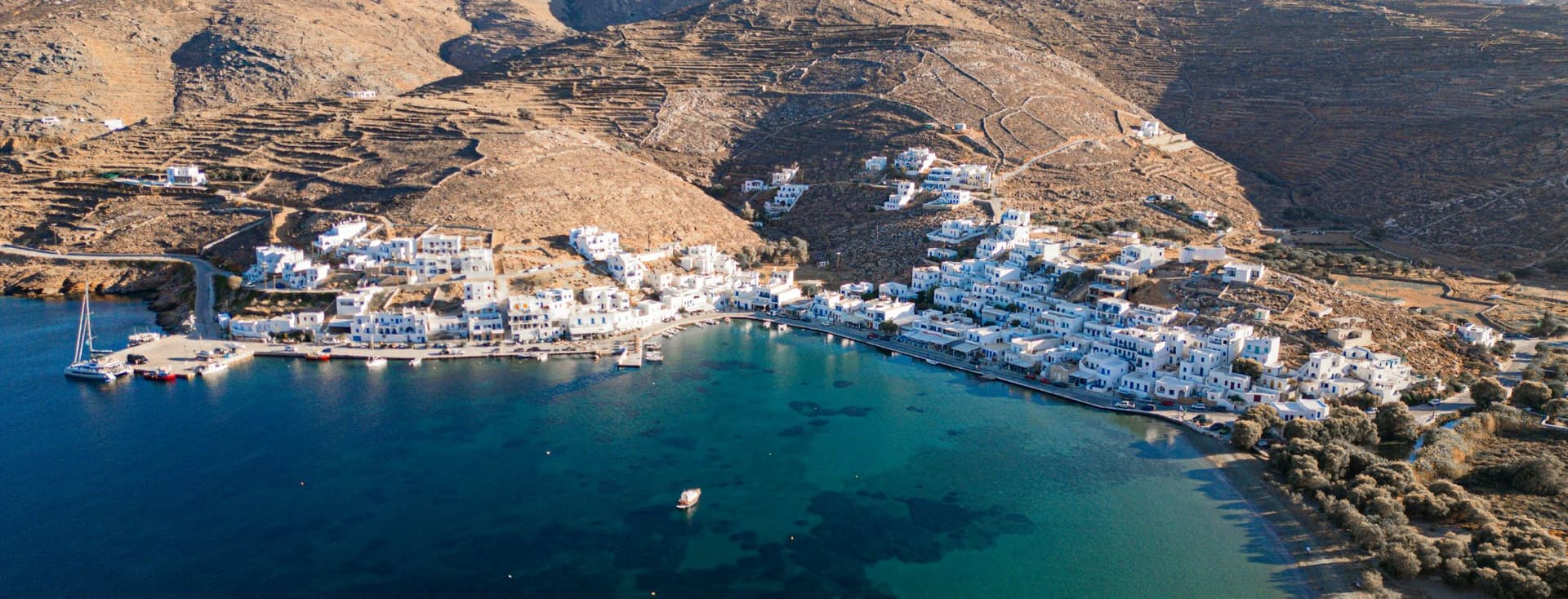
Greece offers far more than sunshine and sea. Buyers who purchase property there benefit from an accessible market, comparatively affordable prices, and a straightforward buying process for EU citizens. Whether you are looking for a primary residence, a holiday home, or an investment property, this guide walks you through the most important steps.
Table of Content
Why is buying property in Greece worthwhile?
Typical property styles and real estate options in Greece
Attractive regions for buying property in Greece
The process of buying property in Greece
Costs and financing: What to consider when buying property in Greece
Buying property in Greece with Engel & Völkers
Diverse property portfolio
Wide selection of attractively priced properties in Greece, from apartments to villas
Advantages of buying property in Greece
Low additional purchase costs, straightforward transaction process, and strong value stability, especially in tourist regions
Financial considerations
Property purchase costs are often lower than in Germany
Popular regions
Athens, Rhodes, Crete, Santorini, and Corfu
Various usage options
Private residence, holiday home, or rental property for locals or tourists
What makes the Greek property market so attractive for German buyers and investors?
Affordable property prices outside major tourist hotspots
Potential for property appreciation and high rental occupancy rates in tourist regions
Low property transfer tax and a simple purchasing process for EU citizens
Mediterranean climate with around 300 days of sunshine per year, warm summers, and mild winters
Excellent accessibility from Germany via direct flights
Warm hospitality, a relaxed lifestyle, and a growing expat community
Diverse landscapes and rich cultural heritage
Anyone searching for property in Greece will mainly encounter the following property types:
Apartments and townhouses in metropolitan areas
Traditional stone houses in rural regions
Apartments, small beach houses, and sea-view villas on islands and along the coast
A wide range of buildable plots of land
Both mainland Greece and the islands offer a highly diverse property landscape. Sparsely populated regions appeal with nature, tranquillity, and authenticity. Coastal regions and islands offer excellent infrastructure, beautiful beaches, and strong appreciation potential. In larger cities, buyers can expect cultural diversity and modern living concepts.
Particularly sought-after regions include:
The Attica region, including the capital city Athens
Crete, with a German-speaking community, excellent infrastructure, and 1,064 kilometres of coastline
The Cyclades, including Santorini, Naxos, and Mykonos
The Ionian Islands, including Corfu and Lefkada
Rhodes and Samos as part of the Dodecanese islands
Northern Greece, known for its varied landscapes and culture
Central Greece, offering a mix of mountains, beaches, and natural scenery
&w=1920&q=80)
For EU citizens, purchasing property in Greece is relatively straightforward. However, there are still a few country-specific details to keep in mind. We guide you from the initial search through to receiving the keys.
Choose your preferred region and property type, then arrange viewings for suitable properties. Once you have found the right property, price negotiations with the seller begin.
A local lawyer checks the land registry for existing mortgages or encumbrances. Only after this review are the sale preparations finalised — an important step to protect buyers.
You will need a personal Greek tax number, known as an AFM, for the purchase contract and all tax-related procedures in Greece. This can be obtained from the local tax office using the M1 form, or through a lawyer acting on your behalf. The AFM must be issued before signing the contract.
Once both parties agree on the purchase price, the contract is notarised and signed. After registration in the land registry, you officially become the owner of the property.
In addition to the purchase price itself, there are several other costs and considerations buyers should keep in mind from the start: additional purchase costs, financing options, and, depending on nationality, the Greek Golden Visa programme.
In addition to the property price, buyers should expect the following additional costs. Overall, these usually amount to around 5 to 7 percent of the purchase price:
Estate agent commission: typically 2 to 4% of the purchase price, if an agent is involved
Notary fees: approximately 2% of the purchase price or taxable property value
Land registry fee: 0.5% of the sale value
Property transfer tax: 3.09% of the purchase price or taxable value
Legal fees: optional, but highly recommended in many cases
In general, buyers have two options: financing through a German bank or through a Greek financial institution. Financing through a Greek bank is possible for EU citizens, although it often involves higher interest rates and more administrative procedures. Independent financial advice is recommended in any case.
For buyers from non-EU countries, Greece offers an attractive residency-by-investment programme through the Golden Visa scheme. Those investing in Greek property may qualify for a residence permit. Since the reform introduced on 31 March 2024, different minimum investment thresholds apply depending on the location of the property:
€800,000 for properties in highly sought-after areas such as Attica (Athens), Thessaloniki, Mykonos, Santorini, and islands with more than 3,100 inhabitants
€400,000 for properties in all other regions of Greece, with a minimum property size of 120 m²
€250,000 as a reduced threshold exclusively for listed buildings or properties requiring conversion or renovation
The Golden Visa is valid for five years and can be renewed as long as the investment is maintained. German citizens do not require this programme, but it may be an attractive additional benefit for international buyers from outside the EU.
With a global network and decades of experience in the international property market, Engel & Völkers is your trusted partner when searching for the right property in Greece. Whether in Athens, Rhodes, or Crete, our experts know the local markets and support you from the first viewing through to the handover of the keys. You can also find a more comprehensive guide to buying property abroad here.
We look forward to hearing from you.
Buying property in Greece
Yes, for EU citizens, purchasing property in Greece is relatively straightforward. You will need a Greek tax number (AFM), and the purchase contract must be notarised.
You should expect additional costs of around 5 to 7 percent of the purchase price. This includes the 3.09% property transfer tax, notary and land registry fees, as well as potential estate agent and legal fees.
As a German citizen, there are no restrictions on the length of your stay. However, if you stay longer than 90 days, you must register your residence. If you spend more than 183 days per year in Greece, you may become subject to Greek tax regulations. Since Germany and Greece have a double taxation agreement, professional tax advice is recommended in such cases.
For many buyers, yes. Greece offers attractive living costs, good value for money, and strong demand for holiday properties. Compared to other Mediterranean countries, the Greek property market is often more affordable.
Yes, either through a German or a Greek bank. For most German buyers, financing through a German institution is usually the simpler option. Independent financial advice before purchasing is highly recommended.
You may also be interested in

Contact


Engel & Völkers Germany
Vancouverstraße 2a
20457 Hamburg, Germany
Tel: +49 40 361310