
How to organise a move step by step: checklist, procedures and essential tips
The new GG website: Inspiring personalities, extraordinary places and exceptional properties Discover now

Spain is one of the most attractive countries to buy property as a foreigner, as it offers many features that make it desirable—such as the climate, landscape, gastronomy, and culture. But can you apply for a mortgage if you don’t live in the country?
In this article, we’ll explain how to apply for a mortgage in Spain as a non-resident: what requirements are needed and what types of mortgages you can access.
Table of Content
Can you apply for a mortgage in Spain without being a resident?
Requirements for obtaining a mortgage in Spain as a non-resident
Paso a paso para pedir una Step-by-step guide to applying for a mortgage in Spain as a non-resident
Types of mortgages for non-residents or foreigners in Spain
Additional costs when applying for a mortgage as a non-resident and buying a property in Spain
Advantages of buying a property in Spain as a foreigner
How to apply safely for a mortgage in Spain as a non-resident
Applying for a mortgage in Spain as a non-resident—or as a foreigner—is possible. The process is quite similar to that of a resident mortgage. In fact, more and more foreigners are choosing to invest in a second home in Spain.
According to data from Engel & Völkers in 2023, 14.9% of home purchases were made by foreigners. The British remain the main buyers, followed by Germans, French, Belgians, and Dutch. However, other nationalities—such as Polish, Romanian, and Moroccan—are on the rise.
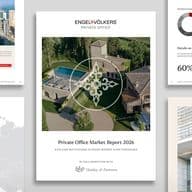
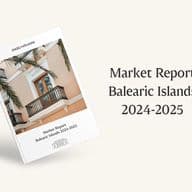
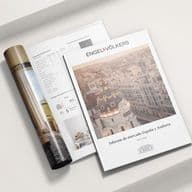
Our annual report keeps you up to date with real estate market trends, helping you discover the most in-demand areas, top tourist hotspots, and the regions that stand out in the luxury sector.
Our agents can walk you through the latest real estate trends and guide you in purchasing your new home as a non-resident in Spain. Get in touch with our team and start building your future.
When applying for a mortgage in Spain as a non-resident foreigner, you’ll need to meet certain fiscal requirements and also have the necessary documentation ready before starting the process. Preparing everything in advance will make the process much faster and smoother.
These are some of the aspects banks will evaluate—whether you’re a resident or not—before granting you a mortgage loan:
Employment status: You must be able to prove that you have a job providing stable income, ensuring your financial solvency to make payments.
Financial situation and credit history: It's important to show that you have no outstanding debts and that you’ve been consistent in repaying previous loans or credit.
Age: This depends on the financial institution, but generally, you shouldn’t be older than 75 years.
Bank account in Spain: You’ll need to have a Spanish bank account to make the monthly payments easier.
These are the documents usually required by banks, although they may vary depending on the institution:
Valid passport or national ID card.
Foreigner Identification Number (NIE): You must obtain an NIE before carrying out any financial or tax-related transaction in Spain.
Copy of your employment contract and a certificate from your employer.
Last three payslips.
Most recent income tax return.
Bank statements from the past six months.
Purchase agreement.
Having the support of a qualified real estate agent—like those at Engel & Völkers—will make the process easier, as we’ll guide and support you every step of the way.Contact us today and find your dream home.

To buy a property in Spain using a mortgage loan, you’ll need to follow these steps:
Calculate how much you can afford: based on your personal and financial situation, determine the budget you can work with.
Find the right property: with that budget in mind, look for a home that fits your financial possibilities.
Gather all the required documentation: prepare all your paperwork before going to the bank.
Compare mortgage offers from different banks: don’t go with the first offer—look for the bank that gives you the best terms.
Apply for the mortgage: once you’re ready, it’s time to start the process.
If approved: sign the mortgage agreement and make the initial payment.
But what are the mortgage options available for foreigners?
Non-resident mortgage loans are essentially the same as those available to residents, although the conditions differ:
Shorter loan repayment periods.
Lower financing: between 70%–80% of the total value of the property.
Before applying for a mortgage with a bank, it's important to know that these loans are also subject to the Euribor, the benchmark interest rate set by the European Central Bank (ECB), which regulates interest rates. These are the types of mortgages you can apply for:
Fixed-rate mortgage: in this case, the interest rate remains the same throughout the term of the loan. That means your payments won’t change, regardless of whether the Euribor rises or falls.
Variable-rate mortgage: here, your monthly payments fluctuate based on market performance. If interest rates go down, you'll pay less—and vice versa.
Mixed-rate mortgage: this option combines both fixed and variable rates. There is an initial period with fixed payments, followed by a period where payments vary. The duration of each period is defined by the bank.
In all cases, the bank must provide you with a European Standardised Information Sheet (ESIS) in advance, so you can easily review the terms and compare them with other offers. These loans are governed by Law 5/2019 of March 15, regulating real estate credit contracts.
At Engel & Völkers, we work with over one hundred credit institutions to help you find the mortgage that best suits your needs. Contact our team and choose the home you’ve been dreaming of.
One of the most common mistakes foreign buyers make is focusing solely on the property price without considering the additional costs associated with the purchase. These usually amount to around 15% extra, so you’ll need to have more savings set aside to complete the transaction.
Here are the expenses you should take into account:
Whether you are a resident in Spain or not, it is essential to carry out the purchase before a notary—so the transaction is legally valid—and to pay the necessary fees to register the property in your name.
In addition to the monthly mortgage payments, you’ll also need to cover other fees such as:
Opening fees
Appraisal costs
Notary and land registry fees related to the loan (although, under the new mortgage law mentioned earlier, these are usually covered by the bank)
Life or home insurance.
When buying a property in Spain, you’ll also need to pay certain taxes depending on the type of property:
If it’s a new-build home, you must pay VAT (Value Added Tax)
If it’s a second-hand property, you’ll need to pay the Property Transfer Tax (ITP)
In addition, there is also the Stamp Duty (AJD – Actos Jurídicos Documentados), a tax levied on legal documents, including notarial deeds.
In some cases, you may need a certified translation of documents (if they are not in Spanish), especially if banks or notaries require them to complete the transaction.
Finally, you may also need a fiscal representative or power of attorney if you’re not physically present in Spain on the day of signing.

Once you apply for a mortgage in Spain as a non-resident and complete the signing process, you’ll enjoy the many benefits of owning a home in this country:
Exceptional climate: Spain enjoys more than 300 days of sunshine in many areas, such as the Costa del Sol, the Canary Islands, or the Balearic Islands.
Quality of life: the country has an excellent public healthcare system.
Culture: a wide range of cultural, culinary, and leisure activities throughout the country.
Relaxed and sociable lifestyle.
Lower cost of living compared to other European countries: buying property in Spain is often more affordable than in France, Germany, or the UK.
Legal stability and safety: the Spanish legal system provides strong protection for foreign buyers.
Attractive tax benefits: such as double taxation agreements with numerous countries.
Investment opportunities: high returns from both short-term vacation rentals and long-term rentals, especially in coastal areas and major cities.
If Spain’s advantages sound appealing to you, all you need is guidance from experts who understand the real estate market and can support you through the buying process.
Our agents specialize in the luxury sector and are fully up to date on the laws and requirements needed to apply for a mortgage in Spain as a non-resident.
If you want to buy property in Spain with full confidence, look no further and trust Engel & Völkers. We are in more than 35 countries and have over 1,000 offices worldwide. Get in touch with our team and enjoy the luxury of not having to worry about a thing.
You may also be interested in
&w=1920&q=75)


&w=1920&q=75)


&w=1920&q=75)

FOR MORE INFORMATION



Engel & Völkers Spain
Avenida Diagonal 640, 6B
08017 Barcelona, España
Tel: +34 900 747 281