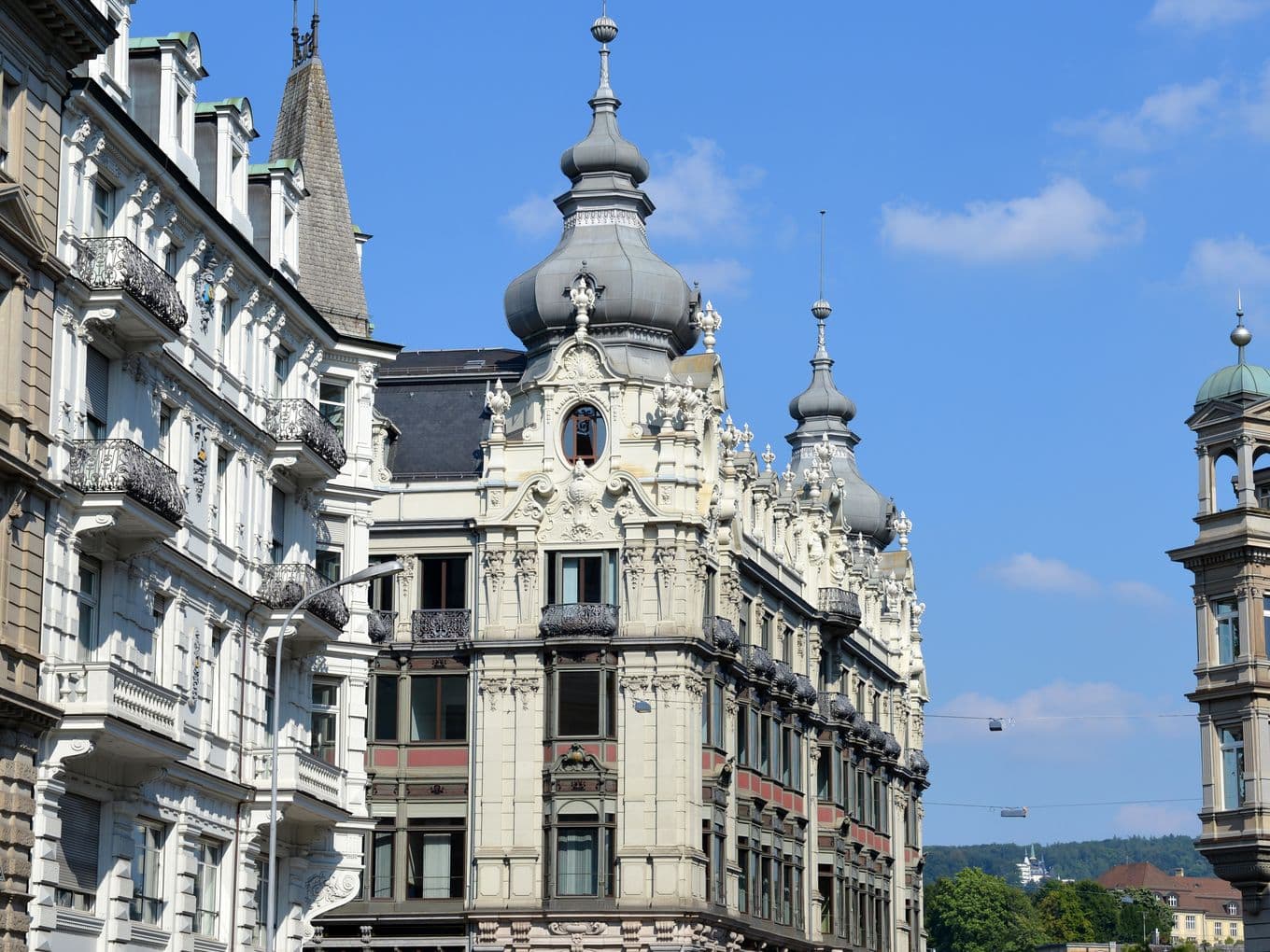
Apartment building in Switzerland

Multi-family homes are a popular investment option in Switzerland. Investors should carefully research the regional market and the properties available. Here you will find initial insights and data on trends in returns, purchase prices, and rents. The analysis covers the Swiss market as a whole, and selected analyses of individual cities and regions are also available.

Mehrfamilienhäuser in Zürich

Our Engel & Völkers Commercial Shops in Switzerland

Your on-site contacts

Interest rate cuts boost consumer spending

The Swiss market for residential investment has seen significant changes in recent years. The market has since recovered from high inflation rates and key interest rates. Multi-family homes in Switzerland therefore represent an attractive asset class, although challenges remain.

The peak of the rise in the interest rate was reached about four years ago. In August 2022, the price increase for consumer goods in Switzerland stood at 3.5%. To counteract this, the key interest rate was gradually lowered over the years, reaching the 0.00% mark in June 2025, where it remains today. The Swiss National Bank’s approach is having an effect: by May 2025, the interest rate had fallen to its lowest level in over four years, at –0.1%. Since then, the interest rate has remained within a range of 0.0% to 0.3% (as of March 2026). As a result, the appeal of residential and commercial properties as investment assets has risen again. Private investors, in particular, are showing increased willingness to buy, although the outbreak of the conflict in Iran in late February 2026 has added another geopolitical challenge.

Interest rate in percentage (change from the month of the previous year)

Sources: BFS, Engel & Völkers Commercial

Prices for multi-family houses have risen

The fact that a residential investment remains attractive is also reflected in market values. Following the price corrections in 2023, market values for residential and commercial properties have risen steadily again since the beginning of 2024. In the first half of 2025, the average price of a Swiss multi-family home stood at CHF 6,040 per square meter. Compared to the same period last year, this represents an increase of 10.7%. Moderately rising to stable prices are expected for 2026. However, the growth momentum from the previous year will not be matched. The total return for multi-family homes in 2026 will therefore weaken and stand at around 6.6% (as of March 2026).

Type of yield(choose up to 3)
Yields for multi-family homes

Sources: Marktindizes für Renditeimmobilien Fahrländer Partner, Engel & Völkers Commercial

* Data as of March 31

Housing demand versus availability

The fundamentals are also positive for the multi-family housing market. Demand in the rental market is high. Switzerland’s population is growing across all cantons. By the end of 2024, approximately 9,051,000 people were living in Switzerland. That is a 1.0% increase from the previous year. The reason is high immigration: In 2024, nearly 213,000 people immigrated to Switzerland. By 2040, the population and number of households are expected to continue growing, which means an increased need for housing. An additional 10% of rental apartments are projected by 2040.

However, the availability of housing is currently very limited. The vacancy rate of 1.00% for Switzerland as a whole in 2025 illustrates this. Furthermore, construction activity cannot sufficiently keep pace with the growing demand. Although around 22,000 apartments were built in the first half of 2025, it is expected that the required 50,000 completions per year will likely not be reached for the full year.

Vacancy rate in percentage
Housing stock

Sources: BFS, Modellierungen Fahrländer Partner, Engel & Völkers Commercial

How are rents trending?

Rising quoted rents are a consequence of the tight housing offer. In 2024, quoted rents rose by an average of 4.7% compared to the previous year. This is the largest increase in 25 years. An increase in average quoted rents can also be observed over the course of 2025, although the momentum has slowed somewhat. Existing rents also saw a positive trend in 2024. This was driven by the increase in the reference interest rate the previous year. In March 2025, however, the reference interest rate fell from 1.75% to 1.50%, and in September 2025, the rate fell again to 1.25%. As a result, existing rents could decline slightly in the coming months. For quoted rents, on the other hand, moderate growth is still expected.

How will the market develop in 2026?

Demand for housing will remain high in 2026, although net immigration is expected to decline slightly compared to the previous year. This is offset by a continued shortage of housing units, which is likely to cause quoted rents to rise moderately. Existing rents, on the other hand, are expected to decline in 2026 due to the reduction in the mortgage reference rate the previous year, providing relief for tenants.

With prices having reached a high level in 2025, a sideways trend is expected in the following year. However, a property’s price depends heavily on its energy efficiency. Owners of apartment buildings in poor energy-efficiency condition will have to accept price reductions, while top-tier properties may even see price increases. However, the high price increases seen in the previous year will not continue in 2026, and the focus will shift to portfolio optimization. The risk of vacancies is extremely low, however, so apartment buildings generally guarantee stable cash flows and remain a safe asset class.

Free markt reports for Swiss cities

Reports for local residential invesment markets

New to our lineup

Find your residential investment in Switzerland

Your Shop

Engel & Völkers Deutschland

Page content provided by: Engel & Völkers GmbH

License partner of Engel & Völkers GmbH

+49 40 361310