New
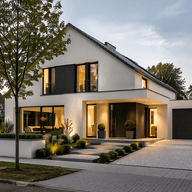
Düsseldorf-Niederkassel, Düsseldorf, North Rhine-Westphalia, Germany
"House within a house" with a dream garden in a prime location
Total rent
€3,840
- 4.5 Rooms
- 2 Bathrooms
- ~177 m² Living area

As a rule, every tenant receives an operating cost bill once a year. According to the German Tenants' Protection Association, this always leads to a large number of enquiries and requests for advice. Since this is a complex issue based on many different laws and contractual agreements, incorrect or unfounded billing can occur time and again.
In the following, we shed some light on the subject and explain the content and possible sources of error in the operating cost bill. It is always worth taking a closer look.
The owner and landlord of a property must carry all costs arising from the rented property. This includes the operating costs.
If an operating cost levy has been validly agreed in the tenancy agreement, the tenant must pay it. The contract must clearly indicate which costs must be borne by the tenant. This can be done by naming the individual items or by referring to the Operating Costs Ordinance.
If there is no such contractual agreement, the rent payment is the gross cold rent, which covers the non-heating-related operating costs. Only the costs for heating and hot water can then be settled separately as utility costs.
Operating costs are costs related to real estate that are constantly recurring when all buildings and facilities of the rental property are used as intended.
This includes property tax, liability and property insurance, all costs related to water supply, drainage and heating, street cleaning and waste disposal as well as cleaning the building and chimney, garden maintenance including removal of wasp nests or vermin control measures.
Likewise, installations collectively used by tenant communities, such as the house lighting, a lift, a communal aerial or cable system, as well as a washing and drying service and any other specified operating costs, are also included.
The allocation key is usually the size of the living space in relation to the total allocation area of the rented property. Vacancies are also counted here. Any other allocation keys must be explicitly stated in the lease agreement. This could be the number of households or individual users of something such as the cable connection.
Items that are recorded individually according to use such as a communal washing machine or a waste disposal unit may only be invoiced on the basis of actual consumption. If this is not done, the tenant could be entitled to a reduction of these costs.
The operating costs for rented living space are to be billed by the landlord for the period of one year. Within the following 12 months, the statement must be sent to the tenant. If this deadline is exceeded, there is no longer an obligation to pay.
The operating cost bill is subject to specific requirements as to what items must be reported as a minimum. It must be clearly comprehensible to the tenant and of course mathematically correct. In terms of content, the allocation key must be listed and both a statement of the total costs and the pro rata calculation for the tenant must be shown. If the tenant has made advance payments, the offsetting leading to the final result must be indicated.
If you as a tenant have received an operating cost bill, you should take the time to check it carefully in the following four weeks. This is especially true if it has significantly increased. If the bill contains items that are unclear to you or does not seem correct, you have one year to submit an objection, according to the 2003 tenancy law reform. After this period, the landlord no longer has to accept your objection.
There is another important issue that often leads to discrepancies: By law, the tenant who is the tenant of the apartment or rental property on the due date is obliged to pay any additional claims! This means that a new tenant may actually be liable for outstanding claims incurred during the tenancy of a previous tenant. For fairness’ sake, the reverse also applies in the case of refunds for overpayments. Here, the new tenant can be the beneficiary.
Our rental properties in Germany
Düsseldorf-Niederkassel, Düsseldorf, North Rhine-Westphalia, Germany
Total rent
€3,840
Bohlingen, Singen, Baden-Württemberg, Germany
Basic rent excl. utilities
€1,650
Bad Salzuflen, North Rhine-Westphalia, Germany
Total rent
€1,150
You may also be interested in


&w=1920&q=75)



&w=1920&q=75)
Contact


Engel & Völkers Germany
Vancouverstraße 2a
20457 Hamburg, Germany
Tel: +49 40 361310