
How to organise a move step by step: checklist, procedures and essential tips

Buying a home is one of the most important financial decisions for many people. However, before signing, it is advisable to clearly understand the procedures involved in buying a house in Spain in 2026, from the initial financial analysis to registration in the Land Registry.
In this article, we explain the key steps involved in buying a home in 2026.
Table of Content
Key steps in the procedures for buying a house in 2026
Initial analysis before starting the procedures for buying a house in 2026
How much money do you need to buy a house?
Necessary documentation in the procedures for buying a house in 2026
Legal procedures for buying a house in 2026
What to do after completing the home purchase procedures
Tips to avoid mistakes when buying a home in 2026
Frequently asked questions about the procedures for buying a house in 2026
Buying a home in Spain involves a series of legal, financial and administrative procedures that must be followed in order. In most transactions, the process begins with an analysis of the buyer’s financial capacity and continues with the signing of the deposit contract, the mortgage application and the signing before a notary.
Below, we explain each of the procedures in detail.
Before starting the procedures for buying a house, it is advisable to assess the buyer’s financial capacity. This involves analyzing income, monthly expenses, existing debts and the savings available for the down payment.
The first step is to review household income and expenses in detail. Having a clear view of your monthly budget makes it possible to calculate how much can be allocated to a future mortgage:
Monthly income: this includes net salary, rental income, investments or any other recurring source of income. This figure will be the basis for calculating financing capacity and an affordable mortgage payment.
Monthly expenses: it is advisable to list all fixed and variable expenses, such as rent, transport, food, insurance or subscriptions. Analyzing this information helps identify how much real financial margin exists.
In addition to income, banks analyze the level of existing debt. That is why it is important to realistically assess your financial situation:
Outstanding debts: personal loans, vehicle financing or credit cards can reduce your ability to obtain a mortgage. The lower the existing debt, the better the financial conditions that can be negotiated.
Saving capacity: monthly savings are key to putting together the money needed for the down payment and the costs associated with buying a home.
Buying a home in Spain usually requires between 30% and 35% of the property price in savings. This percentage includes the down payment — generally 20% — and associated costs such as taxes, notary fees, registry fees or valuation.
Banks in Spain usually finance up to 80% of the value of the property, so the buyer must provide the rest:
Initial down payment: it is usually around 20% of the purchase price of the property, although this may vary depending on the buyer’s profile and the mortgage conditions.
Additional costs: to this amount, you must add between 10% and 15% of the property price, intended for taxes, notary fees, registry fees and other administrative costs.
The final purchase price is not limited to the value of the property. Administrative and financial costs must also be included:
Notary and registry costs: formalizing the purchase requires a public deed before a notary and its subsequent registration in the Land Registry.
Property valuation: if a mortgage is requested, the bank will require an official valuation to determine the value of the property.
At Engel & Völkers, we help our clients estimate these costs from the outset so that they can plan their purchase with greater confidence.
In addition, taxes must be taken into account, as they depend on whether the property is a new-build or a resale home.
Property Transfer Tax (ITP) applies when purchasing resale homes and usually ranges between 6% and 10% of the purchase price, depending on the autonomous community. This tax is paid when the purchase is formalized and is one of the most significant costs in the process.
In the case of new-build homes, other taxes apply:
10% VAT on the property price.
Stamp Duty (AJD), which is usually around 1–1.5%.
Reviewing the property documentation reduces legal risks before signing the purchase. The most important documents include the Land Registry extract, the energy efficiency certificate, the occupancy certificate and, in some cases, the first occupancy license.
The Land Registry extract confirms who owns the property and whether there are mortgages or charges on it. This document makes it possible to verify that the seller has the right to sell the property and that there are no legal issues.
This certificate indicates the property’s energy consumption and its level of efficiency.
In addition to being mandatory for selling a home, it allows the buyer to understand the approximate energy costs.
These documents certify that the property meets the minimum conditions to be inhabited. Without them, it may be difficult to register essential utilities such as water, electricity or gas.
The legal procedures include signing the deposit contract, applying for a mortgage if necessary, signing the deed before a notary and registering the property in the Land Registry. These steps guarantee that the transaction is valid and secure.
The deposit contract is the preliminary agreement that defines the price, deposit and deadline for the purchase, as well as the consequences of non-compliance:
Contract contents: it includes the final price of the home, the deposit paid and the deadline for formalizing the purchase before a notary.
Consequences of non-compliance: if the buyer withdraws, they lose the deposit. If the seller withdraws, they must return double the amount received.
Most buyers need financing to purchase the home. To apply for a mortgage with the bank, you need:
Bank solvency assessment: the bank analyzes income, job stability and debt level before approving the loan.
Required documentation: payslips, tax returns, the deposit contract and other financial documents are part of the process.
When the bank approves the mortgage, the buyer receives the European Standardised Information Sheet (FEIN). This document summarizes all the loan conditions and allows offers to be compared before signing.
Signing the deed is the moment when the purchase is formalized. During this act, the corresponding taxes are paid and the notary certifies the legality of the transaction.
After signing, the deed must be registered in the Land Registry. This step guarantees that the buyer is the new legal owner of the property.
At Engel & Völkers, we accompany our clients throughout this process to ensure that all procedures are carried out correctly.
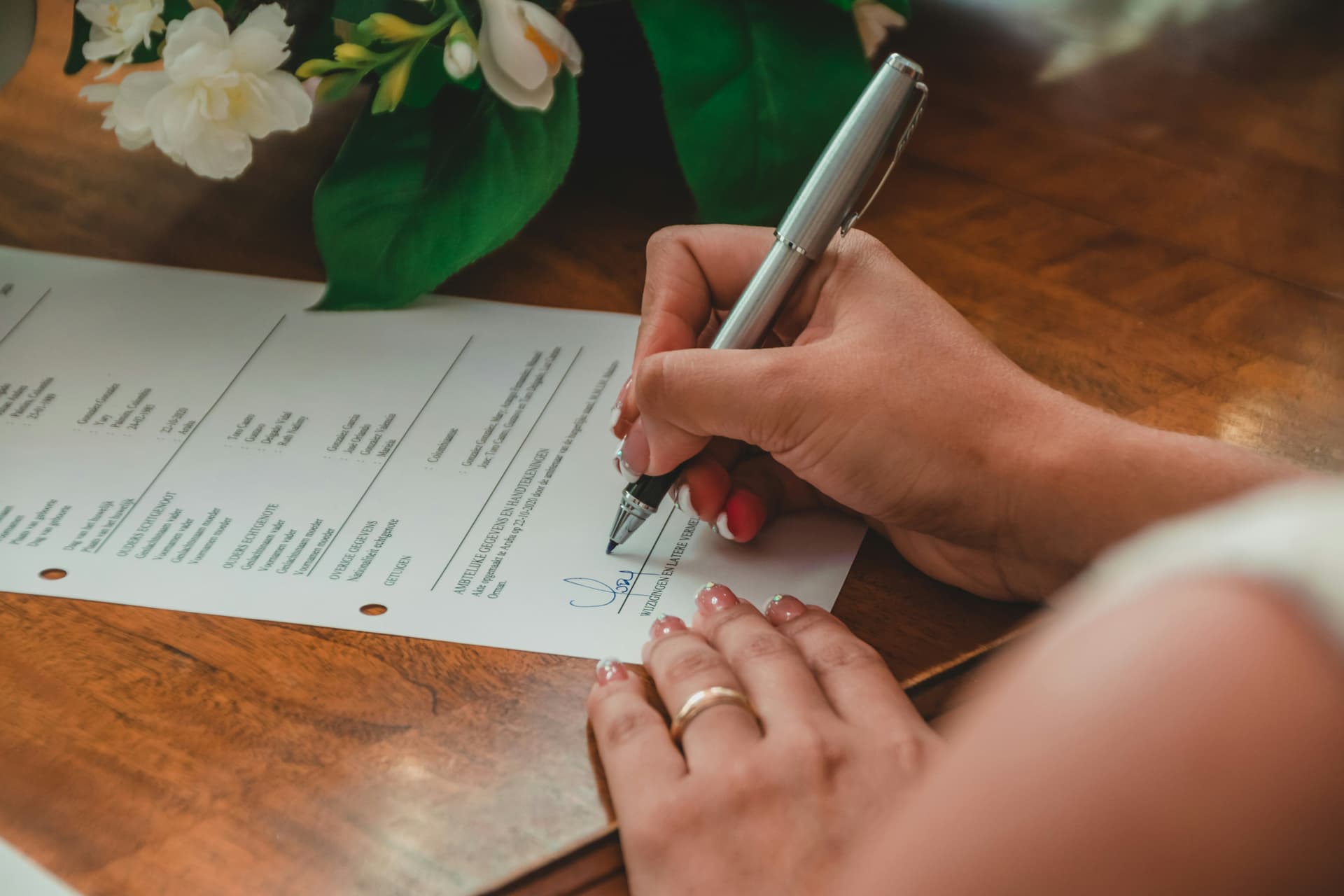
After signing the deed of sale, the new owner must carry out several administrative procedures. These include paying taxes, changing the ownership of utilities and updating the property details in the Cadastre.
Taxes must be paid within a specific period after signing.
ITP on resale homes: this is usually paid within 30 days after the purchase.
VAT and AJD on new-build homes: these taxes are usually settled at the time of signing.
It is essential to complete the necessary procedures to register the essential utilities:
Water: you must contact the utility company to change the contract holder, presenting the deed of sale.
Electricity: similar to the water process, it is necessary to provide the required documentation and formalize the new contract.
Gas: this utility also requires a similar ownership change process, ensuring that all services are active and in the new owner’s name.
The change of ownership must also be reflected in the Cadastre. This allows the property’s tax data to be updated and helps avoid administrative problems in the future.
Buying a house involves a significant investment, so it is advisable to act with caution. These are some of the key considerations to keep in mind:
Viewing several properties and comparing prices makes it possible to identify real opportunities.
In many cases, it is possible to negotiate the final price, especially if the property has been on the market for some time.
Before buying, it is advisable to inspect the property in detail or consult the report on the Technical Building Inspection (ITE):
Electrical and plumbing installations.
Condition of the structure.
Potential renovations needed.
The support of real estate experts makes a major difference. At Engel & Völkers, we offer personalized advice to analyze the market, review documentation and accompany buyers throughout all the procedures involved in buying a house in 2026.
Get in touch with our team and let us guide you through the purchase of your ideal home.
How much money do I need to buy a home?
In Spain, it is usually necessary to have between 30% and 35% of the property price to cover the down payment and the associated costs.
What taxes are paid when buying a house?
It depends on the type of property:
Resale home → ITP (6–10% depending on the autonomous community)
New-build home → VAT (10%) + AJD
How long does the home purchase process take?
The process usually takes between one and three months, depending mainly on the time needed to obtain mortgage financing.
Is it mandatory to sign before a notary?
Yes. The public deed before a notary is necessary to legally formalize the purchase.
Why is it important to register the property?
Registration in the Land Registry legally protects the buyer and certifies their ownership of the property.
You may also be interested in
&w=1920&q=75)


&w=1920&q=75)


&w=1920&q=75)


FOR MORE INFORMATION



Engel & Völkers Spain
Avenida Diagonal 640, 6B
08017 Barcelona, España
Tel: +34 900 747 281