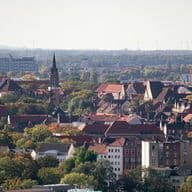
Au-Haidhausen, Munich, Bavaria, Germany
München-Au: 2-Zimmer-Wohnung in ruhiger Innenhoflage mit großzügigem Südostbalkon
Price
€495,000
- 2 Rooms
- 1 Bathroom
- ~59 m² Living area
A Guide for Homeowners

Since the 2025 property tax reform, tax liabilities in Bavaria may differ significantly from previous years. As we move through 2026, several municipalities have further adjusted their assessment rates (Hebesätze). This guide explains how to calculate property tax in Bavaria, who the regulations affect, and the fundamental mechanics of the German property tax system.
The new model: Since 2025, Bavaria has utilized a "fixed-area model" (Flächenmodell). For 2026, many municipalities have updated their specific assessment rates.
Property tax B: This applies to developed or developable land. Calculations are based on land area, usable floor space, and the local municipal multiplier.
The formula: Property Tax B = (Land Area × €0.04 + Floor Space × €0.50) × Municipal Assessment Rate. For residential spaces, a reduced base rate (70%) is applied.
Variable rates: Assessment rates are set by individual municipalities and can change annually; always verify the current rate for your specific location.
Strategic planning: Calculating your tax early helps in managing financial reserves, verifying official assessments, and accurately projecting ancillary costs during a real estate purchase.
Before we move on to the calculation, let’s first clarify: What is property tax? It is a tax that all owners of real estate and land must pay to their municipality. The revenue generated from this tax is used to finance local infrastructure.
Property tax is paid by the owner of a property or parcel of land, or by the homeowners’ association in the case of jointly owned property. If the property is rented out, you as the owner are generally allowed to pass the property tax on to your tenants as part of the operating costs.
Note: The calculation described in this article refers to Property Tax B (developed and developable properties). Different regulations apply to agricultural and forestry land (Property Tax A).
Since the 2025 property tax reform, Bavaria has applied a new model to calculate property tax. As a result, the tax amount can differ significantly from the previous calculation method. In 2026, several municipalities have adjusted their municipal tax rates (Hebesatz) again, meaning the actual property tax due may have changed compared with 2025.
As the owner of a property or parcel of land, you do not need to calculate the property tax yourself. The responsible municipality will send you an official tax notice stating the amount owed for your property. However, it can still be useful to estimate the expected property tax in advance. This allows you to plan financial reserves and verify the accuracy of the tax notice once it arrives. Property tax is also an important factor when estimating ancillary costs in a real estate purchase.
If you want to calculate property tax in Bavaria for developed or developable land, use the following formula:
Property Tax B = (Lot Size × €0.04 + Usable Floor Area × €0.50) × Municipal Tax Rate
First, determine the property tax base amount. To do this, multiply the lot size and the usable floor area (in square meters) by their respective equivalence rates. If the space is residential living area, the result is additionally multiplied by the property tax assessment rate (70%). You then multiply the resulting property tax base amount by the municipal tax rate (Hebesatz) set by your municipality. Below, we explain each of these key figures in detail and illustrate them with calculation examples.
The first key figure in calculating property tax in Bavaria is the lot size. This refers to the total area of your property. Multiply the size in square meters by €0.04, the so-called equivalence rate. If you are unsure of the exact size of your property, you can find it in your purchase agreement or in the land register extract.
The second key figure when calculating property tax in Bavaria is the usable floor area. This value, stated in square meters, can also be found in the property purchase agreement. It is multiplied by the equivalence rate of €0.50 per square meter. If the usable floor area is residential living space, the result must then be multiplied by the property tax assessment rate of 70%.
The property tax base amount, calculated using the lot size and usable floor area, is then multiplied by the municipal tax rate (Hebesatz). Each municipality in Bavaria sets its own tax rate for property tax. As a result, the location of your property plays a decisive role in determining the final tax amount. You can find the current municipal tax rate directly through your local municipality. It is important to note that this rate can be adjusted annually, so it should always be confirmed for the relevant calendar year.
Examples of municipal tax rates for property tax B in Bavarian cities (as of 2026):
Munich: 824%
Nuremberg: 750%
Augsburg: 670%
Regensburg: 510%
Bamberg: 385%
To make the property tax calculation in Bavaria easier to understand, we have prepared a sample calculation. The fictional property is located in Augsburg, where the municipal tax rate is 670%. The property has a total lot size of 500 square meters and 100 square meters of usable floor area in the form of a residential home.
Lot Size × €0.04: 500 m² × €0.04 = €20
Usable Floor Area × €0.50 × 70%: 100 m² × €0.50 × 70% = €35
(Equivalence Amount for Lot + Equivalence Amount for Living Space) × Municipal Tax Rate: (€20 + €35) × 670% = €368.50
For the fictional property in this example, the annual property tax amounts to €368.50, or €92.13 per quarter. If the building on the property were not used as residential living space, the equivalence amount for the usable floor area would be €50, increasing the annual property tax to €469. If the same property and residential home were located in Munich instead of Augsburg, the property tax would be €453.20 per year due to the higher municipal tax rate.
To calculate property tax in Bavaria yourself, you need the lot size, the usable floor area, and the municipal tax rate. With this information, the amount of property tax due can be determined in just a few steps. Since some municipalities have adjusted their tax rates again for 2026, an updated calculation is particularly worthwhile. This is especially important when estimating ancillary costs for a planned real estate purchase or when reviewing a property tax notice. If you are currently searching for a new home or looking to purchase real estate as an investment, we would be happy to assist you with your property search in Bavaria.
Au-Haidhausen, Munich, Bavaria, Germany
Price
€495,000
Untergiesing-Harlaching, Munich, Bavaria, Germany
Price
€865,000
Au-Haidhausen, Munich, Bavaria, Germany
Price
€2,490,000
Lerchenfeld, Freising, Bavaria, Germany
Price
€580,000
Bogenhausen, Munich, Bavaria, Germany
Price
€359,000
Erding, Bavaria, Germany
Price
€419,000
Regensburg, Bavaria, Germany
Price
€335,000
Fürstenfeldbruck, Bavaria, Germany
Price
€625,000
Ried, Pfronten, Bavaria, Germany
Price
€360,000
Property tax in Bavaria: Questions & Answers
Since 2025, property tax in Bavaria has been calculated using an area-based model, which takes into account the size of the lot, the usable floor area, and the municipal tax rate set by the local municipality.
The key factors in calculating property tax in Bavaria include the usable floor area and type of use, the lot size, the applicable equivalence rates, and the municipal tax rate set by the local municipality.
Owners of large properties and buildings should expect higher property taxes since 2025, as the tax is now calculated using the area-based model. In addition, municipal tax rates can change each year—and for 2026, several municipalities have adjusted their rates again.
You may also be interested in






Contact


Engel & Völkers Germany
Vancouverstraße 2a
20457 Hamburg, Germany
Tel: +49 40 361310