New
Nordost, Ingolstadt, Bavaria, Germany
Zentral investieren. Langfristig profitieren.
Price
€240,000
- 2 Rooms
- 2 Bathrooms
- ~53 m² Living area
Current interest rates and their impact on real estate financing
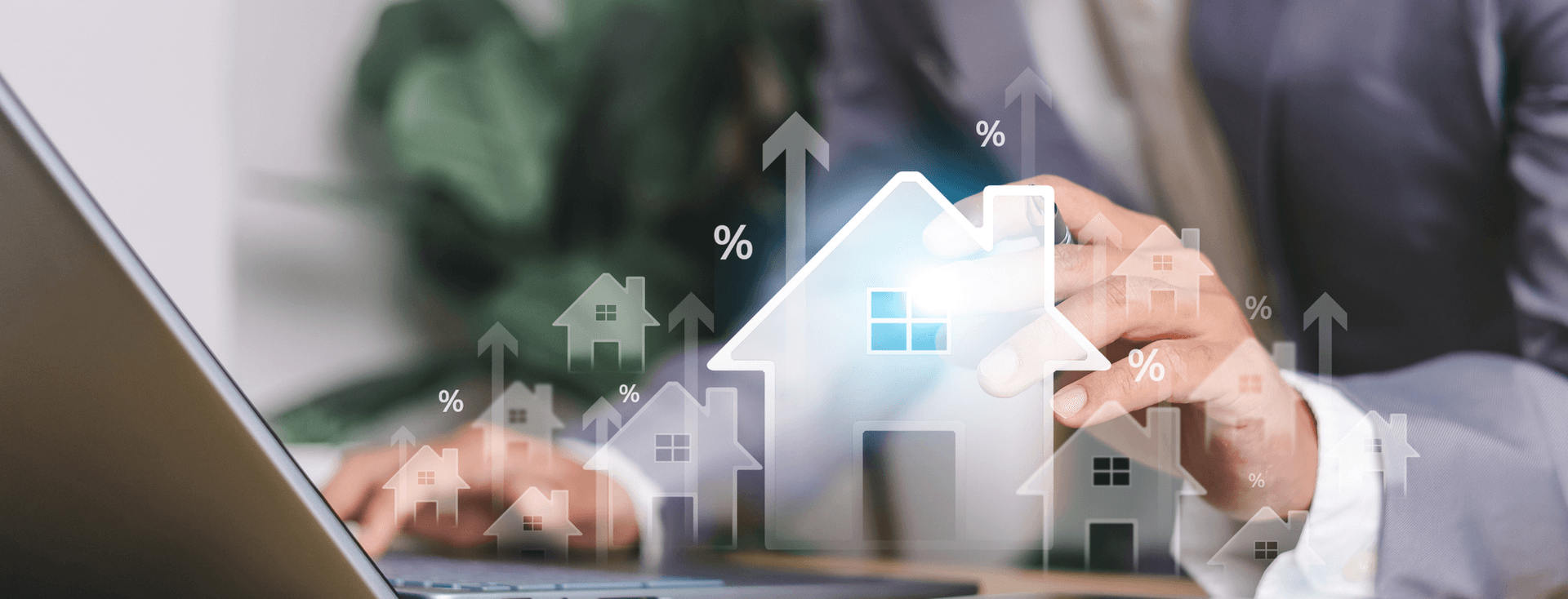
Buying a house represents security, a place of your own, and a long-term investment for many people. In recent years, however, the real estate market has been strongly influenced by interest rate developments. Many prospective buyers initially postponed their decisions because financing costs and interest rates had risen significantly.
A new market dynamic is now emerging. Interest rates in Germany are currently stabilizing, while demand is gradually picking up again. At the same time, property prices in Würzburg and other regions are remaining stable in some areas or moving moderately. This combination can open up new opportunities for buyers.
Engel & Völkers supports you with in-depth market knowledge and personal advice to help you identify the right time to purchase your property. Whether you are looking to buy a house or an apartment in Würzburg, we are happy to assist you.
Table of Content
Current interest rate trends in the real estate market
What are current mortgage rates?
Real estate prices in Würzburg: Regional market development
What does the current market situation mean for buyers?
Real estate investment in Bavaria’s housing market
Property prices in Würzburg: Why local market knowledge matters
Property prices in Ingolstadt
Interest rate trends for real estate have a direct impact on the affordability of homeownership. After a period of historically low interest rates lasting almost a decade, financing costs rose sharply starting in 2022. The background to this was, among other things, increased inflation and the monetary policy measures of central banks, which responded to economic developments with higher key interest rates. As a result, construction and real estate loans also became noticeably more expensive.
For many prospective buyers, this initially meant greater uncertainty in their planning. Financing had to be recalculated, monthly payments increased, and banks sometimes assessed creditworthiness more rigorously than in previous years. At the same time, the new interest rate environment led to a slight calming of the real estate market and a slowdown in the previously very dynamic price development in many regions.
Currently, mortgage rates in Germany generally range between about 3 and 4 percent, depending on the loan term, creditworthiness, and equity. In historical terms, this level remains below that of many previous decades. Crucially, it is not only the interest rate itself that matters, but also the entire financing structure – i.e., equity, repayment, and loan term.
For buyers, this means:
Financing remains predictable
Banks are once again valuing properties more stably
Sellers are sometimes more willing to negotiate
This creates particularly interesting entry opportunities in local markets like Würzburg and the surrounding area.
The level of mortgage rates is strongly influenced by the key interest rate of the European Central Bank (ECB). If the key interest rate rises, real estate financing generally becomes more expensive. If the key interest rate falls, loans become cheaper, which can stimulate demand in the Bavarian housing market.
Furthermore, economic factors such as inflation, capital market movements, and the general demand for real estate loans affect interest rates. Understanding these relationships allows for strategic planning of real estate investments.
In addition to interest rate developments, regional market conditions naturally play a central role. The housing market in Bavaria is traditionally in high demand – especially in economically stable cities like Würzburg.
Würzburg combines a high quality of life with a strong regional economy, a renowned university, and an attractive location on the Main River. This keeps the demand for real estate consistently high.
Currently, however, the following is evident:
Real estate prices in Würzburg have partially stabilized.
Buyers have more options on the market again.
Properties are sometimes on the market for longer periods.
This can mean a better starting point for prospective buyers looking to purchase a house or apartment in Würzburg.
The combination of stable interest rates and moderate price developments can be particularly attractive for long-term buyers. Anyone planning to live in a property themselves or making a real estate investment should consider several factors.
1. Realistic financing planning
Solid planning of real estate financing and interest rates is crucial. In addition to the interest rate, the following factors play a role:
Equity share
Repayment rate
Term of financing
Possible special repayments
An individual financing structure can significantly influence the monthly payments.
2. Considering additional purchase costs
When buying a property, prospective buyers should also consider the additional purchase costs. In Bavaria, these often amount to between 8 and 10 percent of the purchase price and consist of several items:
Property transfer tax
Notary and land registry fees
Real estate agent commission
These costs must be integrated into the financing plan.
3. Taking advantage of market opportunities
The real estate market moves in cycles. While low interest phases drive demand, periods of stable or higher rates can create new opportunities.
Currently, many buyers benefit from:
Less competition during viewings
More realistic price expectations from sellers
A broader range of available properties
Those looking to buy in Würzburg often have more time to compare and select carefully.
Beyond owner-occupation, real estate investment remains highly relevant. Property continues to be regarded as a stable long-term asset, especially in economically strong regions such as Bavaria.
The Bavarian housing market is supported by:
Consistent population growth in urban areas
A strong economy
Limited building land in desirable cities
These factors contribute to long-term value stability.
Buyers looking to purchase an apartment in Würzburg can benefit not only from potential value appreciation but also from stable rental demand.
Real estate markets are highly regional. While national trends such as interest rate developments play an important role, local factors ultimately determine prices and demand.
In Würzburg, property values are shaped by quality of life, the university, and economic stability. Anyone planning to buy should closely monitor local developments.
Sound market knowledge helps assess realistic purchase prices, identify opportunities early, and make informed decisions.
Engel & Völkers combines several key strengths:
Comprehensive market analysis and up-to-date regional data
Many years of experience in Bavaria’s housing market
Personalized advice tailored to your investment or purchase plans
Our experts understand the unique characteristics of each district in Würzburg and can accurately assess which properties best match your requirements.
Ingolstadt
Nordost, Ingolstadt, Bavaria, Germany
Price
€240,000
Hundszell, Ingolstadt, Bavaria, Germany
Price
€1,490,000
Münchner Straße, Ingolstadt, Bavaria, Germany
Price
€320,000
Etting, Ingolstadt, Bavaria, Germany
Price
€650,000
Oberhaunstadt, Ingolstadt, Bavaria, Germany
Price
€650,000
Gerolfing, Ingolstadt, Bavaria, Germany
Price
€895,000
Friedrichshofen, Ingolstadt, Bavaria, Germany
Price
€298,000
Mitte, Ingolstadt, Bavaria, Germany
Price
€2,200,000
Nordost, Ingolstadt, Bavaria, Germany
Price
€140,000
Ingolstadt is also one of Bavaria’s economically strong cities. Its proximity to Munich and the presence of major employers continue to drive demand.
Property prices in Ingolstadt have also shown slight stabilization. Buyers can currently negotiate more realistically than in previous years.
Seizing opportunities in the real estate market
The current market phase offers new possibilities for many buyers. A key factor is the ECB’s key interest rate, which significantly influences financing conditions and overall market dynamics.
Following substantial rate increases in recent years, the market is now stabilizing. This creates an attractive situation for buyers, with greater willingness to negotiate on the seller side and improved planning reliability.
Those looking to buy now can often benefit from more favorable conditions.
Engel & Völkers experts support you in implementing your property plans strategically and incorporating current market developments into your decisions.
Frequently asked questions about buying property and interest rates
The ideal fixed-rate period depends on your financial planning security and risk tolerance. Many buyers choose between 10 and 20 years. Longer terms provide greater predictability, while shorter terms may offer lower rates.
Precise forecasts are difficult, as rates depend on ECB policy, inflation, and overall economic conditions. Many experts expect rates in Germany to stabilize within a moderate range.
This depends on your personal situation. Following recent ECB rate cuts, financing conditions have improved for many buyers. Demand is rising again, while prices remain stable to moderately increasing.
Rising rates can reduce demand in the short term, leading to greater negotiation flexibility. Falling rates tend to increase demand and push prices upward.
The ECB sets the key interest rate, influencing the cost at which banks borrow money. Mortgage rates are based on this but are also affected by capital market developments and loan demand.
In the long term, property prices in Bavaria remain stable due to economic strength and high quality of life. Short-term fluctuations are possible, but many cities remain attractive investment locations.
Contact


Engel & Völkers Germany
Vancouverstraße 2a
20457 Hamburg, Germany
Tel: +49 40 361310