Residential investment: Positive market signals in the first half of 2026
An overview of the rights, taxes, and obligations associated with owning and using your own holiday home.
&w=1920&q=75)
Whether it’s a weekend house in the countryside or an apartment on the Baltic Sea, owning a holiday property offers many advantages. However, anyone who uses it personally should be familiar with a number of legal and tax specifics: when registration is required, what second home tax costs, and who can be exempt.
Table of Content
Any property used in addition to the main residence is considered a second home
Registration is usually required within 14 days of moving in – for both owned and rented properties
In most municipalities, second home tax is charged
If you own and use several holiday homes, each property is taxed separately. Holiday homes that are exclusively rented out and not used privately are not treated as second homes
Married employees who maintain a second home at their place of work can be exempt from tax
If you use your holiday home privately – whether you rent it or own it – you must register it as a second home. The deadline is generally 14 days after you take up occupancy. The responsible authority is the residents’ registration office (Einwohnermeldeamt) at the location of the property.
This registration requirement applies regardless of whether the holiday home is in the same municipality as your main residence. It also does not matter whether you use the property exclusively for yourself or partly for rental. If the holiday home is located abroad, the registration obligation in Germany does not apply. A property that is exclusively rented out and never used by the owner is not classified as a second home.
If your main residence is abroad and you also own a property in Germany, you should have the legal classification reviewed on a case-by-case basis. The assessment usually depends on how long you stay in Germany each year and on the rules of the competent registration authority. A municipal second home tax may apply, depending on the local tax by-laws.
In principle, all types of property can serve as a second home. Whether it’s a holiday apartment, holiday house or student flat, it is not the type of property but the way it is used that determines whether it is classified as a second home.
Only when individual rooms are rented out does the classification differ from one municipality to another. Some authorities already treat a single room as a second home, while others require a self-contained residential unit or at least an integrated bathroom. If in doubt, the local city administration can provide precise information.
When looking for a holiday home to use as a second residence in popular tourist regions, another factor is crucial: the permitted use of the property. Some municipalities require prior approval if units are to be marketed as holiday lets for tourists. If a permit for tourist use already exists, this can lead to difficulties when registering the property as a second home. You will find more details in our article on properties with tourist use.
When choosing the location for a holiday home as a second residence, several aspects matter. If you mainly want to use the property yourself, you will select the region according to your personal holiday preferences. If you also intend to rent it out, regions with strong tourist demand and high occupancy are attractive.
Particularly popular regions in Germany include:
German Baltic Sea: resorts along the coast and the islands of Rügen, Usedom, Hiddensee, Poel and Fehmarn
German North Sea: coastal towns and islands such as Sylt, Amrum, Norderney, Föhr and Juist
Alpine region: destinations for hiking and winter sports as well as Chiemsee and Tegernsee
Major cities: Berlin, Hamburg, Munich, Leipzig, Cologne
Cities without second home tax: Düsseldorf, Speyer, Wismar, Schwerin, Würzburg, Wolfsburg, Wernigerode, Gera, Jena
Attractive international locations include:
Italy: Tuscany, Lake Garda and South Tyrol
Spain: Canary Islands and Balearic Islands
Austria: Tyrol
Portugal: Algarve
As with a main residence, a holiday home used as a second home incurs at least the usual running costs and service charges. In apartment buildings, these are covered via the monthly service charge or maintenance fee (“Hausgeld”) to fund operating costs and repairs in the building where the second home is located.
Additional costs can include gardening services for properties with outdoor space, cleaning staff for end-of-tenancy cleaning after rentals or regular monthly cleaning and rent, if the holiday home is not owned but leased. Ongoing contracts for services such as internet, telephone or pay TV continue even when the holiday property is not occupied.
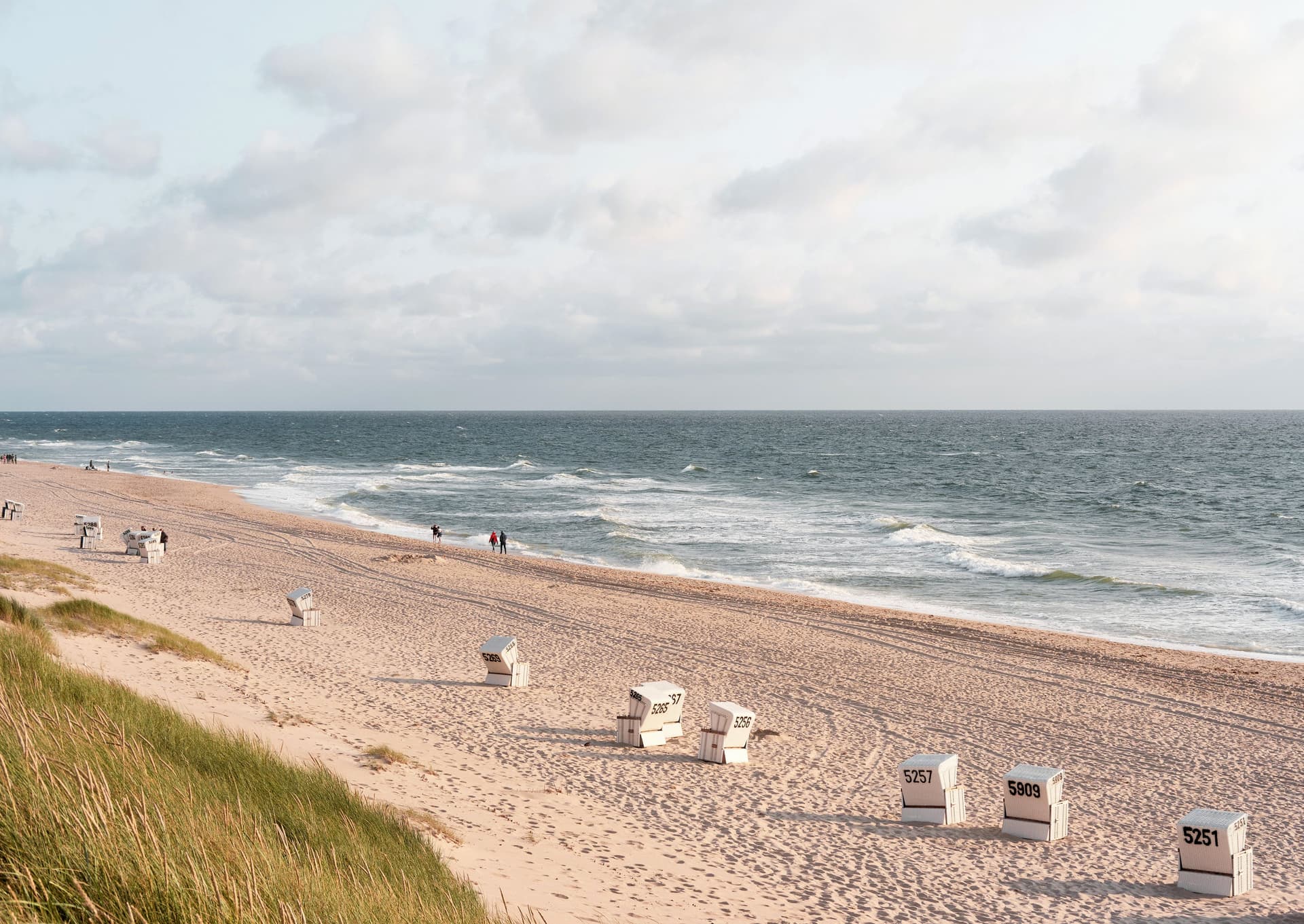
Whether second home tax is levied is decided by each municipality individually. As a local expenditure tax for the use of communal infrastructure, it is permitted but not compulsory.
The basis of assessment is the annual net rent excluding utilities (Nettokaltmiete). For owner-occupied properties, the municipality uses the local reference rent.
Tax rates vary considerably:
Munich: 18% of the annual net rent (doubled since 2022)
Hamburg: 8%
Berlin: 20% (since 2025, previously 15%)
Sylt: 6%, with an individual calculation basis (degree of own use, size, location, year of construction)
Jena: no second home tax
These examples show how differently the tax burden can look from one location to another. Comparing potential locations is worthwhile.
Certain groups of people are exempt from second home tax, including:
Married employees who maintain a second home at their place of work while their family lives at the joint main residence
People living in a care home, retirement home, hotel or other collective accommodation
Young people under 16 years of age
In Bavaria: individuals with annual income below EUR 29,000
Owners who let their holiday home exclusively and never use it themselves
Important: Even a few weeks of private use per year can be sufficient to trigger tax liability.
Yes. Under Section 21 of the German Federal Registration Act (Bundesmeldegesetz), every residence in addition to the main residence is considered a second home. This means that each holiday property with private use is assessed individually. If you own several properties in municipalities that levy second home tax, the tax is due in each municipality.
This only applies to properties that you use yourself. Pure investment properties that are exclusively rented out are exempt. If you sell a holiday home, you must remember to deregister it at the residents’ registration office – otherwise the tax obligation continues.
Some municipalities calculate second home tax on a daily basis, others by the month. If you register your second home, for example, on the 15th of a month, you will pay half the monthly tax in one municipality and the full month in another.
From the municipality’s perspective, it is irrelevant whether you use the property only during the holiday season or every weekend – this does not affect tax liability. However, some municipalities do take the “availability” of the second home to the owner into account. This is calculated based on the length of time the property is rented out compared with the days it is not rented.
For example, if you own a holiday apartment in Westerland on Sylt and rent it out for fewer than 180 days per year, you pay the full tax. With more than 270 rental days per year, the availability to you as owner is still calculated at 30%.
Each municipality sets its own payment arrangements. However, an annual tax declaration for the second home tax must always be submitted – either to the local tax office or directly to the municipality.
Typical payment schedules include:
Annually in advance: common in many smaller municipalities
Half-yearly: for example in Cologne
Quarterly: for example in Hamburg
Fixed date in July: standard practice in some municipalities
The deadline for submitting the tax declaration is also determined by the respective municipality.
| Advantages | Disadvantages |
|---|---|
Available at any time, ideal for spontaneous use | High capital requirement for the purchase |
Location and fit-out tailored to your preferences | Ongoing service charges and running costs even when vacant |
Relaxed travel with minimal luggage | Second home tax in most municipalities |
High level of privacy, ideal for families | Cleaning, guest reception and agency/booking fees when letting |
Rental income possible when not in use | Registration requirements and administrative effort |
Capital appreciation potential as an investment asset | Less holiday flexibility if you feel tied to one location |
Suitable as retirement planning or as a future home | More affordable locations often achieve lower rental yields |
Holiday home as a second home
Yes. After purchasing or renting a holiday home, you can register it as a second residence, provided you use it yourself. The point at which you must register depends on the deadlines set by the local municipality or city. As a rule, you must register within 14 days of moving in.
In Germany, you must register the holiday property as a second home no later than 14 days after you move in. If you fail to comply with the registration requirement, the municipality can impose a fine.
If you use your holiday property yourself, you must register it as a second home. This obligation applies both when you purchase and when you rent a holiday home. If you treat the property purely as an investment and rent it out exclusively, you do not register it as a second residence.
Second home tax rates are set by individual municipalities and can therefore vary considerably from one location to another. In Germany, the tax is typically between 5% and 15% of the net rent excluding utilities.
This depends on the municipality and your personal situation. If one spouse uses a holiday home as a second residence for work purposes, they can be exempt from second home tax, provided both spouses share one main residence. In addition, some towns and municipalities in Germany do not levy second home tax at all.
Under the German Federal Registration Act (Bundesmeldegesetz), the combination of a main residence abroad and a second home in Germany is not expressly provided for. In practice, however, some residents’ registration offices classify the holiday property in such cases as a main residence in Germany.
Disclaimer
The content of this article is intended solely for general informational purposes. It has been compiled and reviewed to the best of our knowledge, based on the regulations in effect at the time of publication. It does not constitute, nor is it a substitute for, legal, tax, or financial advice. Despite careful review, we accept no liability for the completeness, accuracy, or timeliness of the information provided. Laws, regulations, and market conditions are subject to change at any time. For specific inquiries, we recommend consulting a qualified expert.
You may also be interested in



&w=1920&q=75)
Contact


Engel & Völkers Germany
Vancouverstraße 2a
20457 Hamburg, Germany
Tel: +49 40 361310