Residential investment: Positive market signals in the first half of 2026
Bill accurately and on time with the essential information landlords need at a glance.
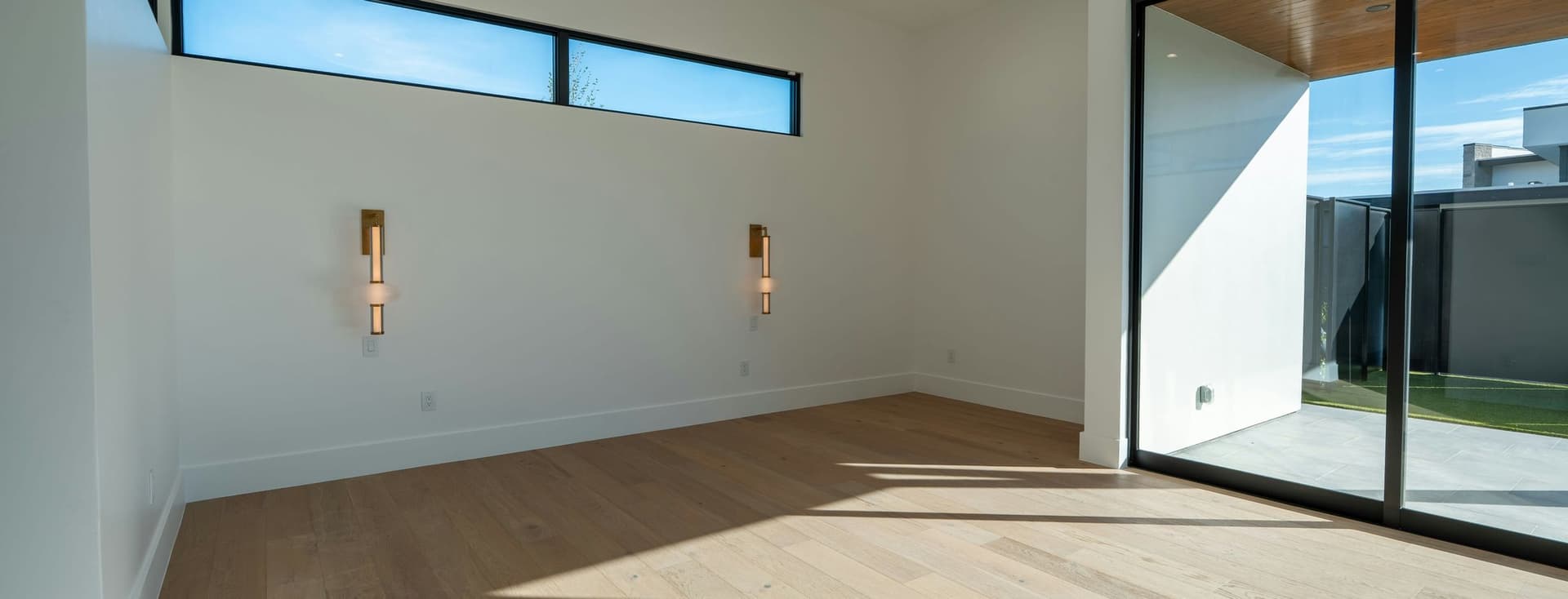
As the owner of a rented property, you are obliged to pay property tax to your local city or municipality on time. But do you always have to bear these costs yourself? Not necessarily. Under certain conditions, you can pass property tax on to your tenants and reduce your ongoing costs as a landlord.
This guide explains what applies when you want to pass property tax on to tenants – from the contractual clause to the apportionment key and the annual service charge statement.
Table of Content
Can a landlord pass property tax on to the tenant?
Which apportionment key is used to pass property tax on to tenants?
Special case: Mixed use of residential and commercial space
Settling property tax via the service charge statement
A tenant does not pay their share of property tax: What can you do?
What else should landlords know about property tax?
Conclusion: When does the tenant pay property tax?
As a operating cost that can be passed on, property tax can be fully charged to tenants
This applies provided there is a clause in the rental contract, with settlement handled through the annual utility bill
The cost distribution key is generally based on the living space of the respective tenant
For mixed-use properties combining residential and commercial units, costs are often billed separately
Under the German Operating Costs Ordinance (BetrKV), property tax is one of the operating costs that can be passed on to tenants. In practice, this means you are generally allowed to pass property tax charges on to your tenants.
However, this requires an explicit agreement in the tenancy agreement. If there is no such clause, you as the owner must bear the property tax yourself. A subsequent change to the contract is not possible without the tenant’s consent. Before every new tenancy, you should therefore check whether property tax is listed among the operating costs that can be passed on – and add it if necessary.
How property tax is apportioned depends on whether you are renting out a single-family home or a multi-family building.
Single-family home: The tenant pays the property tax in full.
Multi-family building: The property tax is apportioned between all tenants.
If the parties have not agreed on a different arrangement in the contract, living space is used as the apportionment key: the proportion of an individual flat in relation to the total living space of the building determines how much property tax the respective tenant pays.
Example: Apportioning property tax in a multi-family building
A multi-family building has a total living space of 400 square metres. One flat measures 60 square metres – that is 15 percent of the total living space. The annual property tax amounts to EUR 660.
15 percent of EUR 660 is EUR 99. This tenant therefore pays EUR 99 in property tax, which is settled via the annual service charge statement.
If you rent out a property for both residential and commercial use, particular care is required when passing property tax on to tenants. Commercial units are often assessed differently for tax purposes than residential units.
In many cases, separate statements for the residential and commercial units are advisable. This helps ensure that tenants in residential units do not suffer any significant financial disadvantage.
According to case law of the German Federal Court of Justice (BGH), a uniform statement is also permissible if this does not create an economic disadvantage for residential tenants. In practice, you should obtain legal advice when in doubt to identify the most appropriate solution for your property. In both approaches, the respective size of the units forms the basis for apportioning the costs.
If property tax is listed in the tenancy agreement as a pass-through operating cost, you settle it via the annual service charge statement. Property tax must be shown as a separate item, and the apportionment key used must be indicated.
Tenants make monthly advance payments towards operating costs over the course of the year. These advance payments are offset against the actual costs at the end of the accounting period. You must observe the statutory deadlines: the service charge statement must reach the tenant no later than twelve months after the end of the accounting period. If you miss this deadline, you lose the right to claim additional payments – regardless of the amount.
All key points relating to the service charge statement can be found in our guide to operating costs.
If the tenancy agreement states that property tax may be passed on as an operating cost, the tenant is obliged to pay their share. If payment is outstanding, you should first send a written reminder with a clear payment deadline. If the tenant still does not respond, you can assert your claim through legal channels.
Even if you pass property tax on to your tenants, you remain liable for payment to the municipality as the property owner. Property tax generally falls due in the middle of each quarter. You can find more detailed information in our property tax guide.
If a flat stands empty, you can apply for a reduction of property tax for the period of vacancy. You must prove that you, as the landlord, are not responsible for the vacancy – for example, because essential refurbishment work is required.
Important: Reformed property tax applies from January 2025
For many owners, the amount of property tax has changed noticeably compared to previous years. You should therefore check whether your tenants’ monthly advance payments for operating costs still reflect the current level of property tax. Adjust the advance payments if necessary to avoid high back payments at the end of the accounting period.
If property tax is listed in the tenancy agreement as an operating cost that can be passed on, you can apportion these charges in full to your tenants – in both residential and commercial properties.
Unless otherwise agreed in the contract, the apportionment key is the tenant’s living space in relation to the total living space of the building. Property tax is settled once a year via the service charge statement. However, one point remains unchanged: you are always liable for payment to the municipality as the owner.
Disclaimer
The content of this article is intended solely for general informational purposes. It has been compiled and reviewed to the best of our knowledge, based on the regulations in effect at the time of publication. It does not constitute, nor is it a substitute for, legal, tax, or financial advice. Despite careful review, we accept no liability for the completeness, accuracy, or timeliness of the information provided. Laws, regulations, and market conditions are subject to change at any time. For specific inquiries, we recommend consulting a qualified expert.
Passing on property tax to tenants
Yes. A landlord may pass property tax on to tenants in full, provided this is agreed in the tenancy agreement. The charges are settled via the operating costs in the service charge statement.
If the tenancy agreement contains a suitable clause, landlords can pass property tax on to tenants in full. In multi-family buildings, each tenant pays a share of the property tax that corresponds to the size of their flat in relation to the total living space.
Property tax must be shown as a separate item in the annual service charge statement. The apportionment key used must also be stated.
If no other agreement has been made in the tenancy agreement, the apportionment key is the tenant’s living space in relation to the total living space of the building. This determines the tenant’s share of property tax.
As the owner, you are liable for payment of property tax to the municipality. However, you can pass the charges on to your tenants via the service charge statement if this is agreed in the tenancy agreement.
You may also be interested in





&w=1920&q=75)

Contact


Engel & Völkers Germany
Vancouverstraße 2a
20457 Hamburg, Germany
Tel: +49 40 361310